by Jason Tarnow | Apr 21, 2020 | Crime, Criminal Attorney, Legal Aid, Legal Rights, Media, Politics, Uncategorized, Wheels Of Justice
It has been over one month since the Courts of British Columbia significantly curtailed operations in an attempt to combat COVID-19.
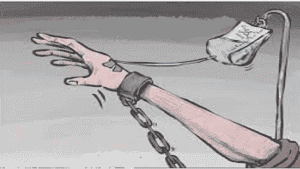
For many of those who work in the legal field, it was this development that made it all real. It quickly became clear that the novel coronavirus had the potential to spread quickly, and the confined space of a courtroom serves as ideal grounds for transmission.
Despite the coronavirus acting as a proverbial wrench in the gears of justice, the judicial system continues to putter along. This is largely due to increased utilization of technological tools like video/conferencing for court appearances and swearing of affidavits, and relaxing restrictions when it comes to fax/electronic filing of court documents.
Video conferencing isn’t new to the BC court system. As early as 2002, Judges across the province agreed that the technology improved procedural efficiency by facilitating witness testimony from distant locations and allowing interim appearances by video involving counsel from other jurisdictions. Judges also noted the value of video- conferencing for inmates at correctional centres – defeating the purpose of transferring multiple inmates from various correctional centres to various courthouses. The bottom line is that modernizing certain aspects of the criminal justice system makes sense financially and systemically – and events like COVID-19 demonstrate how it can have occupational benefits too.
At present, there is enormous value in modernizing certain judicial processes for two reasons – one, to limit face-to-face interactions between judicial staff, defence counsel and an Accused person, and two, to mitigate the consequences of what can only be described as colossal delay.
In reducing operations, the majority of criminal trials scheduled between March 18, 2020 and June 1, 2020, have been adjourned generally to dates in June and July, 2020. Cases that are deemed to be of an urgent nature will be able to proceed, although in a procedural sense, things will look different – for example, witnesses who would ordinarily appear before the Court to give evidence may be authorized to testify via video. For the most part, however, trials will proceed at a date that is likely much later than originally anticipated.

The situation is more grim for accused persons in custody awaiting their trial. Inmates are, of course, among the most vulnerable to contracting the novl coronavirus – a concern that was a topic of discussion before the courts closed – but didn’t really become part of the actual narrative until it was too late Trials for accused persons in custody have also been adjourned (for trials scheduled between March 23 and May 16, 2020). Sentencing hearings and bail hearings for accused persons will proceed. This could be positive – for some, it might result in their immediate release from the correctional system. For others, further incarceration for as little as an additional 90 days in custody will be devastating, a potential death sentence.
It is far too early to gauge how overwhelmed the court system will be at the return to business as usual – but when you consider that there was a huge backlog before COVID-19 shut it all down, it seems only reasonable that extreme measures – such as implementing night/weekend court, and permanently authorizing certain modernization measures – will need to be taken to truly return to normal.
by Jason Tarnow | Mar 5, 2020 | Crime, Criminal Attorney, Legal Aid, Police, Social Media, Wheels Of Justice
“No person is criminally responsible for an act committed or an omission made while suffering from a mental disorder that rendered the person incapable of appreciating the nature and quality of the act or omission or of knowing that it was wrong”
He was a student and Captain of Mount Royal University’s hockey team – but that changed on January 13, 2018, after taking a large dose of magic mushrooms.
Shortly after ingesting 4 grams of mushrooms at a house party, Matthew Brown took off all of his clothing and disappeared into the freezing night. Eventually, he came upon the home of a Mount Royal University professor that he had never met before. He broke into her home and beat her with a broken broom handle, leaving her with severe injuries. After leaving her residence, he broke into another home where he was eventually apprehended by the police.
On March 2, 2020, he was acquitted after mounting a successful defence of “non-insane automatism” resulting from severe self-intoxication.
Mr. Brown was acquitted and walked out of court a free man. His actions were found to be involuntary – but not by reason of mental disorder. His defence of non-insane automatism resulting from severe self-intoxication was only available after a pre-trial ruling in which a judge found that Section 33.1 of the Criminal Code, prohibiting self-intoxication as a defence, was unconstitutional.
Non-insane automatism and insane automatism both involve an Accused person that was unaware of the consequences of their actions at the time of the offence, and therefore could not form intent required to prosecute the offence.
In Mr. Brown’s case, his automatism ended when the effects of the drugs wore off, and he was left with no memory of the event. Since his actions were not attributed to a disease that would have recurring symptoms, a Not Criminally Responsible according to Mental Disorder (NCRMD) finding would have been inappropriate.
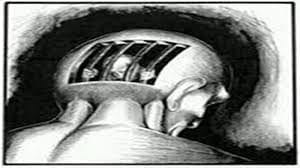
 A finding of NCRMD relates to automatism as a consequence of a mental disorder. Unlike automatism resulting from intoxication, it does not result in an acquittal. NCRMD is most commonly seen in cases where an Accused suffers from severe mental illness, such as schizophrenia. Across Canada, the number of Accused deemed NCRMD is small, however, media attention on these particular cases often results in public outrage.
After a judge has determined that an Accused is NCRMD, the case is usually handed over to the Review Board (governed by Province/Territory) where there are three possible outcomes:
- Absolute Discharge
- Conditional Discharge
- Detention in a hospital
While most cases do end up under the authority of the Review Board, the Court of hearing has the discretion to proceed to disposition if it feels appropriate in the circumstances. If the Court orders an Absolute Discharge (the only available option when the Accused has been found not to pose a significant risk to the public), the matter is concluded. If the Court orders a conditional discharge, or detention in a hospital, the Review Board must review the matter again with 90 days. In any circumstance, the Court or Review Board must impose whichever sentence is the least onerous and least restrictive on the Accused, all while balancing protection of the public and the interests, liberty and dignity of the Accused. There have been success stories, (which may again cause unnecessary alarm to the public) that demonstrate how effective rehabilitation of mentally ill offenders is far from hopeless. It is also important to note that the statistics surrounding NCRMD cases show that the prevalence of an NCRMD finding in relation to violent offences are low.