
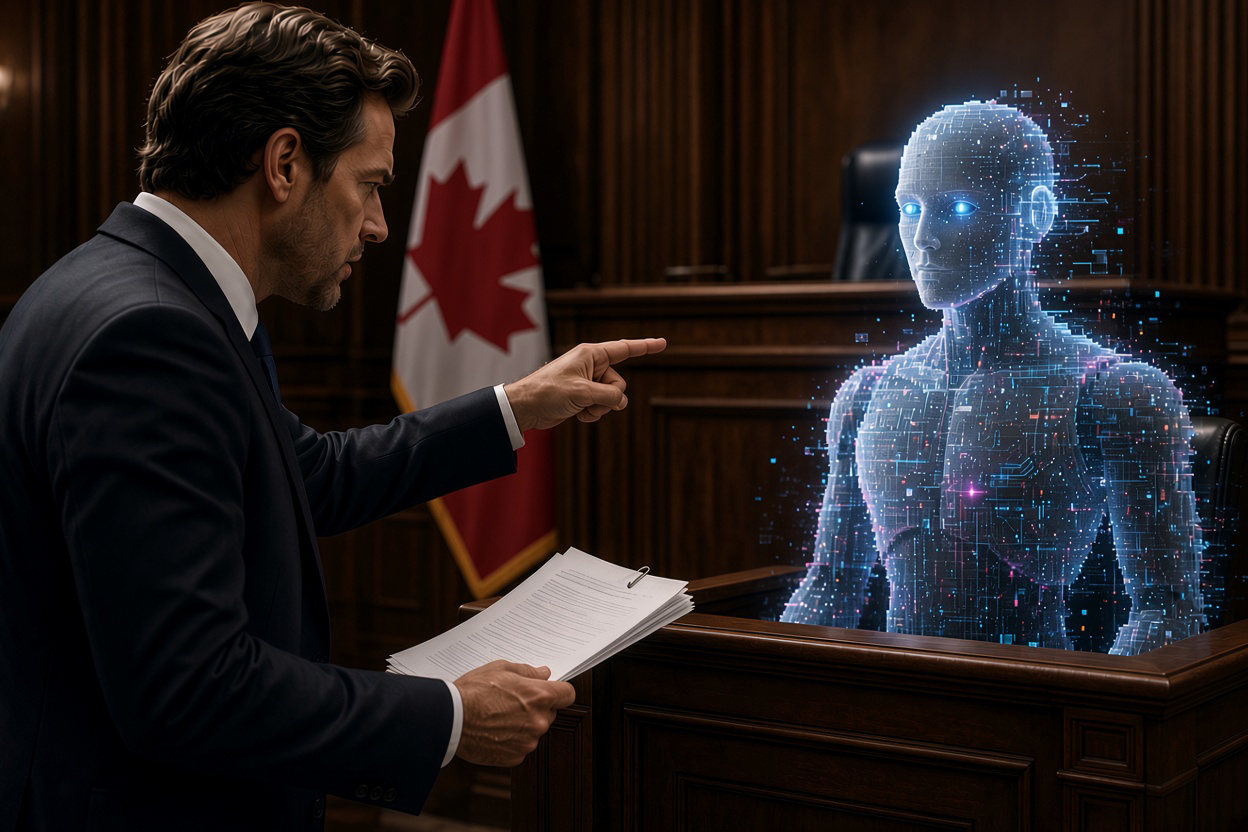
Artificial intelligence is changing how lawyers research, draft, and communicate. Courts are now confronting how it should be used in the most solemn part of a criminal case: sentencing. A recent Arizona decision shows how quickly the technology can cross a line, and why criminal defence counsel must be ready to challenge it.
What Happened in Arizona
On September 30, 2026, the Arizona Court of Appeals, Division One, vacated a 10-year manslaughter sentence imposed on Gabriel Paul Horcasitas. He was convicted in the 2021 road-rage shooting death of Christopher Pelkey. At the May 2025 sentencing hearing, the court played an AI-generated video that showed Pelkey addressing the judge and offering forgiveness. The video was created by Pelkey’s sister, who was preparing her own victim impact statement.
The appellate court affirmed the manslaughter conviction but sent the matter back for re-sentencing. Its reasoning focused on due process.
The Court’s Core Concern
The court explained that the video did not simply preserve something Pelkey had said while alive. Instead, it presented “a depiction of the victim and his thoughts created from the imaginings of the victim’s sister.” In the court’s view, the video blurred the line between what the family believed the victim would have said and what the victim actually thought.
The court also held that victim-rights protections do not override a defendant’s right to due process. A defendant must be able to test and respond to the information relied on at sentencing. An AI-generated speaker that cannot be cross-examined, and whose words cannot be traced to verified sources, presents an obvious problem.
Importantly, the ruling is not a blanket prohibition on digital media at sentencing. It addresses an AI-generated likeness presented as the voice of a deceased person, where the sentencing judge expressly relied on its content.

Why This Matters in British Columbia
The Arizona decision is not binding in Canada. It is, however, a clear warning for practitioners here.
In Canada, victims may describe the harm they have suffered through victim impact statements under section 722 of the Criminal Code. These statements are an important part of the process, and they must be handled with care. They are meant to convey the real effects of a crime on a real person’s family and community. They are not a vehicle for putting invented words into the mouth of someone who has died.
Sentencing in BC is also governed by principles of proportionality, individualized assessment, and fairness. An emotionally powerful presentation that the defence cannot meaningfully answer risks distorting that assessment.
What Defence Counsel Should Do
If an AI-generated element is proposed for a sentencing hearing in British Columbia, defence counsel should:
- Object early and in writing, so the objection is preserved for appeal.
- Request disclosure of how the material was created, who wrote the words, and what sources support them.
- Demand the right to respond, including cross-examination where appropriate.
- Seek a ruling on admissibility before the material is presented, not after.
Acting promptly protects the client’s right to a fair sentencing and protects the integrity of the process.
Respecting the Solemnity of Sentencing
Sentencing is not a stage for novelty. It is where the court decides how the state will respond to a person’s conduct, and where a family’s loss is formally recognized. Those who have been harmed deserve a process that is rigorous and honest. Those accused deserve a process that is fair, transparent, and based on evidence.
Technology will continue to develop, and courts will need to adapt. Until clear rules exist, the safest course is to keep sentencing grounded in verifiable facts and to insist that every word the court hears can be tested.
Facing a Sentencing in Metro Vancouver?
If you or a loved one is facing sentencing in Metro Vancouver, Richmond, or elsewhere in British Columbia, experienced criminal defence counsel can make a meaningful difference. Tarnow Criminal Law represents clients in all levels of Court in British Columbia and the Yukon on matters including but not limited to sexual assault, drug trafficking, impaired driving, dangerous operation, and youth criminal justice.
Contact Tarnow Criminal Law today at 604.278.0555 to schedule a confidential consultation.
This article is general information and not legal advice. Each case turns on its own facts. Speak with a lawyer about your specific situation.