by Jason Tarnow | Jun 8, 2026 | Crime, Criminal Attorney, Politics
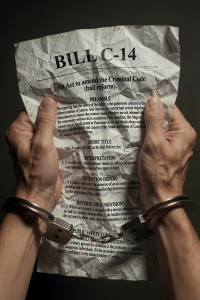 As a Vancouver criminal defence lawyer with years of experience navigating British Columbia courts, I’ve seen firsthand how shifts in bail laws can dramatically affect the lives of those accused of crimes. In the past week, fresh developments around Bill C-14, the Bail and Sentencing Reform Act, have kept criminal law practitioners across Canada on high alert. With Senate amendments under consideration by the House of Commons as of early June 2026, this legislation represents one of the most significant overhauls to the Criminal Code in recent memory.
For anyone facing charges in Vancouver or elsewhere in BC, understanding these proposed changes is essential. Whether you’re a first-time accused, a repeat offender, or simply concerned about justice system fairness, this post breaks down the key elements, their implications, and practical takeaways.
Why Bail Reform is Front and Centre in Canadian Criminal Law
Canada’s bail system operates on foundational principles: the presumption of innocence, the right to reasonable bail under section 11(e) of the Charter, and the “ladder principle” from R. v. Antic (2017 SCC 27), which favours the least restrictive conditions necessary. Yet public concern over repeat offenders committing crimes while on release has fueled calls for tougher measures.
Bill C-14, introduced in late 2025, responds with over 80 targeted amendments to the Criminal Code, the Youth Criminal Justice Act, and the National Defence Act. It expands reverse onus provisions, toughens sentencing for violent and organized crime, and recalibrates how justices assess detention. Recent Senate scrutiny and advocacy from groups like the Canadian Civil Liberties Association (CCLA) highlight the tension between public safety and individual rights.
In BC, where Vancouver’s busy courthouses already strain under caseloads, these changes could reshape pre-trial outcomes significantly.
Key Provisions in Bill C-14: Reverse Onus, Sentencing, and More
At its core, Bill C-14 bail reform introduces or expands reverse onus for several serious offences. Accused persons must now demonstrate why they should be released rather than the Crown proving why they should be detained. This applies to offences involving:
- Violence or weapons
- Breaking and entering
- Auto theft
- Organized crime involvement
Additional measures include restrictions on sureties with recent indictable convictions (with Senate-proposed safety valves for discretion) and adjustments to the principle of restraint, potentially reducing emphasis on the ladder principle for certain charges.
On the sentencing side, the bill aims to impose consecutive sentences for major crimes, limits conditional sentences (house arrest) for serious sexual offences, and strengthens tools against repeat violent offenders. These align with broader government efforts to address community safety while responding to criticisms of prior reforms like Bill C-75.
Recent CCLA advocacy urges MPs to adopt Senate amendments, including mandatory consideration of section 493.2 (Criminal Code) factors for vulnerable populations—particularly Indigenous accused—and enhanced annual reporting on pre-trial detention statistics. These “softening” measures seek to mitigate disproportionate impacts on racialized, low-income, and Indigenous communities, which are overrepresented in BC’s justice system.
Implications for Vancouver Criminal Defence Practice
As a Vancouver-based lawyer handling everything from impaired driving to serious indictable matters, I anticipate several practical shifts:
- Higher Detention Rates Pre-Trial: Expanded reverse onus will make it harder to secure release for clients facing listed offences. Defence counsel will need to prepare robust sureties packages, character evidence, and risk mitigation plans earlier. In Vancouver Provincial and Supreme Courts, where bail hearings are already high-stakes, expect more contested tertiary ground arguments (public confidence in justice).
- Impact on Vulnerable Clients: Indigenous clients, those with mental health issues, or from marginalized communities may face heightened challenges. Senate amendments requiring inquiry into s. 493.2 factors could provide a crucial tool, but implementation will depend on judicial training and Crown practices.
- Sentencing Trends: Tougher consecutive sentencing and restricted conditional discharges will push for more creative mitigation strategies. Defence lawyers must emphasize Gladue principles (for Indigenous offenders) and other mitigating factors more forcefully.
- Interaction with Jordan Principles: The Supreme Court of Canada’s recent May 2026 clarifications in cases like R. v. Vrbanic and R. v. Jacques-Taylor affirm the 18/30-month ceilings for trial delays while recognizing complexity exceptions. Faster bail decisions under Bill C-14 could help or hinder, depending on how they affect overall timelines.
In BC, these federal changes intersect with local pressures, including court disruptions anticipated from the 2026 FIFA World Cup, which may force rescheduling of criminal trials in key Vancouver-area venues.
Balanced Analysis: Safety vs. Charter Rights
Critics, including civil liberties groups, argue that Bill C-14 risks eroding the presumption of innocence by detaining more presumptively innocent people, increased overcrowding in remand centres, and disproportionately affecting equity-seeking groups. Proponents counter that it restores balance after perceived leniency, deterring repeat offences and bolstering public trust.
From my perspective in Vancouver criminal law trenches, the truth lies in nuanced application. Blanket “tough on crime” measures rarely solve systemic issues like court backlogs or social determinants of crime. Evidence-based reforms, robust data collection (as Senate amendments propose), and judicial discretion remain vital.
The bill also arrives amid ongoing discussions about intimate partner violence, femicide presumptions, and organized crime – which are all issues that resonate strongly in British Columbia.
Practical Takeaways for Accused Persons and Practitioners
- Early Legal Advice is Critical: If charged, contact an experienced Vancouver criminal lawyer immediately. Bail strategy starts at arrest.
- Build Strong Release Plans: Gather employment letters, treatment programs, sureties, and electronic monitoring options proactively.
- Monitor Legislative Progress: With House consideration of Senate amendments ongoing, the final shape of Bill C-14 could evolve. Stay informed via reliable legal sources.
- Consider Charter Challenges: Overly broad reverse onus or restraint provisions may invite future litigation under sections 7, 11(d), and 11(e).
- For Lawyers: Emphasize individualized assessments. Leverage any preserved judicial discretion and vulnerable-population considerations.
Defence counsel should also prepare for potential increases in Crown appeals of favourable bail decisions.
Conclusion: Navigating Uncertainty in Canadian Criminal Law
Bill C-14 underscores a pivotal moment in Canadian criminal law. While aimed at enhancing safety, its success will hinge on fair implementation that respects Charter protections. For those in Vancouver facing charges, or law students and citizens following justice issues, these developments highlight why competent, zealous representation matters more than ever.
At our firm, we remain committed to advocating for clients amid these shifts, which includes fighting for releases where justified and challenging overreach where necessary. The justice system works best when balanced, evidence-driven, and humane.
This blog post is for educational purposes only and does not constitute legal advice. Every case is unique. If you or someone you know is facing criminal charges in Vancouver or BC, consult a qualified criminal defence lawyer promptly for personalized guidance.
by Jason Tarnow | Jun 29, 2022 | Crime, Media, Politics
In May of 2022, the Supreme Court of Canada determined that stacking parole ineligibility for multiple murders is unconstitutional under Canadian law.
In 2011, Stephen Harper’s government passed legislation relating to sentencing provisions in the Criminal Code that would allow Judges to impose parole ineligibility far beyond the minimum of 25 years on the offence of First Degree Murder, pursuant to Section 745.51.
Since that time, several sentences have been passed in imposing parole ineligibility, with the most lengthy sentence being no parole eligibility for 75 years in the case of Douglas Garland, who was found guilty of murdering two adults and their grandson. Garland appealed his sentence to the Alberta Court of Appeal, where it was upheld.
It was the case of the Quebec mosque shooter, Alexandre Bissonnette, that resulted in a unanimous decision from all nine Supreme Court Justices to rule that the sentencing provision violated Section 12 of the Canadian Charter of Rights and Freedoms, granting protection against cruel and unusual punishment. Bissonnette pleaded guilty to 6 counts of First Degree murder and six counts of attempted murder, and the Crown had asked for a parole ineligibility period of 150 years – 25 consecutive years for each of the six people he murdered – which would have been the harshest sentence handed down in Canada since the abolishment of capital punishment. The presiding Judge declined, and instead sentence Bissonnette to 40 years before he could apply for Parole. Criminal defence counsel appealed to the Quebec Court of Appeal in 2020, and the sentence was reduced to 25 years. The Crown then appealed to the Supreme Court of Canada, which led to the landmark decision to cap parole ineligibility at 25 years.
With this decision, those incarcerated under the stacked ineligibility provision are seeking to have their sentences reduced, which has caused a great deal of alarm to the public. It is important to remember that someone convicted of first degree murder will have eligibility at Parole after 25 years – but that does not guarantee their release by any means. The Parole Board looks at many factors when determining whether or not to grant Parole, including the actual offence itself, criminal and social history, rehabilitation efforts, and remorse. Their review of an individuals history when considering release is thorough and rigid. Victim impact statements from family members and loved ones are also taken into consideration.
The decision from the SCC included the following passage:
“This appeal is not about the value of each human life, but rather about the limits of the state’s power to punish offenders.”
This is a reminder that the Court’s decision to limit parole ineligibility is not meant to diminish loss of life, or to favour offenders. It reaffirms that our government, including judicial institutions, must abide by limits to ensure that Canada remains a fair and just society for all.
If you have been charged with a criminal offence in British Columbia (including, but not limited to: Richmond, Vancouver, Surrey, Delta, Langley, Coquitlam, New Westminster, Abbotsford, Victoria, Nanaimo, Kamloops, Kelowna) or the Yukon Territory (including but not limited to: Whitehorse, Dawson City, Watson Lake, Haines Junction, Mayo, Old Crow) contact experienced counsel at Tarnow Criminal Law without delay.
by Jason Tarnow | Jan 20, 2021 | Crime, Legal Rights, Police, Social Media, Wheels Of Justice
The internet is a precarious place. We buy, we sell, we talk – and we post. And while that’s all fine and good, it isn’t without consequence. Facebook launched in 2004, and since that time Canadian Courts have addressed and analyzed evidence obtained through Facebook and other social media platforms.
Recently, in a 2-1 decision, in R. v. Martin, 2021 NLCA 1, the Newfoundland and Labrador Court of Appeal overturned a lower court’s decision deeming Facebook screenshots as inadmissible. In a 30 page decision, the Court of Appeal explained how the Provincial Court Judge (“PCJ”) had erred in their analysis of the rules of authentication in relation to the proposed electronic evidence.
The case involves allegations that the Accused, Mr. E. Martin, made threats against the Royal Newfoundland Constabulary (police), via pictures and written communication on Facebook. He was charged with being in possession of a knife for a purpose dangerous to the public peace, being in possession of a rifle for a purpose dangerous to the public peace, and uttering a threat to members of the Royal Newfoundland Constabulary.

The police had attended Mr. Martin’s residence one evening to follow up on a domestic disturbance complaint. The investigation went no further than a brief attendance at the Accused’s residence, which resulted in no further action being taken.
The investigation with respect to the charges in this case began when the police received an anonymous tip that the Accused had posted several pictures on Facebook indicating he planned to harm police.
It was the evening following their first visit to Mr. Martin’s residence that the police received the anonymous tip that indicated he had posted a menacing caption, directed at police, combined with photos that included firearms. The police again attended Mr. Martin’s residence, but were clearly not welcomed. They returned to the detachment and tried to view Mr. Martin’s Facebook page, but were unable to view any content. The police then contacted the anonymous tipster to ask if they would email pictures of the postings, which they did. In total, six screen shots were forwarded. The “screenshots” depicted an individual in various poses, kneeling with and holding various firearms that included a rifle and a long gun. The words “Ed’s Post” and “Ed Martin added 4 new photos” appeared as “banners” over the photos, in the typical Facebook font and symbolism.
These screenshots were at the centre of the Crown’s firearms and threats charges against the Accused. A Voir Dire was held to determine the admissibility of the screen shots. Ultimately, the PCJ declined to admit the photos as evidence, reasoning that these items had failed to be authenticated. The PCJ opined that since the anonymous tipster had not been called to give evidence, no one could testify that the screenshots were not altered or changed in anyway. The Court went further to say that there had been nothing to substantiate that the Accused even had a Facebook account, and even if they did, there was no way to determine conclusively that the Accused had been the one to author the posts depicted in the screenshots.
The Accused was convicted of being in possession of a knife for a dangerous purpose (which was found on him at the time of his arrest) but was acquitted on the charges of being in possession of a rifle for a dangerous purpose to the public peace, and uttering a threat to members of the Royal Newfoundland Constabulary. The Crown appealed the PCJ’s decision to rule the screenshots inadmissible – which brings us to the Court of Appeal’s analysis of the issue.
The Court of Appeal was thorough and careful to reiterate its explanation of a key component in their analysis: the threshold for admissibility of authenticated electronic documents under the Canada Evidence Act is low, and can be established by both direct and secondary evidence. The proposed electronic evidence must be capable of supporting a finding that the evidence sought to be admitted is what it purports to be.
The Crown submitted that the PCJ had been erroneous in ruling that the screenshots were not authenticated by the evidence adduced at Trial. At the Voir Dire, 10 witnesses, all police officers, were called including the officer who began the investigation and obtained the screenshots. This police officer testified that he was very familiar with the layout of Facebook, and the screenshots were consistent with what he knows of Facebook. While not accepted by the PCJ as an acceptable form of authentication, the Court of Appeal disagreed and suggested that the officer’s testimony was evidence that the screenshots were authentic. Further, the police officer testified about identifying striking similarities between what they saw when they were in attendance at the Accused’s home – clothing, personal items, layout of the residence – that mirrored what they had seen in two of the screenshots. The Court of Appeal found that this information aided in the authentication of the screenshots, and determined that it was not necessary to have the anonymous tipster’s testimony verifying their authenticity. No evidence to the contrary was introduced by the Defence.

The Court of Appeal stressed that authenticity does not determine authorship – meaning that although the evidence is admissible, it is not determinative of who actually authored the post. As a result of their analysis, the Crown’s appeal was allowed and the case was returned back to Provincial Court for further proceedings. As is standard practice, the Court of Appeal did not comment on what probative value the evidence may have.
The introduction of digital evidence in criminal proceedings will continue to create a myriad of issues for the courts to determine. The Charter was not written with these intricacies in mind – and the responsibility lays not only with the courts, but in the hands of criminal lawyers across the country. If your case involves digital evidence (social media postings, text messages, etc.) it is imperative that you contact experienced and seasoned counsel without delay. We are licensed to practice in British Columbia, the Yukon Territory and the Northwest Territories.
by Jason Tarnow | Oct 2, 2020 | Crime, Legal Rights, Media, Police, Politics, Wheels Of Justice
Whenever incidents relating to terrorism in Canada hit the news, the eyes of Canadians widen with revolt. Recent headlines elicited a similar response, with a healthy dose of confusion and curiosity added to the mix.

On September 21, 2020, criminal charges were announced against 25 year old Ontario resident Shehroze Chaudhry – but not due to allegations of committing acts of terrorism. Rather, Chaudhry has been charged under Section 83.231(1) of the Criminal Code – perpetrating a hoax regarding terrorist activity:
83.231 (1) Every one commits an offence who, without lawful excuse and with intent to cause any person to fear death, bodily harm, substantial damage to property or serious interference with the lawful use or operation of property:
(a) conveys or causes or procures to be conveyed information that, in all the circumstances, is likely to cause a reasonable apprehension that terrorist activity is occurring or will occur, without believing the information to be true; or
(b) commits an act that, in all the circumstances, is likely to cause a reasonable apprehension that terrorist activity is occurring or will occur, without believing that such activity is occurring or will occur.

Chaudhry was a frequent guest on an award winning New York Times podcast known as “Caliphate”. He spoke, in gruesome detail, of his time as an ISIS executioner in Syria, among other things. But the charges levelled against him assert that his personal experiences as an ISIS soldier are fabricated.
While the NYT claimed to have verified his role in ISIS, he gave conflicting accounts to CBC, even going so far as to say he would take a polygraph to prove he had never killed anyone. He likely thought this would absolve him any criminal liability relating to terrorism offences in Canada, but the charges against him refute this misconception.
The details released from the police don’t specify if any other person was harmed or killed due to the alleged yarn by Chaudhry, but they will play a determinative role if he is convicted. The sentences range from a fine and imprisonment in a provincial correctional institution if prosecuted summarily, to life imprisonment should Crown proceed by indictment.
Chaudhry’s case demonstrates that Canadian jurisprudence condemns all activity relating to terrorism – whether it’s the real deal or not.
by Jason Tarnow | Sep 28, 2020 | Crime, Legal Aid, Legal Rights, Media, Politics, Social Media, Wheels Of Justice
Section 2 of the Canadian Charter of Rights and Freedoms grants all Canadians the fundamental right of freedom of expression – but as one young man in Markham, Ontario learned this week, the Charter also permits the enforceme nt of reasonable limits on expression.
18 year old Tristan Stronach, a grade 12 student, was charged under section 372(2) of the Criminal Code – making indecent communications – after his instructor had to conclude an online lesson after Stronach allegedly made racist remarks about the black community. The nature of the alleged comments, while not described specifically, has caused some to ask: why isn’t he being charged with a hate crime?
The answer is: because there is no specific “hate crime” offence in the Criminal Code.
Section 372(2) of the Criminal Code reads as follows:
Indecent communications
(2) Everyone commits an offence who, with intent to alarm or annoy a person, makes an indecent communication to that person or to any other person by a means of telecommunication.
“But what about hate speech?”
Section 319(1) of the Criminal Code reads as follows:
Public incitement of hatred
319 (1) Everyone who, by communicating statements in any public place, incites hatred against any identifiable group where such incitement is likely to lead to a breach of the peace is guilty of:
(a) an indictable offence and is liable to imprisonment for a term not exceeding two years; or
(b) an offence punishable on summary conviction.
Wilful promotion of hatred
(2) Everyone who, by communicating statements, other than in private conversation, wilfully promotes hatred against any identifiable group is guilty of
(a) an indictable offence and is liable to imprisonment for a term not exceeding two years; or
(b) an offence punishable on summary conviction.

While it has been made clear that the allegations relate to racist comments towards a single identifiable group – the black community – charges under this section were likely not approved because the evidence is unable to support a conviction. The comments were not made in a “public” place, and while they were made in the virtual presence of a group of individuals, they did not promote hatred – i.e., the comments weren’t made in such a way that they would result in other individuals following suit and creating a breach of the peace as a result.
Notwithstanding the above, if the accused is convicted of making indecent communications, the court will consider to what degree bias, prejudice, or hate played a role. These are aggravating factors that could result in a harsher sentence. Through this legislative structure, these aggravating factors can be considered for a variety of offences – assault, theft, murder, and so on.
As Canadians, we are very fortunate to live in a country that allows us to speak, move, and exist freely – but cases like this are a reminder that equality reigns supreme.