by Jason Tarnow | Sep 2, 2020 | Crime, Criminal Attorney, Legal Rights, Media, Police, Politics, Social Media, Uncategorized
In one of our previous posts, we discussed biometric technology and the role it plays in Canadian law enforcement. It is, however, only one of the “predictive” tools utilized by the police in relation to criminal investigations.
A new report by the Citizen Lab at the University of Toronto goes into alarming detail regarding growth of algorithmic policing methods, and how this technology compromises the privacy rights of Canadian citizens. The report is incredibly thorough and comprehensive, delving into how this controversial technique offends various sections of our Canadian Charter of Rights and Freedoms. Firstly, though, it is important that our readers understand what algorithmic policing is.

The overall success of any algorithm is the system’s ability to gather, store, and analyze data – with law enforcement’s methodology being no different. A “location focused” algorithmic approach seeks to determine (predict) which areas are more likely to see criminal activity. The algorithmic system in these pursuits analyzes historical police data to identify geographical locations where crimes are, in theory, more likely to be committed. If this sounds familiar to you, then you’ve likely heard of, or accessed, the Vancouver Police Department’s GeoDash crime map – an online tool where you can navigate a map of the City of Vancouver by crime occurrence. You can choose from a variety of offences on the dropdown list, including homicide, break and enter, mischief, theft, and “offences against a person” which likely includes a variety of crimes such as sexual assault, assault causing bodily harm, and uttering threats. By looking at this map, you get an idea of which neighborhoods in Vancouver are most vulnerable to crime – except that it’s a little bit more sophisticated than that, and goes far beyond simply dropping a pin on the map. The public can see where the crime took place, but not who is alleged to have committed it. The offender’s personal information is logged, in as much detail as possible, and becomes part of a larger system dedicated to predictive surveillance – i.e., it creates a profile of which individuals are more likely to commit a particular crime. This profile can be used to identify people who are “more likely to be involved in potential criminal activity, or to assess an identified person for their purported risk of engaging in criminal activity in the future”.

While this information is definitely concerning, there is another issue: we have very little insight into the extent that this technology is being used. We know that the methods by which police gather information have historically discriminated against minority groups and those living in marginalized communities. This seems to guarantee that the VPD’s use of algorithmic investigative techniques relies on data that is often obtained through biased methods. We know that black and indigenous individuals are disproportionately represented in the correctional system, which can only mean that they are disproportionately represented in respect of these algorithms.
Although not everyone agrees that systemic racism exists within the VPD, the calls to address, unravel and mitigate the harm to marginalized groups continue to amplify. The idea that information collected under the apprehension of bias will not only remain on record, but will be used to further future investigations, is an indicator that Canadian law enforcement’s road to redemption will likely be a bumpy one.
by Jason Tarnow | Jun 23, 2020 | Crime, Legal Aid, Legal Rights, Media, Police, Politics, Riots, Social Media, Wheels Of Justice
“Systemic racism is so rampant in the United States, I’m from Canada so I can’t even imagine what that must be like!”
“Police brutality in the US makes me proud to be Canadian”
The two statements above reflect a dangerous and widespread misconception held by many Canadians as they observe growing unrest in the United States:
“Deaths of minorities at the hands of law enforcement just isn’t an issue here”
Of course, nothing could be further from the truth.

Systemic racism exists in institutions across Canada – and an analysis of police brutality against minorities performed by CBC reveals some startling data.
Between 2000 and 2017, CBC was identified 461 fatal encounters between law enforcement and civilians. The RCMP– Canada’s largest and only federal police force – is responsible for the highest number of incidents at 118 casualties, followed by the Toronto Police Service at 52, and the Service de police de la Ville de Montreal at 32. The data demonstrates that these occurrences continue to rise steadily across the country.
When looking at the study, it is obvious that Caucasian individuals represent the largest number of victims per ethnic group, composing roughly 43% of all casualties identified. They also represent nearly 80% of Canada’s total population.
Indigenous victims represent roughly 16% of all casualties identified, but account for less than 5% of Canada’s total population.
Black victims represent roughly 10% of all casualties identified, but account for less than 3% of Canada’s total population.
22% of the victims were unable to be identified by ethnicity.
These facts are alarming and highlight a trend of violence by law enforcement against identifiable minorities. Aggravating circumstances further, it is estimated that mental health and substance abuse issues afflicted approximately 70% of the 461 victims.
The data further reveals that the majority of these occurred in urban areas with diverse cultural communities – not within areas densely populated by minorities. What this means is that of the percentage of the 461 fatalities that involve people of color is grossly disproportionate to the overall population of the areas affected.

Gun related deaths accounted for over 71% of the 461 fatalities, use of restraint at just shy of 16%, physical force at 1.3%, use of an intermediate weapon (a tool not designed to cause death with conventional use, such as a baton) at 1.1%, and “other” accounting for 10.1% of deaths.
Perhaps most shocking of all is that these statistics have not been compiled and presented by the organizations with the most reliable sources of information – the law enforcement agencies themselves.
The analysis conducted by CBC provides a glimpse into the systemic racism that is alive and well within law enforcement agencies across the country, but it hardly tells the entire story.
The data relates only to fatalities – it does not represent the wrongful arrests and prosecutions of minorities in Canada, the disproportionate sentences that are imposed, or the loss of dignity and liberty.
It does not represent the interactions that don’t result in an arrest or charges, nor does it represent the victims of racism and bias who will never have the opportunity to tell their stories.
by Jason Tarnow | Apr 29, 2020 | Crime, Criminal Attorney, Legal Aid, Legal Rights, Media, Police, Politics, Social Media, Uncategorized, Wheels Of Justice
High on the list of things that have changed due to COVID-19 is our perception of what truly qualifies as an essential service – the transportation of goods by freight haulers, grocery stores and pharmacies, waste management and sanitation, and the list goes on. Service providers in these sectors are now being recognized for their significant contributions to our communities. In recent weeks, safety measures have been formulated and established, such as the installation of acrylic screens to act as a barrier between cashiers and customers, temporarily suspending the use of cash, and constantly monitoring supply stocks and evaluating the best methods to ensure that protective personal equipment is available to those working in healthcare.
But what about the justice system?
On March 18, 2020, court operations were abruptly suspended in BC. Mass adjournments of almost all trials, for those detained and those awaiting trial free in the community, has created uncertainty for accused persons and for their counsel. It has also highlighted systemic flaws that have been dismissed for far too long.

The Court of Appeal of BC was the first to announce that, beginning May 4, 2020, appeals (all appeals, not just those deemed urgent) would be heard using the platform “Zoom”. A notice from the Chief Justice of British Columbia elaborated further and noted that the courts would use Zoom only until the government supplied a “permanent, enterprise videoconferencing solution”, lending likelihood to the idea that some of the interventions relied upon during the COVID-19 pandemic could become permanent adaptations.
COVID-19 emphasized the court systems’ vulnerability to interruption. At some point along the line, preference to proceed with business as usual was prioritized over adjusting to function optimally in a society that is increasingly reliant on digital mechanisms.
Currently, much of the paperwork involved in criminal proceedings is processed manually by court services staff (with the exception of some electronic documents) at the registry. Rules for fax filing vary by registry, which often creates confusion for counsel.
Here are some examples of what modernization could look like:
|
Change
|
Effect
|
| Online court schedule for all levels of court |
Counsel can manage their court schedule with more flexibility and can coordinate appearances in various jurisdictions with other counsel to maximize efficiency |
| Video-conferencing from correctional facilities to the office of counsel and to the court |
Clients have more personal interactions with their counsel. Visits to the correctional centre can be limited (not replaced completely). If those in custody can appear exclusively by video, it reduces the number of inmates being transported via vehicle, saving time, money, and sheriffs’ resources |
| Enhanced online filing for court documents |
Fewer issues with errors relating to form. Court services staff spend less time on data entry manual processing. |
| Digital court files |
Court services staff can access all materials in one system and forward materials as needed to judicial staff. Storage of materials digitally saves an enormous amount of space. Archived files can be easily obtained rather than being stored “offsite”. Enhanced security for all files. Counsel could access court documents, such as a Record of Proceedings, online instead of having to make requests to court services staff |
| Digital disclosure transfer |
All disclosure would be digitized, allowing law enforcement, crown counsel, court staff, and defence counsel to exchange documents without delay. Significant reduction in paper usage and courier/postage costs. |
While other sectors prioritize adopting innovation, the court system has all-but ignored important opportunities for tech reform. Budgetary limitations are a frequent excuse. And of course, cost is an important factor – but it should not override value. The technology exists and has the potential to be extremely advantageous in the courtroom, and is often utilized more frequently in more remote jurisdictions such as Prince George, BC and throughout the Yukon Territory. Due to the logistical difficulties associated with residing in a remote location, video-conferencing is often used at trial for out-of-town witnesses.
Before the era of social distancing and COVID-19, there seemed little reason to forge ahead towards modernization with any sense of urgency – the old adage “if it ain’t broke, don’t fix it” comes to mind – but now, we simply don’t have a choice.
by Jason Tarnow | Apr 21, 2020 | Crime, Criminal Attorney, Legal Aid, Legal Rights, Media, Politics, Uncategorized, Wheels Of Justice
It has been over one month since the Courts of British Columbia significantly curtailed operations in an attempt to combat COVID-19.
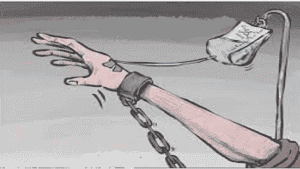
For many of those who work in the legal field, it was this development that made it all real. It quickly became clear that the novel coronavirus had the potential to spread quickly, and the confined space of a courtroom serves as ideal grounds for transmission.
Despite the coronavirus acting as a proverbial wrench in the gears of justice, the judicial system continues to putter along. This is largely due to increased utilization of technological tools like video/conferencing for court appearances and swearing of affidavits, and relaxing restrictions when it comes to fax/electronic filing of court documents.
Video conferencing isn’t new to the BC court system. As early as 2002, Judges across the province agreed that the technology improved procedural efficiency by facilitating witness testimony from distant locations and allowing interim appearances by video involving counsel from other jurisdictions. Judges also noted the value of video- conferencing for inmates at correctional centres – defeating the purpose of transferring multiple inmates from various correctional centres to various courthouses. The bottom line is that modernizing certain aspects of the criminal justice system makes sense financially and systemically – and events like COVID-19 demonstrate how it can have occupational benefits too.
At present, there is enormous value in modernizing certain judicial processes for two reasons – one, to limit face-to-face interactions between judicial staff, defence counsel and an Accused person, and two, to mitigate the consequences of what can only be described as colossal delay.
In reducing operations, the majority of criminal trials scheduled between March 18, 2020 and June 1, 2020, have been adjourned generally to dates in June and July, 2020. Cases that are deemed to be of an urgent nature will be able to proceed, although in a procedural sense, things will look different – for example, witnesses who would ordinarily appear before the Court to give evidence may be authorized to testify via video. For the most part, however, trials will proceed at a date that is likely much later than originally anticipated.

The situation is more grim for accused persons in custody awaiting their trial. Inmates are, of course, among the most vulnerable to contracting the novl coronavirus – a concern that was a topic of discussion before the courts closed – but didn’t really become part of the actual narrative until it was too late Trials for accused persons in custody have also been adjourned (for trials scheduled between March 23 and May 16, 2020). Sentencing hearings and bail hearings for accused persons will proceed. This could be positive – for some, it might result in their immediate release from the correctional system. For others, further incarceration for as little as an additional 90 days in custody will be devastating, a potential death sentence.
It is far too early to gauge how overwhelmed the court system will be at the return to business as usual – but when you consider that there was a huge backlog before COVID-19 shut it all down, it seems only reasonable that extreme measures – such as implementing night/weekend court, and permanently authorizing certain modernization measures – will need to be taken to truly return to normal.
by Jason Tarnow | Oct 16, 2018 | Crime, Media, Police, Politics, Social Media
On October 17, 2018, which is just 1 short day away, cannabis becomes legal across all of Canada.

Cannabis legalization marks a huge shift in public policy, law, and will propel an industry that has existed in the shadows, into the limelight. While both federal and provincial governments have been candidly saying that legalization will not be perfect right away and will be a work in progress, most Canadians are viewing legalization as a step in the right direction as so many lives have been negatively affected by cannabis prohibition.
So, what will happen on October 17? The naysayers want you to believe that there will be a proliferation of crime in the streets. Stoned zombies walking around town. A dramatic rise in impaired drivers. However those that are educated on the subject know that the sky won’t fall and society will continue to function just as it did today, on October 16. What will change is that the millions of cannabis consumers in Canada won’t have to worry about being arrested (if they stay within the parameters of the new cannabis laws) and communities that allow for retail sales will be able to collect millions in tax dollars that can be pumped right back into public programs and infrastructure.
For a variety of reasons, there remains a considerable stigma associated to cannabis consumption. However as time goes on and people realize the benefits that legalization will bring, I predict that the stigma erodes and that society will regard cannabis favorably.
by Jason Tarnow | Sep 29, 2017 | Crime, Legal Aid, Legal Rights, Police, Politics, Social Media, Wheels Of Justice
Impaired operation of a vehicle/vessel is illegal in British Columbia, the Yukon Territory, and really, across our entire nation. However, you may be surprised to learn that police agencies haven’t always exercised their discretion when determining what constitutes a “vessel”. We all know it is against the law to drive your motor vehicle while under the influence of alcohol, and common sense dictates that this also applies to motorcycles, and motorized boats – but did you know that it is (apparently) just as unlawful to knock back a few and go for a ride in your canoe?
Yes, the word “vessel” does not limit illegality to motorized methods of passage. Police agencies across Canada have been known to charge individuals for tipsy transport via canoe.
If you make the smart choice to ride your bicycle to/from the bar, and your swerving attracts the attention of police, you might be ticketed with public intoxication – but not impaired driving.
If you get caught canoeing down the Fraser River, you could potentially be charged with impaired operation of a vehicle/vessel – and if convicted, you would likely lose your driver’s license.
Even though you don’t need a license to operate a canoe, it probably isn’t smart to be drunk on the water. While you’re unlikely to harm anyone else, open water and alcohol don’t mix very well. You could end up paying big penalties for impaired operation of a canoe, the highest of which would be your life if you happen to fall overboard.
But, if you don’t heed my advice & find yourself being breathalyzed canoe-side – “thar she blows…. over .08”, contact our office to discuss your options.
We are conveniently located in Richmond, B.C. only a few steps away from Brighouse Station on the Canada Line, which brings you from various locations in Metro Vancouver in 20 minutes. We service all areas of the lower mainland (including but not limited to Surrey, New Westminster, Port Coquitlam, North Vancouver, and Abbotsford) the interior of B.C. (including but not limited to Cranbrook, Kelowna, Kamloops, and Salmon Arm), Northern B.C. (including but not limited to Prince George, Prince Rupert, and Quesnel) and in the Yukon Territory where we offer services in Whitehorse, Dawson City, and Old Crow. Contact our office today for your initial consultation.