by Jason Tarnow | Mar 5, 2020 | Crime, Criminal Attorney, Legal Aid, Police, Social Media, Wheels Of Justice
“No person is criminally responsible for an act committed or an omission made while suffering from a mental disorder that rendered the person incapable of appreciating the nature and quality of the act or omission or of knowing that it was wrong”
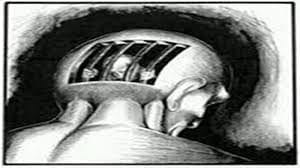
He was a student and Captain of Mount Royal University’s hockey team – but that changed on January 13, 2018, after taking a large dose of magic mushrooms.
Shortly after ingesting 4 grams of mushrooms at a house party, Matthew Brown took off all of his clothing and disappeared into the freezing night. Eventually, he came upon the home of a Mount Royal University professor that he had never met before. He broke into her home and beat her with a broken broom handle, leaving her with severe injuries. After leaving her residence, he broke into another home where he was eventually apprehended by the police.
On March 2, 2020, he was acquitted after mounting a successful defence of “non-insane automatism” resulting from severe self-intoxication.
Mr. Brown was acquitted and walked out of court a free man. His actions were found to be involuntary – but not by reason of mental disorder. His defence of non-insane automatism resulting from severe self-intoxication was only available after a pre-trial ruling in which a judge found that Section 33.1 of the Criminal Code, prohibiting self-intoxication as a defence, was unconstitutional.
Non-insane automatism and insane automatism both involve an Accused person that was unaware of the consequences of their actions at the time of the offence, and therefore could not form intent required to prosecute the offence.
In Mr. Brown’s case, his automatism ended when the effects of the drugs wore off, and he was left with no memory of the event. Since his actions were not attributed to a disease that would have recurring symptoms, a Not Criminally Responsible according to Mental Disorder (NCRMD) finding would have been inappropriate.
 A finding of NCRMD relates to automatism as a consequence of a mental disorder. Unlike automatism resulting from intoxication, it does not result in an acquittal. NCRMD is most commonly seen in cases where an Accused suffers from severe mental illness, such as schizophrenia. Across Canada, the number of Accused deemed NCRMD is small, however, media attention on these particular cases often results in public outrage.
After a judge has determined that an Accused is NCRMD, the case is usually handed over to the Review Board (governed by Province/Territory) where there are three possible outcomes:
- Absolute Discharge
- Conditional Discharge
- Detention in a hospital
While most cases do end up under the authority of the Review Board, the Court of hearing has the discretion to proceed to disposition if it feels appropriate in the circumstances. If the Court orders an Absolute Discharge (the only available option when the Accused has been found not to pose a significant risk to the public), the matter is concluded. If the Court orders a conditional discharge, or detention in a hospital, the Review Board must review the matter again with 90 days. In any circumstance, the Court or Review Board must impose whichever sentence is the least onerous and least restrictive on the Accused, all while balancing protection of the public and the interests, liberty and dignity of the Accused. There have been success stories, (which may again cause unnecessary alarm to the public) that demonstrate how effective rehabilitation of mentally ill offenders is far from hopeless. It is also important to note that the statistics surrounding NCRMD cases show that the prevalence of an NCRMD finding in relation to violent offences are low.
by Jason Tarnow | Feb 11, 2020 | Crime, Criminal Attorney, Media, Police, Riots, Social Media, Wheels Of Justice
“Not only is this a concern with the possibility of misidentifying someone and leading to wrongful convictions, it can also be very damaging to our society by being abused by law enforcement for things like constant surveillance of the public”
– Nicole Martin, Forbes contributor

Star Trek. Back to the Future. District 9. I, Robot. These are only a few examples of films that have relied on biometrics – more commonly referred to as Facial Recognition – as a theme for entertainment. All are fiction based and while you may have thought of biometrics as a tool used by elusive government agencies like the FBI and CIA, that isn’t the case at all. Advancements in biometric technology have been seized upon by various law enforcement and government agencies across Canada – creating serious concerns from privacy and civil liberty advocates, and of course, criminal defence counsel.
The Calgary Police Service began using Facial Recognition technology in 2014. The system they use, known as NeoFace Reveal, works by analyzing an uploaded image and translating it into a mathematical pattern known as an algorithm. The image is then logged in a database and used for comparison against other uploaded images.
The Toronto Police Service hopped on board too. They reported uploading 800,000 images into their Repository for Integrated Criminalistic Imaging, or RICI by 2018. Their use of biometrics began with a trial in 2014, and in 2018, the Service purchased a system at a cost of about $450,000. Between March and December of 2018, the Toronto Police Service ran 1,516 searches, with about 910 of those searches (or 60%) resulting in a potential match. Of those potential matches, approximately 728 people were identified (about 80%). There were no statistics provided in relation to ethnicity, age, or gender, however, research has raised concerns about disproportionate effects of biometrics as it relates to people of color.
Manitoba Police do not currently use biometric technology as an investigative tool, although the idea was floated around in 2019 after the commission of a report concerning growing crime rates in Winnipeg’s downtown core. The Provincial government in Manitoba went so far as to suggest that this technology could be used to identify violent behavior – which sounds a lot like active surveillance, an unethical use of biometrics, which demonstrates one of the most profound concerns surrounding use of this technology. And while it is only a matter of time until the Manitoba Police do use this technology, many retailers in the province are already using it.
At home here in British Columbia, the Vancouver Police Department denies using Facial Recognition technology as a mechanism to investigate crime – in fact, back in 2011, they turned down ICBC’s offer to assist in identifying suspects involved in the Vancouver Stanley Cup Riots with the aid of their software. The office of the BC Privacy Commissioner confirmed that any use of ICBC’s facial recognition data by the VPD would amount to a breach of privacy for its customers.The office of the Privacy Commissioner of Canada has been keeping track since at least 2013 – yet, there is little regulation of the use of biometrics in public and private sectors.
The same cannot be said for the RCMP in British Columbia, who, as recently as two weeks ago refused to confirm or deny use of biometrics as an investigative tool, but questions have been raised as to whether or not the RCMP is a client of Clearview AI, a facial recognition startup pioneered by US citizen Hoan Ton-That. Clearview’s work has not gone unnoticed – Facebook and Twitter have issued cease and desist letters, making it very clear that they do not support Clearview’s objectives. Google issued a cease and desist letter as well – however, their position on biometrics is fuzzy – especially since they are trying to make advancements in this area as well. So far, though, they have come under fire for their tactics and the results that have been generated.
The Canadian Government’s position on the use of biometrics is established on their website. When you submit your biometric information at Service Canada (for example), your information isn’t actually stored there, rather, it is sent to the Canadian Immigration Biometric Identification System, where it will remain for a period of 10 years. Further, your biometrics information will be shared with the United States, Australia, New Zealand and the United Kingdom. And yes – you can refuse to provide this information – but it will likely put a kink in your travel plans.

One important factor to consider about all of these agencies and their use of biometric technology is that this tool was never intended for use as active surveillance, or a method to intervene in incidents of crime in real-time. Whether it is a violent assault, sexual assault, theft under or over $5,000, murder or kidnapping, biometrics is an “after the fact” investigative mechanism. If used ethically and within parameters that preserve the privacy of all citizens 100% of the time, perhaps there would be no need for alarm – but that is incredibly unlikely. As more agencies begin to use this technology, the lack of regulatory oversight is bound to create an enormous pervasion of your privacy – and you may never know about it.
by Jason Tarnow | Sep 23, 2019 | Crime, Criminal Attorney, Legal Aid, Legal Rights, Police, Wheels Of Justice
Bill C-75 received Royal Assent on June 21, 2019. The Act amends the Criminal Code, the Youth Criminal Justice Act (“YCJA”), the Victim Surcharge Bill (C-28), the Exploitation and Trafficking in Persons Bill (Bill C-38), and the Unconstitutional provisions Bill (Bill C-39).
Lacking a comprehensive amendment since 1972, the bail provisions of the Criminal Code have been revised to address concerns that have been mounting for several decades. The Act seeks to simplify the judicial interim release process by expanding the conditions on which the police can release an Accused person, thereby making an appearance before a Justice unnecessary. The Act will also seek to reduce judicial delay by ensuring that release conditions are not redundant, unrealistic or overly complex, and that sureties are not overburdened.
If successful, the amendments relating to bail will result in fewer Administration of Justice Offences (“AOJO”) being brought before the Canadian courts. In any event, the Act has laid new framework by which these offences will be dealt with. Offences of this nature are offences that are “committed against the integrity of the justice system”, including but not limited to: failing to comply with bail conditions (no contact, no-go, abstinence alcohol/drugs to name a few), failure to appear in court, and breach of probation. Amendments to the Act provide that these offences will be directed to a judicial referral hearing when appropriate, as opposed to immediately laying a breach charge. At a judicial referring hearing, rather than focus on the guilt or innocence of the accused, the Judge will review the conditions imposed, and will decide how to proceed. Judicial referral hearings will not appear on a person’s criminal record – however, if a person does not appear for their hearing, the investigating police officer may use their discretion to either drop or proceed with the charge. Since Administration of Justice Offences account for about 4 out of every 10 incidents reported by police, removing these matters from the traditional court process will likely have a substantial impact on managing judicial delay.
The Act amends several portions of the YCJA. Firstly, it limits the conditions that can be placed on a young person upon their release from custody, in hopes of avoiding breaches that occur only due to unnecessarily rigid conditions. The intended result will be lower frequencies of Administration of Justice Offences. Additionally, prosecutors will no longer be obligated to consider an adult sentence for youth charged with serious violent offences, and are no longer obligated to bring that decision to the attention of the Court. The Crown will also not be obligated to consider an adult sentence for a youth convicted of a serious, violent offence.
In the interests of addressing delay, the Act has also removed certain elements of the judicial process, many of which could likely hinder an Accused person’s ability to make full answer and defence to the charges against them. Firstly, the Act restricts the availability of Preliminary Inquiries to offences that carry a maximum punishment of 14 years or more in prison (previously, any indictable offence could attract a Preliminary Hearing). Preliminary Hearings are an excellent opportunity for the Crown, Defence and Judge to assess the strength of the prosecution’s case. It assists with judicial case management, providing insight into the length of time required for witnesses to give their evidence, issues requiring a Voir Dire, and the number of days required for trial. In certain instances, it may also provide an opportunity for the defence to consider a resolution proposal, in circumstances where the evidence presented guides such a decision. Additionally, the Act permits Judges to limit the issues explored during a Prelim, and which witnesses may be called. It goes without saying that indictable matters aside from first degree murder and aggravated sexual assault are deserving of a Preliminary Hearing.
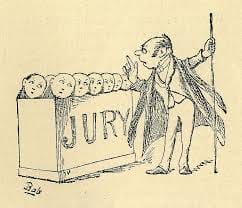
The Act also modifies the procedure for jury selection. Peremptory challenges, which allowed counsel to reject a potential juror without requiring a reason, have been abolished. There were serious concerns surrounding the misuse of peremptory challenges to ensure the jury was of a particular composition – one that would be adverse to the interests of the Accused.
The objective of the Act, broadly, is to reduce judicial delay by targeting and eliminating systemic flaws that impede the wheels of justice from turning as they should – but constitutional challenges are still to be expected.
If you’ve been charged with a criminal offence, it is crucial that you contact an experienced criminal lawyer without delay. We are conveniently located in Richmond, B.C., only a few steps away from Brighouse Station on the Canada Line, which brings you from various locations in Metro Vancouver in 20 minutes. We service all areas of the lower mainland (including but not limited to Surrey, New Westminster, Port Coquitlam, North Vancouver, and Abbotsford) the interior of B.C. (including but not limited to Cranbrook, Kelowna, Kamloops, and Salmon Arm), Northern B.C. (including but not limited to Prince George, Prince Rupert, and Quesnel) and in the Yukon Territory where we offer services in Whitehorse, Dawson City, Faro, Mayo, and Old Crow. Contact our office today to speak to a criminal defence lawyer without delay.
by Jason Tarnow | May 8, 2018 | Crime, Criminal Attorney
It seems like a done deal.
Legal cannabis will be in the hands of Canadians before the year is up, if, of course, Bill C-45 (the Cannabis Act) passes through its third and final reading in the Senate on June 7, 2018. Assuming it does, government approved retailers will begin stocking the sticky product sometime in late August or early September. With only a couple months to go, law enforcement officials are finalizing strategies to combat high drivers. While THC impairment screening devices are in the research and development stage, police forces will be relying on specially trained officers to identify drug impaired motorists.
These specially trained officers are known as “Drug Recognition Experts” (“DRE”), receiving the designation after completion of programming offered in jurisdictions spanning North America. Much like the preliminary steps taken in alcohol-impaired driving investigations, DRE’s make findings based whatever limited evidence is available at the time. For example, if a police constable forms reasonable suspicion of impairment by alcohol, the next step is to demand a breath sample on an Approved Screening Device. The result of that screening determines the officer’s next steps. In this context, the officer’s opinion regarding impairment is subjective only until the Approved Screening Device issues a reading. If the result is a “FAIL”, the officer can reasonably conclude that the driver is intoxicated. Discretion then allows the officer to issue an Immediate Roadside Prohibition (in British Columbia), or to continue the investigation with another breath test at the detachment, paving the way for criminal charges.
In the case of marijuana-impaired drivers, police lack one very important resource: sound, scientific instruments to test for THC levels. Forget the debate over what constitutes “impairment” from marijuana – we can’t make any use of an identifiable range when there is no quantifying tool.
Acknowledging this, the Government of Canada has attempted to soothe concerns by assuring the public that DRE’s are absolutely qualified, that their subjective opinions are sufficient, and that their judgement is sound. But, in reality, police officers are just normal people with a job to do, and are not in any way immune to making mistakes – but in their role, fallacy holds serious consequences for public confidence.
DRE procedure is both standardized and systemic, meaning that the techniques don’t change – regardless of circumstances. Aka, it is a “one size fits all” approach. Observation is the key focus of these investigations – DRE’s making note of a subject’s behavior, attitude, and candour throughout the process. Specific observations relating to blood pressure, pulse, and ocular activity are also recorded. Subjects are asked to perform “field tests” similar to those requested in alcohol impairment investigations – walk a straight line, stand on one leg, touch your nose, etc.
The key concern with this methodology is the blind faith in an officer’s ability to provide a subjective opinion that is free from bias. Interestingly, a blood or urine test to confirm toxicology is only requested after DRE has concluded (decided) that a driver is drug-impaired. So if you’re being investigated for such an offence, your best case scenario is to waste 2-3 hours at the police detachment under observation, plus further invasive testing, before the DRE establishes that you weren’t driving stoned – you were tired after a long night of work, just like you said.
If the Government chooses to develop an administrative penalty system for high drivers in the same way they did for alcohol impaired drivers, we are likely to see increased praise for police when fines from impounds and prohibitions come pouring in. Criminal lawyers in British Columbia are already cringing at the thought of another regime that strips individuals of their right to make full answer and defence to allegations against them – this time, in relation to drug offences, which can create significant problems for future travel and employment prospects.
If law enforcement’s strategy to protect our roadways involves unethical arrests, and even worse, false convictions, public perception of police integrity is sure to be compromised, and our progressive marijuana laws could end up doing more harm than good.
If you’ve been charged with drug impairment offences, it is crucial that you contact an experienced criminal lawyer without delay. We are conveniently located in Richmond, B.C., only a few steps away from Brighouse Station on the Canada Line, which brings you from various locations in Metro Vancouver in 20 minutes. We service all areas of the lower mainland (including but not limited to Surrey, New Westminster, Port Coquitlam, North Vancouver, and Abbotsford) the interior of B.C. (including but not limited to Cranbrook, Kelowna, Kamloops, and Salmon Arm), Northern B.C. (including but not limited to Prince George, Prince Rupert, and Quesnel) and in the Yukon Territory where we offer services in Whitehorse, Dawson City, and Old Crow. Contact our office today for your initial consultation.
by Jason Tarnow | Apr 10, 2018 | Crime, Criminal Attorney, Legal Rights, Police, Wheels Of Justice
 On March 29, 2018, Bill C-75 had its first reading in the House of Commons, and upon publication, was quick to receive scrutiny from lawyers across the country.
The Bill seeks to amend provisions of several key pieces of legislation, including the Criminal Code and the Youth Criminal Justice Act. However, in doing so, many rights currently afforded to an Accused will become a thing of the past.
The first major concern that stands out is the proposal to abolish the use of peremptory challenges in the jury selection process. When jurors are being selected, an Accused person and his Defence counsel are afforded 12 of these challenges, permitting them to deny a juror without explanation. Crown Counsel also has 12 challenges for their own use. The purpose of peremptory challenges is to provide balance in the adversarial trial process – however, the motivation behind their use differs depending on who you ask. The Bill doesn’t elaborate on how jury selection will be managed without peremptory challenges.
Equally alarming is the proposal to deny Preliminary Hearings for offences that don’t carry a maximum term of life imprisonment upon conviction. It is also being suggested that Justices be given power to limit issues examined and witnesses called during a Prelim. The Preliminary Hearing’s purpose is to determine whether the Crown has enough evidence to commit an Accused person to stand Trial, a valuable tool for the Defence in any given case (even if the offence doesn’t carry a potential life sentence). However, it isn’t beneficial only to the Accused. The evidence heard at a Preliminary Hearing is transcribed, to be recalled upon by parties at Trial. The issues explored at the Prelim can assist in narrowing what issues will be raised at trial, which in return reduces the likelihood of wasted court time on irrelevant issues (especially important in consideration of the impact of delay!). With the ability to seek a Direct Indictment from the Attorney General, the proposal to limit Prelims is wholly unnecessary.
Next up, and not surprisingly, we see this Bill seek to increase punitive measures for Accused persons facing allegations of abuse against an intimate partner. These consequences begin prior to any finding of guilt – in fact, they begin at the onset of proceedings, when an Accused person seeks release on bail. Bill C-75 suggests more “onerous interim release requirements” for individuals facing allegations relating to violence against an intimate partner. This essentially means that the terms of release will be increasingly stringent. On that note, the Bill also proposes to increase the maximum term of imprisonment for repeat intimate abuse offenders, and to have violence against a partner considered an aggravating factor at
sentencing.

Perhaps most disturbing is the revision relating to police powers and written evidence in the form of an Affidavit. Currently, a police officer is required to attend a trial in person to give oral evidence regarding their involvement in the case. They are subjected to cross-examination on that involvement, at which time they must truthfully answer questions posed by the Defence. This is a crucial opportunity for the Defence to raise reasonable doubt (when considering that police officers often offer the most compelling and credible evidence) which is the only reason for taking a matter to trial. Of course, the Defence will still be allowed to apply to cross-examine a police officer on their written evidence – but that application requires additional court time, and one struggles to believe that such an application would be denied in any event. So this proposed amendment will likely result in additional delay and squandered court time.
Many of these amendments strike at the heart of the adversarial process, and an Accused’s person’s right to make full answer and Defence to the charges against them. Numerous changes are procedural, justified by the assertion that too many cases are being thrown out over judicial delay. Systemic flaws, a lack of inquiry and input by judicial staff, and failure to accept and validate the concerns of concerned legal professionals in the private sector are a few of the factors that have resulted in impractical proposals pushed forward in Bill C-75.
by Jason Tarnow | Jul 20, 2017 | Crime, Criminal Attorney, Legal Rights, Politics, Social Media, Uncategorized, Wheels Of Justice
 It is commonplace that first-time offenders rarely have a good understanding of the judicial process. Although it would be fantastic if everyone was fully apprised of their rights and obligations under Canadian law, it is unrealistic. However, I hope that this post will answer a few very common questions we receive on a daily basis.
Lets get started.
Q – I’m looking at my Court documents, and it appears that I am being charged by someone named Regina. Who is she? I don’t even know anyone by that name?
A – Regina is the latin word for Queen. As Queen Elizabeth II is the reigning Monarch, Regina is the term used in legal context. When a male takes the throne, the term will change to Rex, the latin word for King.
Q – My wife and I got into a really heated argument and the police were called. I was arrested and charged with assault, and now there is a no-contact order between us. My wife and I met for dinner last night to talk things over, and we agreed that it was silly to call the police. She would like to drop the charges, how can she do this?
A – In British Columbia, individuals do not press charges, and neither do the police. The police investigate, prepare a report, and recommend charges to Crown Counsel. Crown Counsel then reviews the information and approves or denies charges based on the strength of the evidence. There must be a reasonable likelihood of conviction to pursue prosecution. In short, your wife cannot “drop the charges”. Additionally, since there is a no contact order in place, you cannot contact your wife, directly or indirectly, until the order is lifted. Ignoring the no contact order could result in a Breach charge, landing you in jail.
Q – I’ve been charged with an Indictable Offence. Is that a misdemeanor?
A – The terms “misdemeanor” and “felony” are not rooted in Canada. Those terms are used in the United States. An indictable offence is very serious and carries significantly higher penalties than the less serious “summary offence”. One major difference is that summary offences can only be tried in Provincial Court by a Judge, whereas indictable offences can be tried in Supreme Court by a Judge an Jury. There are also “hybrid offences” which can be prosecuted by summary or indictment – impaired driving is one example. The choice to proceed by indictment is usually because of aggravating circumstances such as a car accident resulting in injuries.
Q – I was arrested for impaired driving and given a Promise to Appear (“PTA”). Several weeks later, I was contacted by the police who told me that the PTA has been cancelled. Does this mean my charges are dropped?
A – In short: no. Your PTA was likely cancelled because the police and Crown Counsel are still in the early stages of their investigation. Once an Accused person has attended their First Appearance, the judicial-delay clock starts ticking. The Supreme Court of Canada recently advised that proceedings in Provincial Court should run from start to finish in no more than 18 months – this means that you must be charged, and proceed to trial within 18 months. If the proceedings take longer than 18 months to be heard, there is probability for the case to be thrown out due to delay. In Superior courts, the proceedings should be completed within 30 months. So, while your PTA has been cancelled, it does not in any way mean that you are off the hook. There is no statute in Canada that prohibits the commencement of prosecution of criminal offences. In the United States, there is no statute of limitations on murder, but there is on sexual assaults and other serious criminal offences.
Hopefully the above information has answered a few of your questions, but likely not all of them. Of course, there are many complex questions that deserve a much more thorough explanation, and we are here ready to answer them.
Whether you have been charged with a minor offence under the Criminal Code such as theft under $5,000, assault, mischief under $5,000 or a more serious offence such as aggravated assault, sexual assault, assault causing bodily harm, or murder, it is crucial that you speak to one of our lawyers prior to making any statements to the police (which we will advise you not to do in any event), or anyone else for that matter. Because, although you’ll hear it from the cops first, I’m telling you again: what you say CAN and WILL be used against you.
We are conveniently located in Richmond, B.C. only a few steps away from Brighouse Station on the Canada Line, which brings you from various locations in Metro Vancouver in 20 minutes. We service all areas of the lower mainland (including but not limited to Surrey, New Westminster, Port Coquitlam, North Vancouver, and Abbotsford) the interior of B.C. (including but not limited to Cranbrook, Kelowna, Kamloops, and Salmon Arm), Northern B.C. (including but not limited to Prince George, Prince Rupert, and Quesnel) and in the Yukon Territory where we offer services in Whitehorse, Dawson City, and Old Crow.