by Jason Tarnow | Sep 23, 2019 | Crime, Criminal Attorney, Legal Aid, Legal Rights, Police, Wheels Of Justice
Bill C-75 received Royal Assent on June 21, 2019. The Act amends the Criminal Code, the Youth Criminal Justice Act (“YCJA”), the Victim Surcharge Bill (C-28), the Exploitation and Trafficking in Persons Bill (Bill C-38), and the Unconstitutional provisions Bill (Bill C-39).
Lacking a comprehensive amendment since 1972, the bail provisions of the Criminal Code have been revised to address concerns that have been mounting for several decades. The Act seeks to simplify the judicial interim release process by expanding the conditions on which the police can release an Accused person, thereby making an appearance before a Justice unnecessary. The Act will also seek to reduce judicial delay by ensuring that release conditions are not redundant, unrealistic or overly complex, and that sureties are not overburdened.
If successful, the amendments relating to bail will result in fewer Administration of Justice Offences (“AOJO”) being brought before the Canadian courts. In any event, the Act has laid new framework by which these offences will be dealt with. Offences of this nature are offences that are “committed against the integrity of the justice system”, including but not limited to: failing to comply with bail conditions (no contact, no-go, abstinence alcohol/drugs to name a few), failure to appear in court, and breach of probation. Amendments to the Act provide that these offences will be directed to a judicial referral hearing when appropriate, as opposed to immediately laying a breach charge. At a judicial referring hearing, rather than focus on the guilt or innocence of the accused, the Judge will review the conditions imposed, and will decide how to proceed. Judicial referral hearings will not appear on a person’s criminal record – however, if a person does not appear for their hearing, the investigating police officer may use their discretion to either drop or proceed with the charge. Since Administration of Justice Offences account for about 4 out of every 10 incidents reported by police, removing these matters from the traditional court process will likely have a substantial impact on managing judicial delay.
The Act amends several portions of the YCJA. Firstly, it limits the conditions that can be placed on a young person upon their release from custody, in hopes of avoiding breaches that occur only due to unnecessarily rigid conditions. The intended result will be lower frequencies of Administration of Justice Offences. Additionally, prosecutors will no longer be obligated to consider an adult sentence for youth charged with serious violent offences, and are no longer obligated to bring that decision to the attention of the Court. The Crown will also not be obligated to consider an adult sentence for a youth convicted of a serious, violent offence.
In the interests of addressing delay, the Act has also removed certain elements of the judicial process, many of which could likely hinder an Accused person’s ability to make full answer and defence to the charges against them. Firstly, the Act restricts the availability of Preliminary Inquiries to offences that carry a maximum punishment of 14 years or more in prison (previously, any indictable offence could attract a Preliminary Hearing). Preliminary Hearings are an excellent opportunity for the Crown, Defence and Judge to assess the strength of the prosecution’s case. It assists with judicial case management, providing insight into the length of time required for witnesses to give their evidence, issues requiring a Voir Dire, and the number of days required for trial. In certain instances, it may also provide an opportunity for the defence to consider a resolution proposal, in circumstances where the evidence presented guides such a decision. Additionally, the Act permits Judges to limit the issues explored during a Prelim, and which witnesses may be called. It goes without saying that indictable matters aside from first degree murder and aggravated sexual assault are deserving of a Preliminary Hearing.
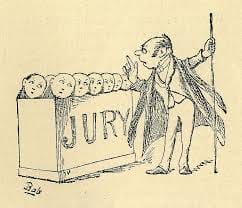
The Act also modifies the procedure for jury selection. Peremptory challenges, which allowed counsel to reject a potential juror without requiring a reason, have been abolished. There were serious concerns surrounding the misuse of peremptory challenges to ensure the jury was of a particular composition – one that would be adverse to the interests of the Accused.
The objective of the Act, broadly, is to reduce judicial delay by targeting and eliminating systemic flaws that impede the wheels of justice from turning as they should – but constitutional challenges are still to be expected.
If you’ve been charged with a criminal offence, it is crucial that you contact an experienced criminal lawyer without delay. We are conveniently located in Richmond, B.C., only a few steps away from Brighouse Station on the Canada Line, which brings you from various locations in Metro Vancouver in 20 minutes. We service all areas of the lower mainland (including but not limited to Surrey, New Westminster, Port Coquitlam, North Vancouver, and Abbotsford) the interior of B.C. (including but not limited to Cranbrook, Kelowna, Kamloops, and Salmon Arm), Northern B.C. (including but not limited to Prince George, Prince Rupert, and Quesnel) and in the Yukon Territory where we offer services in Whitehorse, Dawson City, Faro, Mayo, and Old Crow. Contact our office today to speak to a criminal defence lawyer without delay.
by Jason Tarnow | Oct 16, 2018 | Crime, Media, Police, Politics, Social Media
On October 17, 2018, which is just 1 short day away, cannabis becomes legal across all of Canada.

Cannabis legalization marks a huge shift in public policy, law, and will propel an industry that has existed in the shadows, into the limelight. While both federal and provincial governments have been candidly saying that legalization will not be perfect right away and will be a work in progress, most Canadians are viewing legalization as a step in the right direction as so many lives have been negatively affected by cannabis prohibition.
So, what will happen on October 17? The naysayers want you to believe that there will be a proliferation of crime in the streets. Stoned zombies walking around town. A dramatic rise in impaired drivers. However those that are educated on the subject know that the sky won’t fall and society will continue to function just as it did today, on October 16. What will change is that the millions of cannabis consumers in Canada won’t have to worry about being arrested (if they stay within the parameters of the new cannabis laws) and communities that allow for retail sales will be able to collect millions in tax dollars that can be pumped right back into public programs and infrastructure.
For a variety of reasons, there remains a considerable stigma associated to cannabis consumption. However as time goes on and people realize the benefits that legalization will bring, I predict that the stigma erodes and that society will regard cannabis favorably.
by Jason Tarnow | Jul 19, 2018 | Crime, Legal Rights, Media, Social Media, Uncategorized
In early July, the BCSPCA announced charges against Mr. Hopcraft under the Prevention of Cruelty to Animals Act and the Veterinarians Act after viewing a video posted on Mr. Hopcraft’s “Wild Education” Facebook page showing him relieving a blood python of a bowel obstruction.
Contrary to what the BCSPCA has alleged, this procedure did not cause the python any harm, pain, nor discomfort. In fact, the python was relieved of a 6-month build up of excrement in its bowel track, which was surely causing it incredible discomfort.
Today, the python is alive and well, as confirmed by its happy owners.
While Mr. Hopcraft takes these charges very seriously, we take the position that this is nothing more than the BCSPCA’s attempt to, once again, slander Mr. Hopcraft in the Court of Public Opinion and try to put him out of business.
As many of you know, Mr. Hopcraft has considerable knowledge and more than 18-years experience in handling and caring for exotic animals. For years, Mr. Hopcraft has been educating the general public on television, in your children’s schools, and at your community events. Over these years, Mr. Hopcraft has consistently demonstrated that his primary objective is to ensure the well-being of his animals, many of which come to him as neglected or abandoned pets.
Furthermore, since the BCSPCA publicly announced charges against Mr. Hopcraft, numerous veterinarians in British Columbia have reached out and denounced the BCSPCA’s allegations towards him. Their consensus is that the python suffered no harm, and that if the python were to be sedated in any way (which the BCSPCA suggested ought to have happened) that the python could have experienced complications and/or died.
Mr. Hopcraft will meet these charges in a court of law and until his trial date he is to be presumed innocent.
Finally, Mr. Hopcraft, and his Wild Education organization, will proudly continue to care for its animals and he looks forward to continuing to educate you all about them.
Jason Tarnow
Legal Counsel to Michael Hopcraft
by Jason Tarnow | May 8, 2018 | Crime, Criminal Attorney
It seems like a done deal.
Legal cannabis will be in the hands of Canadians before the year is up, if, of course, Bill C-45 (the Cannabis Act) passes through its third and final reading in the Senate on June 7, 2018. Assuming it does, government approved retailers will begin stocking the sticky product sometime in late August or early September. With only a couple months to go, law enforcement officials are finalizing strategies to combat high drivers. While THC impairment screening devices are in the research and development stage, police forces will be relying on specially trained officers to identify drug impaired motorists.
These specially trained officers are known as “Drug Recognition Experts” (“DRE”), receiving the designation after completion of programming offered in jurisdictions spanning North America. Much like the preliminary steps taken in alcohol-impaired driving investigations, DRE’s make findings based whatever limited evidence is available at the time. For example, if a police constable forms reasonable suspicion of impairment by alcohol, the next step is to demand a breath sample on an Approved Screening Device. The result of that screening determines the officer’s next steps. In this context, the officer’s opinion regarding impairment is subjective only until the Approved Screening Device issues a reading. If the result is a “FAIL”, the officer can reasonably conclude that the driver is intoxicated. Discretion then allows the officer to issue an Immediate Roadside Prohibition (in British Columbia), or to continue the investigation with another breath test at the detachment, paving the way for criminal charges.
In the case of marijuana-impaired drivers, police lack one very important resource: sound, scientific instruments to test for THC levels. Forget the debate over what constitutes “impairment” from marijuana – we can’t make any use of an identifiable range when there is no quantifying tool.
Acknowledging this, the Government of Canada has attempted to soothe concerns by assuring the public that DRE’s are absolutely qualified, that their subjective opinions are sufficient, and that their judgement is sound. But, in reality, police officers are just normal people with a job to do, and are not in any way immune to making mistakes – but in their role, fallacy holds serious consequences for public confidence.
DRE procedure is both standardized and systemic, meaning that the techniques don’t change – regardless of circumstances. Aka, it is a “one size fits all” approach. Observation is the key focus of these investigations – DRE’s making note of a subject’s behavior, attitude, and candour throughout the process. Specific observations relating to blood pressure, pulse, and ocular activity are also recorded. Subjects are asked to perform “field tests” similar to those requested in alcohol impairment investigations – walk a straight line, stand on one leg, touch your nose, etc.
The key concern with this methodology is the blind faith in an officer’s ability to provide a subjective opinion that is free from bias. Interestingly, a blood or urine test to confirm toxicology is only requested after DRE has concluded (decided) that a driver is drug-impaired. So if you’re being investigated for such an offence, your best case scenario is to waste 2-3 hours at the police detachment under observation, plus further invasive testing, before the DRE establishes that you weren’t driving stoned – you were tired after a long night of work, just like you said.
If the Government chooses to develop an administrative penalty system for high drivers in the same way they did for alcohol impaired drivers, we are likely to see increased praise for police when fines from impounds and prohibitions come pouring in. Criminal lawyers in British Columbia are already cringing at the thought of another regime that strips individuals of their right to make full answer and defence to allegations against them – this time, in relation to drug offences, which can create significant problems for future travel and employment prospects.
If law enforcement’s strategy to protect our roadways involves unethical arrests, and even worse, false convictions, public perception of police integrity is sure to be compromised, and our progressive marijuana laws could end up doing more harm than good.
If you’ve been charged with drug impairment offences, it is crucial that you contact an experienced criminal lawyer without delay. We are conveniently located in Richmond, B.C., only a few steps away from Brighouse Station on the Canada Line, which brings you from various locations in Metro Vancouver in 20 minutes. We service all areas of the lower mainland (including but not limited to Surrey, New Westminster, Port Coquitlam, North Vancouver, and Abbotsford) the interior of B.C. (including but not limited to Cranbrook, Kelowna, Kamloops, and Salmon Arm), Northern B.C. (including but not limited to Prince George, Prince Rupert, and Quesnel) and in the Yukon Territory where we offer services in Whitehorse, Dawson City, and Old Crow. Contact our office today for your initial consultation.
by Jason Tarnow | Apr 10, 2018 | Crime, Criminal Attorney, Legal Rights, Police, Wheels Of Justice
 On March 29, 2018, Bill C-75 had its first reading in the House of Commons, and upon publication, was quick to receive scrutiny from lawyers across the country.
The Bill seeks to amend provisions of several key pieces of legislation, including the Criminal Code and the Youth Criminal Justice Act. However, in doing so, many rights currently afforded to an Accused will become a thing of the past.
The first major concern that stands out is the proposal to abolish the use of peremptory challenges in the jury selection process. When jurors are being selected, an Accused person and his Defence counsel are afforded 12 of these challenges, permitting them to deny a juror without explanation. Crown Counsel also has 12 challenges for their own use. The purpose of peremptory challenges is to provide balance in the adversarial trial process – however, the motivation behind their use differs depending on who you ask. The Bill doesn’t elaborate on how jury selection will be managed without peremptory challenges.
Equally alarming is the proposal to deny Preliminary Hearings for offences that don’t carry a maximum term of life imprisonment upon conviction. It is also being suggested that Justices be given power to limit issues examined and witnesses called during a Prelim. The Preliminary Hearing’s purpose is to determine whether the Crown has enough evidence to commit an Accused person to stand Trial, a valuable tool for the Defence in any given case (even if the offence doesn’t carry a potential life sentence). However, it isn’t beneficial only to the Accused. The evidence heard at a Preliminary Hearing is transcribed, to be recalled upon by parties at Trial. The issues explored at the Prelim can assist in narrowing what issues will be raised at trial, which in return reduces the likelihood of wasted court time on irrelevant issues (especially important in consideration of the impact of delay!). With the ability to seek a Direct Indictment from the Attorney General, the proposal to limit Prelims is wholly unnecessary.
Next up, and not surprisingly, we see this Bill seek to increase punitive measures for Accused persons facing allegations of abuse against an intimate partner. These consequences begin prior to any finding of guilt – in fact, they begin at the onset of proceedings, when an Accused person seeks release on bail. Bill C-75 suggests more “onerous interim release requirements” for individuals facing allegations relating to violence against an intimate partner. This essentially means that the terms of release will be increasingly stringent. On that note, the Bill also proposes to increase the maximum term of imprisonment for repeat intimate abuse offenders, and to have violence against a partner considered an aggravating factor at
sentencing.
Perhaps most disturbing is the revision relating to police powers and written evidence in the form of an Affidavit. Currently, a police officer is required to attend a trial in person to give oral evidence regarding their involvement in the case. They are subjected to cross-examination on that involvement, at which time they must truthfully answer questions posed by the Defence. This is a crucial opportunity for the Defence to raise reasonable doubt (when considering that police officers often offer the most compelling and credible evidence) which is the only reason for taking a matter to trial. Of course, the Defence will still be allowed to apply to cross-examine a police officer on their written evidence – but that application requires additional court time, and one struggles to believe that such an application would be denied in any event. So this proposed amendment will likely result in additional delay and squandered court time.
Many of these amendments strike at the heart of the adversarial process, and an Accused’s person’s right to make full answer and Defence to the charges against them. Numerous changes are procedural, justified by the assertion that too many cases are being thrown out over judicial delay. Systemic flaws, a lack of inquiry and input by judicial staff, and failure to accept and validate the concerns of concerned legal professionals in the private sector are a few of the factors that have resulted in impractical proposals pushed forward in Bill C-75.