by Jason Tarnow | Sep 3, 2026 | Crime, Police
In June, the Supreme Court of Canada released R. v. Berg, 2026 SCC 21, and every criminal defence lawyer in BC should have it bookmarked. The decision tackles a question I confront constantly in my Vancouver practice: in a trial that comes down to two conflicting accounts — the complainant’s word against the accused’s — how does a judge decide without turning the trial into a credibility contest?
The answer, the Court confirmed unanimously, is that a judge never simply picks the more believable witness. A conviction must rest on proof beyond a reasonable doubt, assessed against the whole of the evidence. Preferring one account over another is not enough.
That may sound like a truism. It isn’t. As Berg shows, appellate courts are still catching trial judges who slide — sometimes subtly — from “I believe the complainant” to “therefore the accused is guilty.” For anyone facing sexual assault charges in British Columbia or the Yukon, this decision matters.
Key Takeaways
- In R. v. Berg, 2026 SCC 21, a unanimous Supreme Court confirmed that convictions must rest on proof beyond a reasonable doubt — never on merely preferring the complainant’s testimony over the accused’s.
- The Court reined in R. v. J.J.R.D. (2006), 218 O.A.C. 37, in which Ontario case trial judges have long used when resolving conflicting testimony, holding it should generally not be relied on when assessing an accused person’s evidence.
- The classic framework from R. v. W.(D.), [1991] 1 S.C.R. 742 remains the governing approach: even if the accused’s evidence is rejected, the Crown’s case must still prove guilt beyond a reasonable doubt.
- Paired with R. v. Kinamore, 2025 SCC 19 — a BC appeal — the Supreme Court has now issued two significant sexual assault rulings in twelve months, both reinforcing procedural fairness for the accused.
- How a trial judge structures their credibility reasons is now fertile ground for appellate review in “word against word” cases.
What Happened in R. v. Berg
The facts were, in one sense, unremarkable — which is exactly why the case is so important. Mr. Berg met the complainant when he checked into the hotel where she worked. They exchanged contact information, stayed in touch, and she accepted an invitation to his room after her shift. She testified that he sexually assaulted her; he testified the intercourse was consensual. There was no third witness and no decisive physical evidence. The trial turned entirely on testimony.
The trial judge accepted the complainant’s evidence, rejected Mr. Berg’s account, and convicted him of sexual assault under s. 271 of the Criminal Code. A majority of the Saskatchewan Court of Appeal upheld the conviction (2025 SKCA 85), but a dissenting judge would have ordered a new trial, concluding that the trial judge failed to properly grapple with inconsistencies in the complainant’s evidence about her alcohol and marijuana consumption. That dissent gave Mr. Berg an appeal as of right to the Supreme Court.
The Supreme Court dismissed the appeal — the conviction stands — but its reasons deliver guidance that will shape trials for years.

The J.J.R.D. Problem: How Courts Drifted Toward Credibility Contests
For nearly two decades, trial judges across Canada have leaned on R. v. J.J.R.D. (2006), 218 O.A.C. 37, an Ontario Court of Appeal decision, when explaining why they rejected an accused’s testimony. The case was routinely cited for the proposition that a judge may reject an accused’s uncontradicted evidence based on a “considered and reasoned acceptance” of the complainant’s conflicting account.
In Berg, the Supreme Court clarified that J.J.R.D. was really about something narrower: whether a trial judge’s reasons were detailed enough to permit appellate review. The Court held that trial judges should generally not rely on J.J.R.D.when assessing an accused person’s evidence or instructing a jury. Used incorrectly, it wrongly suggests a judge can reject the accused’s evidence simply because the judge accepts the complainant’s — a shortcut that inverts the burden of proof.
This is not an academic quibble. In my practice, I have read countless trial rulings where the reasoning ran, in substance: “The complainant was credible. I accept her evidence. It follows that I reject the accused’s denial.” Berg confirms that this chain of reasoning, standing alone, is an error of law.
W.(D.) Still Governs: The Three-Step Framework
The bedrock remains R. v. W.(D.), [1991] 1 S.C.R. 742. The framework, familiar to every criminal lawyer in British Columbia, asks three questions where the accused testifies:
- If you believe the accused’s evidence, you must acquit.
- Even if you do not believe it, if it leaves you with a reasonable doubt, you must acquit.
- Even if the accused’s evidence does not raise a doubt, you must ask whether, on the evidence you do accept, the Crown has proven guilt beyond a reasonable doubt.
Berg reinforces that the third step is not a formality. The accused’s account must be considered against the totality of the evidence — not dismissed as the automatic by-product of believing the complainant. Notably, the Court found the trial judge in Berg did exactly what the law requires: he assessed Mr. Berg’s account in light of all the evidence before convicting. The conviction survived because the reasoning was sound, not because the complainant was preferred.
Berg and Kinamore: A Pattern at the Supreme Court
Berg does not stand alone. A year earlier, in R. v. Kinamore, 2025 SCC 19 — an appeal from our own BC courts — the Supreme Court unanimously quashed a sexual assault conviction and ordered a new trial. Kinamore held that evidence of a complainant’s sexual history, including sexual inactivity, is presumptively inadmissible under the principles animating s. 276 of the Criminal Code, and that the Crown must clear the same voir dire hurdle as the defence before leading it.
Read together, the two decisions send a consistent message: sexual assault trials are governed by rules of evidence and proof that protect both complainants and accused persons, and neither side gets a shortcut. For defence counsel, they are complementary tools — Kinamore polices what evidence gets in; Berg polices how the judge reasons once it is in.
What This Means for Accused Persons in BC and the Yukon
If you are charged with sexual assault in British Columbia, the odds are high that your trial will look like Berg’s: two accounts, no independent eyewitness, and a verdict that turns on testimony. Here is what a criminal defence lawyer in BC will be examining after this decision:
The structure of the judge’s reasons. In a judge-alone trial — the norm for s. 271 prosecutions in BC Provincial Court, where the Crown often proceeds by indictment but the accused elects trial by provincial court judge — the written or oral reasons must show that the accused’s evidence was weighed against the whole record. Reasons that leap from accepting the complainant to rejecting the accused are now squarely vulnerable on appeal.
Jury instructions. Where the trial is in the BC Supreme Court before a jury, defence counsel will scrutinize the charge to ensure the jury was not directed in a way that invites a credibility contest. Berg says J.J.R.D. language does not belong in jury instructions.
Inconsistencies in the Crown’s evidence. The dissent below focused on the complainant’s inconsistent statements about intoxication. While Mr. Berg ultimately lost, the case confirms that material inconsistencies must be genuinely analyzed — not waved away — when the judge assesses whether the Crown has met its burden.
Preserved appeal routes. Berg reached the Supreme Court because of a dissent in the provincial appeal court. It is a reminder that a strong appellate record starts at trial: objections to reasoning shortcuts, requests for particularized credibility findings, and careful cross-examination all preserve issues for review.
None of this is legal advice about any particular case — the factors above are what counsel examines, and every file turns on its own facts.
Why Experienced Counsel Matters in “Word Against Word” Trials
Cases like Berg are won and lost in the details: how cross-examination exposes inconsistency without alienating the trier of fact, whether evidentiary applications under ss. 276 and 278.92 to 278.94 of the Criminal Code are properly brought or resisted, and whether the trial record positions the defence for appeal if a conviction follows. These are craft skills built through years of trial work — precisely the kind of trials I have defended across sexual offence and assault files in Vancouver and throughout BC and the Yukon.
Frequently Asked Questions
Can I be convicted of sexual assault just because the judge believes the complainant more than me?
No. R. v. Berg, 2026 SCC 21 confirms that a conviction cannot rest on merely preferring the complainant’s account. The Crown must prove guilt beyond a reasonable doubt on the whole of the evidence, and the judge must explain why your evidence, considered against that record, did not raise a doubt.
What is the W.(D.) framework?
It is the three-step approach from R. v. W.(D.), [1991] 1 S.C.R. 742: acquit if you believe the accused; acquit if the accused’s evidence leaves a reasonable doubt; and even if it does not, convict only if the evidence you accept proves guilt beyond a reasonable doubt.
Does R. v. Berg apply in British Columbia?
Yes. Supreme Court of Canada decisions bind every court in Canada, including the BC Provincial Court, BC Supreme Court, BC Court of Appeal, and the Yukon courts.
Can a conviction be appealed if the trial judge’s credibility reasoning was flawed?
Potentially. Flawed credibility reasoning — such as rejecting the accused’s evidence solely because the complainant was believed — can be an error of law supporting an appeal. Strict deadlines apply, so speak to a criminal defence lawyer promptly.
What should I do if I’m charged with sexual assault in BC?
Exercise your right to silence, do not contact the complainant, and retain experienced defence counsel before your first court appearance. Early decisions — including Crown election, bail conditions, and evidentiary applications — can shape the entire case.
This article is general legal information, not legal advice, and reading it does not create a solicitor-client relationship. Sexual assault allegations carry serious consequences, and every case turns on its own facts. If you are facing charges, retain qualified defence counsel without delay.
by Jason Tarnow | Jul 14, 2026 | Crime, Criminal Attorney, Legal Rights, Police, Wheels Of Justice
As a Vancouver criminal defence lawyer with years of experience navigating the complexities of Canadian criminal law in British Columbia courts, I’ve seen firsthand how legislative changes can reshape the justice system. With the Bail and Sentencing Reform Act (Bill C-14) now law and set to take effect on July 15, 2026, we’re on the cusp of significant shifts in how bail hearings and sentencing proceed across Canada, particularly here in Vancouver where issues like organized crime, auto theft, and repeat offending hit close to home.
This timely reform arrives amid ongoing public concerns about community safety in BC. In this post, I’ll break down the key changes in Bill C-14, their legal context, and what they mean for defendants, practitioners, and the broader criminal justice landscape in Vancouver and beyond.

The Road to Bill C-14: Context in Canadian Criminal Law
Bill C-14 introduces over 80 targeted amendments to the Criminal Code, the Youth Criminal Justice Act, and related statutes. It responds to calls from law enforcement, provinces (including BC), and victims’ advocates for stricter measures against violent and repeat offenders, while aiming to maintain Charter protections.
Historically, Canadian bail law has been guided by principles from the Supreme Court of Canada, such as in R. v. Antic (2017), which emphasized the “ladder principle” (least onerous conditions) and the “principle of restraint” favoring release where appropriate. The Charter’s section 11(e) guarantees the right not to be denied reasonable bail without just cause. Sentencing has balanced denunciation, deterrence, rehabilitation, and proportionality under section 718 of the Criminal Code.
Bill C-14 refines these without fully upending them, but it tilts the balance toward public safety in specific high-risk scenarios. As reforms come into force this week, defence counsel in Vancouver must adapt quickly.
Key Changes to Bail Laws: Harder for Repeat and Violent Offenders
One of the most impactful areas is bail. Bill C-14 expands reverse onus provisions, where the accused must demonstrate why release is justified rather than the Crown proving detention is necessary. New or expanded reverse onuses now apply to:
- Break and enter of a dwelling-house.
- Trafficking in persons and human smuggling.
- Assaults and sexual assaults involving choking, suffocation, or strangulation.
- Extortion involving violence.
- Serious violent offences where the accused has two or more prior similar convictions.
- Expansion of the prior conviction window from 5 to 10 years for certain weapon-related violence.
Courts must now consider additional factors, such as random or unprovoked violence, the number and seriousness of outstanding charges (enhancing the tertiary ground for detention), and specific conditions like weapons prohibitions for extortion and organized crime cases. The “ladder principle” is clarified not to apply in reverse onus situations, and certain prior serious offenders are restricted from acting as sureties.
For Vancouver practitioners, this means more rigorous bail plans are essential. In BC Supreme Court or Provincial Court hearings, we’ll need to present compelling evidence addressing public safety risks—perhaps through enhanced surety supervision, electronic monitoring, or treatment programs. Clients facing auto theft, home invasion, or organized crime charges (prevalent in the Lower Mainland) will face heightened scrutiny.
Sentencing Reforms: Tougher Consequences and Consecutive Terms
On the sentencing side, Bill C-14 introduces or expands aggravating factors for crimes against first responders, public transit workers, organized retail theft, and interference with essential infrastructure (e.g., copper theft). Judges must prioritize denunciation and deterrence for repeat violent auto theft and break-and-enter. Consecutive sentences are mandated or strongly considered in cases like extortion paired with arson, or multiple violent offences.
Additional measures include ending conditional sentences (house arrest) for certain serious sexual offences against minors and restoring driving prohibitions for manslaughter or criminal negligence causing death/bodily harm.
These changes align with trends in BC, where prolific offenders and retail crime have strained resources. However, they raise questions about over-incarceration, court delays, and the effectiveness of deterrence for root causes like addiction and mental health—issues defence lawyers address daily in Vancouver.
Implications for Defendants and Defence Practice in Vancouver
For those accused in BC, the practical effects are clear: bail hearings will be more adversarial and evidence-heavy, especially in reverse onus cases. Defence counsel must build stronger records early—gathering character references, risk assessments, and community support plans. In Vancouver, where courthouse backlogs persist, prolonged pre-trial detention could pressure pleas or complicate trials.
From a Charter perspective, these reforms will likely face challenges. Past SCC decisions underscore that bail must remain reasonable and not punitive. Defence lawyers will monitor for overbreadth or violations of presumption of innocence. For repeat offenders, the emphasis on public safety is understandable, but it must not erode individualized justice.
As a Vancouver criminal defence lawyer, I see opportunities too. Strong advocacy can still secure release with tailored plans, and at sentencing, mitigating factors like Gladue principles for Indigenous clients or rehabilitation efforts remain vital. These reforms underscore the need for early intervention and robust defence strategies.
Provincial implementation in BC will be key. Adequate resources for bail supervision, mental health supports, and court capacity are essential to avoid unintended consequences like overcrowded jails.
Broader Impacts on the Justice System and Public Safety
Bill C-14 reflects a policy shift toward accountability for serious crime while acknowledging that laws alone aren’t sufficient. Supporters, including BC officials and police, highlight benefits for victims and communities plagued by repeat offending. Critics, including some civil liberties groups, worry about reduced discretion and potential Charter issues.
For law students and the public, this is a prime example of how criminal law evolves in response to societal pressures. In Vancouver’s diverse context—with its challenges around organized crime, homelessness, and downtown eastside issues—balanced implementation matters.
Long-term, data collection mandated by the Act (annual bail reports) will help evaluate effectiveness. A five-year parliamentary review is also required.
Practical Takeaways for Clients and Practitioners
- Act Early: If facing charges potentially impacted by Bill C-14 (effective July 15, 2026), consult defence counsel immediately to prepare for stricter bail processes.
- Build Comprehensive Plans: Focus on risk mitigation—treatment, employment, housing—for bail and sentencing.
- Stay Informed: Reforms affect youth justice and specific offences; nuances matter.
- Advocate Holistically: While tougher laws address safety, support for prevention and rehabilitation remains crucial.
In my practice defending clients across Vancouver and BC, I remain committed to upholding rights within the evolving framework. These changes demand vigilance but also skilled, strategic representation.
This blog post is for educational purposes only and does not constitute legal advice. Every case is unique—contact a qualified Vancouver criminal defence lawyer for personalized guidance on your situation.
by Jason Tarnow | Jun 8, 2026 | Crime, Criminal Attorney, Politics
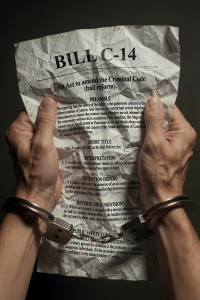 As a Vancouver criminal defence lawyer with years of experience navigating British Columbia courts, I’ve seen firsthand how shifts in bail laws can dramatically affect the lives of those accused of crimes. In the past week, fresh developments around Bill C-14, the Bail and Sentencing Reform Act, have kept criminal law practitioners across Canada on high alert. With Senate amendments under consideration by the House of Commons as of early June 2026, this legislation represents one of the most significant overhauls to the Criminal Code in recent memory.
For anyone facing charges in Vancouver or elsewhere in BC, understanding these proposed changes is essential. Whether you’re a first-time accused, a repeat offender, or simply concerned about justice system fairness, this post breaks down the key elements, their implications, and practical takeaways.
Why Bail Reform is Front and Centre in Canadian Criminal Law
Canada’s bail system operates on foundational principles: the presumption of innocence, the right to reasonable bail under section 11(e) of the Charter, and the “ladder principle” from R. v. Antic (2017 SCC 27), which favours the least restrictive conditions necessary. Yet public concern over repeat offenders committing crimes while on release has fueled calls for tougher measures.
Bill C-14, introduced in late 2025, responds with over 80 targeted amendments to the Criminal Code, the Youth Criminal Justice Act, and the National Defence Act. It expands reverse onus provisions, toughens sentencing for violent and organized crime, and recalibrates how justices assess detention. Recent Senate scrutiny and advocacy from groups like the Canadian Civil Liberties Association (CCLA) highlight the tension between public safety and individual rights.
In BC, where Vancouver’s busy courthouses already strain under caseloads, these changes could reshape pre-trial outcomes significantly.
Key Provisions in Bill C-14: Reverse Onus, Sentencing, and More
At its core, Bill C-14 bail reform introduces or expands reverse onus for several serious offences. Accused persons must now demonstrate why they should be released rather than the Crown proving why they should be detained. This applies to offences involving:
- Violence or weapons
- Breaking and entering
- Auto theft
- Organized crime involvement
Additional measures include restrictions on sureties with recent indictable convictions (with Senate-proposed safety valves for discretion) and adjustments to the principle of restraint, potentially reducing emphasis on the ladder principle for certain charges.
On the sentencing side, the bill aims to impose consecutive sentences for major crimes, limits conditional sentences (house arrest) for serious sexual offences, and strengthens tools against repeat violent offenders. These align with broader government efforts to address community safety while responding to criticisms of prior reforms like Bill C-75.
Recent CCLA advocacy urges MPs to adopt Senate amendments, including mandatory consideration of section 493.2 (Criminal Code) factors for vulnerable populations—particularly Indigenous accused—and enhanced annual reporting on pre-trial detention statistics. These “softening” measures seek to mitigate disproportionate impacts on racialized, low-income, and Indigenous communities, which are overrepresented in BC’s justice system.
Implications for Vancouver Criminal Defence Practice
As a Vancouver-based lawyer handling everything from impaired driving to serious indictable matters, I anticipate several practical shifts:
- Higher Detention Rates Pre-Trial: Expanded reverse onus will make it harder to secure release for clients facing listed offences. Defence counsel will need to prepare robust sureties packages, character evidence, and risk mitigation plans earlier. In Vancouver Provincial and Supreme Courts, where bail hearings are already high-stakes, expect more contested tertiary ground arguments (public confidence in justice).
- Impact on Vulnerable Clients: Indigenous clients, those with mental health issues, or from marginalized communities may face heightened challenges. Senate amendments requiring inquiry into s. 493.2 factors could provide a crucial tool, but implementation will depend on judicial training and Crown practices.
- Sentencing Trends: Tougher consecutive sentencing and restricted conditional discharges will push for more creative mitigation strategies. Defence lawyers must emphasize Gladue principles (for Indigenous offenders) and other mitigating factors more forcefully.
- Interaction with Jordan Principles: The Supreme Court of Canada’s recent May 2026 clarifications in cases like R. v. Vrbanic and R. v. Jacques-Taylor affirm the 18/30-month ceilings for trial delays while recognizing complexity exceptions. Faster bail decisions under Bill C-14 could help or hinder, depending on how they affect overall timelines.
In BC, these federal changes intersect with local pressures, including court disruptions anticipated from the 2026 FIFA World Cup, which may force rescheduling of criminal trials in key Vancouver-area venues.
Balanced Analysis: Safety vs. Charter Rights
Critics, including civil liberties groups, argue that Bill C-14 risks eroding the presumption of innocence by detaining more presumptively innocent people, increased overcrowding in remand centres, and disproportionately affecting equity-seeking groups. Proponents counter that it restores balance after perceived leniency, deterring repeat offences and bolstering public trust.
From my perspective in Vancouver criminal law trenches, the truth lies in nuanced application. Blanket “tough on crime” measures rarely solve systemic issues like court backlogs or social determinants of crime. Evidence-based reforms, robust data collection (as Senate amendments propose), and judicial discretion remain vital.
The bill also arrives amid ongoing discussions about intimate partner violence, femicide presumptions, and organized crime – which are all issues that resonate strongly in British Columbia.
Practical Takeaways for Accused Persons and Practitioners
- Early Legal Advice is Critical: If charged, contact an experienced Vancouver criminal lawyer immediately. Bail strategy starts at arrest.
- Build Strong Release Plans: Gather employment letters, treatment programs, sureties, and electronic monitoring options proactively.
- Monitor Legislative Progress: With House consideration of Senate amendments ongoing, the final shape of Bill C-14 could evolve. Stay informed via reliable legal sources.
- Consider Charter Challenges: Overly broad reverse onus or restraint provisions may invite future litigation under sections 7, 11(d), and 11(e).
- For Lawyers: Emphasize individualized assessments. Leverage any preserved judicial discretion and vulnerable-population considerations.
Defence counsel should also prepare for potential increases in Crown appeals of favourable bail decisions.
Conclusion: Navigating Uncertainty in Canadian Criminal Law
Bill C-14 underscores a pivotal moment in Canadian criminal law. While aimed at enhancing safety, its success will hinge on fair implementation that respects Charter protections. For those in Vancouver facing charges, or law students and citizens following justice issues, these developments highlight why competent, zealous representation matters more than ever.
At our firm, we remain committed to advocating for clients amid these shifts, which includes fighting for releases where justified and challenging overreach where necessary. The justice system works best when balanced, evidence-driven, and humane.
This blog post is for educational purposes only and does not constitute legal advice. Every case is unique. If you or someone you know is facing criminal charges in Vancouver or BC, consult a qualified criminal defence lawyer promptly for personalized guidance.
by Jason Tarnow | Feb 24, 2022 | Crime, Media, Police
A Vancouver man suffering from long haul COVID-19 symptoms was successful in the judicial review of his 90-day Immediate Roadside Prohibition (“IRP”) after arguing that the Adjudicator breached his right to procedural fairness in his original review to RoadSafety BC.
On February 11, 2021, Peter Ronald Gibson was issued an IRP after the police officer alleged he refused to provide a sample. Mr. Gibson made 7 attempts into the Approved Screening Device, none of which successfully yielded a suitable sample. As a result, his vehicle was impounded for 30 days, and he was prohibited from driving for 90 days.
Mr. Gibson sought a review of his IRP to RoadSafety BC, delegate of the Superintendent of Motor Vehicles on the basis that he had a reasonable excuse for failing to provide a breath sample. In Mr. Gibson’s original review, he provided evidence in the form of his Affidavit. He also provided a letter from his physician that confirmed his diagnosis – he was suffering from long term symptoms as a result of COVID-19, including shortness of breath on exertion.
The letter reads:
“His physical examination shows evidence of post-viral reactive airways with sever forced expiratory wheeze. He has been given prescriptions for Flovent and Salbutamol inhalers today. This could contribute to his difficulty performing breathalyzer test during recent traffic stop”
The Adjudicator at RoadSafety BC rejected the letter from Mr. Gibson’s physician, stating that there was no evidence that the physician was aware of the “minimum flow rate (of breath)” required to provide a sample. Mr. Gibson also provided his own Affidavit, which confirmed that he had been referred for treatment, which included CT scans and chest x-rays, among other diagnostic tests.

Keep in mind that the role of the Adjudicator is to analyze whether Mr. Gibson had a reasonable excuse for failing to provide a sample. The analysis is done through review of the Report to Superintendent and all included materials, and also through review of all materials provided by the Applicant (in this case, Mr. Gibson). The Adjudicator may also rely on the Operator’s manual for the Alco-Sensor FST (the Approved Screening Device), which includes information such as proper operating temperature of the device, screen codes, and procedural standards.
Ultimately, the Adjudicator determined that Mr. Gibson’s version of events lacked credibility, and that his physician did not provide sufficient evidence that his medical condition would have prevented him from providing a suitable sample into the Alco-Sensor FST. In doing so, they advanced their interpretation of the testing requirements within the Operator’s manual – specifically, the wording used to describe the necessary airflow required to provide a sample:
“The Alco-Sensor FST has an automatic sampling system designed to ensure that a sample of deep lung air is obtained and analyzed. In order to trigger automatic sampling the subject must blow with a minimum flow rate, must produce a minimum breath volume, and blow for a minimum duration…”
On judicial review, Supreme Court Justice Tammen took issue with the Adjudicator’s interpretation of this issue. The Judge dissected the Adjudicator’s analysis and concluded that despite quoting the appropriate resource, the manual itself provided no information to estimate the “minimum” flow rate required.
Through the Adjudicator’s analysis, Justice Tammen determined that they had relied on information (relating to the required flow rate of a sample) that was not available to the Petitioner (or his physician) at the outset of his review with RoadSafety BC. This breached the Petitioner’s right to procedural fairness.
Justice Tammen directed that the Adjudicator’s decision confirming the IRP of the Petitioner be set aside, and that the matter be remitted to RoadSafety BC for a new hearing.
This case demonstrates a significant flaw in the IRP regime – that is, a blurring of the lines between adjudication and medical expertise. While adjudicators may have specialized knowledge of certain issues due to continued exposure via their employment, the boundaries in their role must be respected and enforced.

If you have received an Immediate Roadside Prohibition, an Administrative Driving Prohibition, or have been charged with Impaired Operation of a Conveyance, contact an experienced criminal lawyer at Tarnow Criminal Law as soon as possible. Our office is located in the heart of Richmond, only 20 minutes from downtown Vancouver on the Canada Line, and within 10 minutes of Vancouver International Airport (“YVR”).
Our firm is also licensed to work in the Yukon Territory, where the 90-day review process for impaired driving is an entirely different process. If you are facing impaired driving charges in the Yukon, contact our office as soon as possible for a consultation.
by Jason Tarnow | Oct 2, 2020 | Crime, Legal Rights, Media, Police, Politics, Wheels Of Justice
Whenever incidents relating to terrorism in Canada hit the news, the eyes of Canadians widen with revolt. Recent headlines elicited a similar response, with a healthy dose of confusion and curiosity added to the mix.

On September 21, 2020, criminal charges were announced against 25 year old Ontario resident Shehroze Chaudhry – but not due to allegations of committing acts of terrorism. Rather, Chaudhry has been charged under Section 83.231(1) of the Criminal Code – perpetrating a hoax regarding terrorist activity:
83.231 (1) Every one commits an offence who, without lawful excuse and with intent to cause any person to fear death, bodily harm, substantial damage to property or serious interference with the lawful use or operation of property:
(a) conveys or causes or procures to be conveyed information that, in all the circumstances, is likely to cause a reasonable apprehension that terrorist activity is occurring or will occur, without believing the information to be true; or
(b) commits an act that, in all the circumstances, is likely to cause a reasonable apprehension that terrorist activity is occurring or will occur, without believing that such activity is occurring or will occur.

Chaudhry was a frequent guest on an award winning New York Times podcast known as “Caliphate”. He spoke, in gruesome detail, of his time as an ISIS executioner in Syria, among other things. But the charges levelled against him assert that his personal experiences as an ISIS soldier are fabricated.
While the NYT claimed to have verified his role in ISIS, he gave conflicting accounts to CBC, even going so far as to say he would take a polygraph to prove he had never killed anyone. He likely thought this would absolve him any criminal liability relating to terrorism offences in Canada, but the charges against him refute this misconception.
The details released from the police don’t specify if any other person was harmed or killed due to the alleged yarn by Chaudhry, but they will play a determinative role if he is convicted. The sentences range from a fine and imprisonment in a provincial correctional institution if prosecuted summarily, to life imprisonment should Crown proceed by indictment.
Chaudhry’s case demonstrates that Canadian jurisprudence condemns all activity relating to terrorism – whether it’s the real deal or not.