
by Jason Tarnow | Oct 13, 2026 | Crime, Media, Police, Social Media, Wheels Of Justice
Artificial intelligence is changing how lawyers research, draft, and communicate. Courts are now confronting how it should be used in the most solemn part of a criminal case: sentencing. A recent Arizona decision shows how quickly the technology can cross a line, and why criminal defence counsel must be ready to challenge it.
What Happened in Arizona
On September 30, 2026, the Arizona Court of Appeals, Division One, vacated a 10-year manslaughter sentence imposed on Gabriel Paul Horcasitas. He was convicted in the 2021 road-rage shooting death of Christopher Pelkey. At the May 2025 sentencing hearing, the court played an AI-generated video that showed Pelkey addressing the judge and offering forgiveness. The video was created by Pelkey’s sister, who was preparing her own victim impact statement.
The appellate court affirmed the manslaughter conviction but sent the matter back for re-sentencing. Its reasoning focused on due process.
The Court’s Core Concern
The court explained that the video did not simply preserve something Pelkey had said while alive. Instead, it presented “a depiction of the victim and his thoughts created from the imaginings of the victim’s sister.” In the court’s view, the video blurred the line between what the family believed the victim would have said and what the victim actually thought.
The court also held that victim-rights protections do not override a defendant’s right to due process. A defendant must be able to test and respond to the information relied on at sentencing. An AI-generated speaker that cannot be cross-examined, and whose words cannot be traced to verified sources, presents an obvious problem.
Importantly, the ruling is not a blanket prohibition on digital media at sentencing. It addresses an AI-generated likeness presented as the voice of a deceased person, where the sentencing judge expressly relied on its content.

Why This Matters in British Columbia
The Arizona decision is not binding in Canada. It is, however, a clear warning for practitioners here.
In Canada, victims may describe the harm they have suffered through victim impact statements under section 722 of the Criminal Code. These statements are an important part of the process, and they must be handled with care. They are meant to convey the real effects of a crime on a real person’s family and community. They are not a vehicle for putting invented words into the mouth of someone who has died.
Sentencing in BC is also governed by principles of proportionality, individualized assessment, and fairness. An emotionally powerful presentation that the defence cannot meaningfully answer risks distorting that assessment.
What Defence Counsel Should Do
If an AI-generated element is proposed for a sentencing hearing in British Columbia, defence counsel should:
- Object early and in writing, so the objection is preserved for appeal.
- Request disclosure of how the material was created, who wrote the words, and what sources support them.
- Demand the right to respond, including cross-examination where appropriate.
- Seek a ruling on admissibility before the material is presented, not after.
Acting promptly protects the client’s right to a fair sentencing and protects the integrity of the process.
Respecting the Solemnity of Sentencing
Sentencing is not a stage for novelty. It is where the court decides how the state will respond to a person’s conduct, and where a family’s loss is formally recognized. Those who have been harmed deserve a process that is rigorous and honest. Those accused deserve a process that is fair, transparent, and based on evidence.
Technology will continue to develop, and courts will need to adapt. Until clear rules exist, the safest course is to keep sentencing grounded in verifiable facts and to insist that every word the court hears can be tested.
Facing a Sentencing in Metro Vancouver?
If you or a loved one is facing sentencing in Metro Vancouver, Richmond, or elsewhere in British Columbia, experienced criminal defence counsel can make a meaningful difference. Tarnow Criminal Law represents clients in all levels of Court in British Columbia and the Yukon on matters including but not limited to sexual assault, drug trafficking, impaired driving, dangerous operation, and youth criminal justice.
Contact Tarnow Criminal Law today at 604.278.0555 to schedule a confidential consultation.
This article is general information and not legal advice. Each case turns on its own facts. Speak with a lawyer about your specific situation.
by Jason Tarnow | Jun 8, 2026 | Crime, Criminal Attorney, Politics
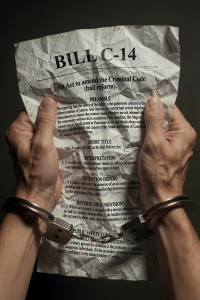 As a Vancouver criminal defence lawyer with years of experience navigating British Columbia courts, I’ve seen firsthand how shifts in bail laws can dramatically affect the lives of those accused of crimes. In the past week, fresh developments around Bill C-14, the Bail and Sentencing Reform Act, have kept criminal law practitioners across Canada on high alert. With Senate amendments under consideration by the House of Commons as of early June 2026, this legislation represents one of the most significant overhauls to the Criminal Code in recent memory.
For anyone facing charges in Vancouver or elsewhere in BC, understanding these proposed changes is essential. Whether you’re a first-time accused, a repeat offender, or simply concerned about justice system fairness, this post breaks down the key elements, their implications, and practical takeaways.
Why Bail Reform is Front and Centre in Canadian Criminal Law
Canada’s bail system operates on foundational principles: the presumption of innocence, the right to reasonable bail under section 11(e) of the Charter, and the “ladder principle” from R. v. Antic (2017 SCC 27), which favours the least restrictive conditions necessary. Yet public concern over repeat offenders committing crimes while on release has fueled calls for tougher measures.
Bill C-14, introduced in late 2025, responds with over 80 targeted amendments to the Criminal Code, the Youth Criminal Justice Act, and the National Defence Act. It expands reverse onus provisions, toughens sentencing for violent and organized crime, and recalibrates how justices assess detention. Recent Senate scrutiny and advocacy from groups like the Canadian Civil Liberties Association (CCLA) highlight the tension between public safety and individual rights.
In BC, where Vancouver’s busy courthouses already strain under caseloads, these changes could reshape pre-trial outcomes significantly.
Key Provisions in Bill C-14: Reverse Onus, Sentencing, and More
At its core, Bill C-14 bail reform introduces or expands reverse onus for several serious offences. Accused persons must now demonstrate why they should be released rather than the Crown proving why they should be detained. This applies to offences involving:
- Violence or weapons
- Breaking and entering
- Auto theft
- Organized crime involvement
Additional measures include restrictions on sureties with recent indictable convictions (with Senate-proposed safety valves for discretion) and adjustments to the principle of restraint, potentially reducing emphasis on the ladder principle for certain charges.
On the sentencing side, the bill aims to impose consecutive sentences for major crimes, limits conditional sentences (house arrest) for serious sexual offences, and strengthens tools against repeat violent offenders. These align with broader government efforts to address community safety while responding to criticisms of prior reforms like Bill C-75.
Recent CCLA advocacy urges MPs to adopt Senate amendments, including mandatory consideration of section 493.2 (Criminal Code) factors for vulnerable populations—particularly Indigenous accused—and enhanced annual reporting on pre-trial detention statistics. These “softening” measures seek to mitigate disproportionate impacts on racialized, low-income, and Indigenous communities, which are overrepresented in BC’s justice system.
Implications for Vancouver Criminal Defence Practice
As a Vancouver-based lawyer handling everything from impaired driving to serious indictable matters, I anticipate several practical shifts:
- Higher Detention Rates Pre-Trial: Expanded reverse onus will make it harder to secure release for clients facing listed offences. Defence counsel will need to prepare robust sureties packages, character evidence, and risk mitigation plans earlier. In Vancouver Provincial and Supreme Courts, where bail hearings are already high-stakes, expect more contested tertiary ground arguments (public confidence in justice).
- Impact on Vulnerable Clients: Indigenous clients, those with mental health issues, or from marginalized communities may face heightened challenges. Senate amendments requiring inquiry into s. 493.2 factors could provide a crucial tool, but implementation will depend on judicial training and Crown practices.
- Sentencing Trends: Tougher consecutive sentencing and restricted conditional discharges will push for more creative mitigation strategies. Defence lawyers must emphasize Gladue principles (for Indigenous offenders) and other mitigating factors more forcefully.
- Interaction with Jordan Principles: The Supreme Court of Canada’s recent May 2026 clarifications in cases like R. v. Vrbanic and R. v. Jacques-Taylor affirm the 18/30-month ceilings for trial delays while recognizing complexity exceptions. Faster bail decisions under Bill C-14 could help or hinder, depending on how they affect overall timelines.
In BC, these federal changes intersect with local pressures, including court disruptions anticipated from the 2026 FIFA World Cup, which may force rescheduling of criminal trials in key Vancouver-area venues.
Balanced Analysis: Safety vs. Charter Rights
Critics, including civil liberties groups, argue that Bill C-14 risks eroding the presumption of innocence by detaining more presumptively innocent people, increased overcrowding in remand centres, and disproportionately affecting equity-seeking groups. Proponents counter that it restores balance after perceived leniency, deterring repeat offences and bolstering public trust.
From my perspective in Vancouver criminal law trenches, the truth lies in nuanced application. Blanket “tough on crime” measures rarely solve systemic issues like court backlogs or social determinants of crime. Evidence-based reforms, robust data collection (as Senate amendments propose), and judicial discretion remain vital.
The bill also arrives amid ongoing discussions about intimate partner violence, femicide presumptions, and organized crime – which are all issues that resonate strongly in British Columbia.
Practical Takeaways for Accused Persons and Practitioners
- Early Legal Advice is Critical: If charged, contact an experienced Vancouver criminal lawyer immediately. Bail strategy starts at arrest.
- Build Strong Release Plans: Gather employment letters, treatment programs, sureties, and electronic monitoring options proactively.
- Monitor Legislative Progress: With House consideration of Senate amendments ongoing, the final shape of Bill C-14 could evolve. Stay informed via reliable legal sources.
- Consider Charter Challenges: Overly broad reverse onus or restraint provisions may invite future litigation under sections 7, 11(d), and 11(e).
- For Lawyers: Emphasize individualized assessments. Leverage any preserved judicial discretion and vulnerable-population considerations.
Defence counsel should also prepare for potential increases in Crown appeals of favourable bail decisions.
Conclusion: Navigating Uncertainty in Canadian Criminal Law
Bill C-14 underscores a pivotal moment in Canadian criminal law. While aimed at enhancing safety, its success will hinge on fair implementation that respects Charter protections. For those in Vancouver facing charges, or law students and citizens following justice issues, these developments highlight why competent, zealous representation matters more than ever.
At our firm, we remain committed to advocating for clients amid these shifts, which includes fighting for releases where justified and challenging overreach where necessary. The justice system works best when balanced, evidence-driven, and humane.
This blog post is for educational purposes only and does not constitute legal advice. Every case is unique. If you or someone you know is facing criminal charges in Vancouver or BC, consult a qualified criminal defence lawyer promptly for personalized guidance.
by Jason Tarnow | Jun 23, 2020 | Crime, Legal Aid, Legal Rights, Media, Police, Politics, Riots, Social Media, Wheels Of Justice
“Systemic racism is so rampant in the United States, I’m from Canada so I can’t even imagine what that must be like!”
“Police brutality in the US makes me proud to be Canadian”
The two statements above reflect a dangerous and widespread misconception held by many Canadians as they observe growing unrest in the United States:
“Deaths of minorities at the hands of law enforcement just isn’t an issue here”
Of course, nothing could be further from the truth.

Systemic racism exists in institutions across Canada – and an analysis of police brutality against minorities performed by CBC reveals some startling data.
Between 2000 and 2017, CBC was identified 461 fatal encounters between law enforcement and civilians. The RCMP– Canada’s largest and only federal police force – is responsible for the highest number of incidents at 118 casualties, followed by the Toronto Police Service at 52, and the Service de police de la Ville de Montreal at 32. The data demonstrates that these occurrences continue to rise steadily across the country.
When looking at the study, it is obvious that Caucasian individuals represent the largest number of victims per ethnic group, composing roughly 43% of all casualties identified. They also represent nearly 80% of Canada’s total population.
Indigenous victims represent roughly 16% of all casualties identified, but account for less than 5% of Canada’s total population.
Black victims represent roughly 10% of all casualties identified, but account for less than 3% of Canada’s total population.
22% of the victims were unable to be identified by ethnicity.
These facts are alarming and highlight a trend of violence by law enforcement against identifiable minorities. Aggravating circumstances further, it is estimated that mental health and substance abuse issues afflicted approximately 70% of the 461 victims.
The data further reveals that the majority of these occurred in urban areas with diverse cultural communities – not within areas densely populated by minorities. What this means is that of the percentage of the 461 fatalities that involve people of color is grossly disproportionate to the overall population of the areas affected.

Gun related deaths accounted for over 71% of the 461 fatalities, use of restraint at just shy of 16%, physical force at 1.3%, use of an intermediate weapon (a tool not designed to cause death with conventional use, such as a baton) at 1.1%, and “other” accounting for 10.1% of deaths.
Perhaps most shocking of all is that these statistics have not been compiled and presented by the organizations with the most reliable sources of information – the law enforcement agencies themselves.
The analysis conducted by CBC provides a glimpse into the systemic racism that is alive and well within law enforcement agencies across the country, but it hardly tells the entire story.
The data relates only to fatalities – it does not represent the wrongful arrests and prosecutions of minorities in Canada, the disproportionate sentences that are imposed, or the loss of dignity and liberty.
It does not represent the interactions that don’t result in an arrest or charges, nor does it represent the victims of racism and bias who will never have the opportunity to tell their stories.