by Jason Tarnow | Jun 8, 2026 | Crime, Criminal Attorney, Politics
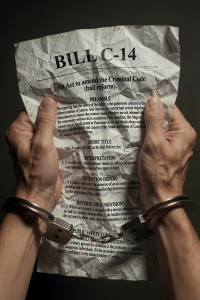 As a Vancouver criminal defence lawyer with years of experience navigating British Columbia courts, I’ve seen firsthand how shifts in bail laws can dramatically affect the lives of those accused of crimes. In the past week, fresh developments around Bill C-14, the Bail and Sentencing Reform Act, have kept criminal law practitioners across Canada on high alert. With Senate amendments under consideration by the House of Commons as of early June 2026, this legislation represents one of the most significant overhauls to the Criminal Code in recent memory.
For anyone facing charges in Vancouver or elsewhere in BC, understanding these proposed changes is essential. Whether you’re a first-time accused, a repeat offender, or simply concerned about justice system fairness, this post breaks down the key elements, their implications, and practical takeaways.
Why Bail Reform is Front and Centre in Canadian Criminal Law
Canada’s bail system operates on foundational principles: the presumption of innocence, the right to reasonable bail under section 11(e) of the Charter, and the “ladder principle” from R. v. Antic (2017 SCC 27), which favours the least restrictive conditions necessary. Yet public concern over repeat offenders committing crimes while on release has fueled calls for tougher measures.
Bill C-14, introduced in late 2025, responds with over 80 targeted amendments to the Criminal Code, the Youth Criminal Justice Act, and the National Defence Act. It expands reverse onus provisions, toughens sentencing for violent and organized crime, and recalibrates how justices assess detention. Recent Senate scrutiny and advocacy from groups like the Canadian Civil Liberties Association (CCLA) highlight the tension between public safety and individual rights.
In BC, where Vancouver’s busy courthouses already strain under caseloads, these changes could reshape pre-trial outcomes significantly.
Key Provisions in Bill C-14: Reverse Onus, Sentencing, and More
At its core, Bill C-14 bail reform introduces or expands reverse onus for several serious offences. Accused persons must now demonstrate why they should be released rather than the Crown proving why they should be detained. This applies to offences involving:
- Violence or weapons
- Breaking and entering
- Auto theft
- Organized crime involvement
Additional measures include restrictions on sureties with recent indictable convictions (with Senate-proposed safety valves for discretion) and adjustments to the principle of restraint, potentially reducing emphasis on the ladder principle for certain charges.
On the sentencing side, the bill aims to impose consecutive sentences for major crimes, limits conditional sentences (house arrest) for serious sexual offences, and strengthens tools against repeat violent offenders. These align with broader government efforts to address community safety while responding to criticisms of prior reforms like Bill C-75.
Recent CCLA advocacy urges MPs to adopt Senate amendments, including mandatory consideration of section 493.2 (Criminal Code) factors for vulnerable populations—particularly Indigenous accused—and enhanced annual reporting on pre-trial detention statistics. These “softening” measures seek to mitigate disproportionate impacts on racialized, low-income, and Indigenous communities, which are overrepresented in BC’s justice system.
Implications for Vancouver Criminal Defence Practice
As a Vancouver-based lawyer handling everything from impaired driving to serious indictable matters, I anticipate several practical shifts:
- Higher Detention Rates Pre-Trial: Expanded reverse onus will make it harder to secure release for clients facing listed offences. Defence counsel will need to prepare robust sureties packages, character evidence, and risk mitigation plans earlier. In Vancouver Provincial and Supreme Courts, where bail hearings are already high-stakes, expect more contested tertiary ground arguments (public confidence in justice).
- Impact on Vulnerable Clients: Indigenous clients, those with mental health issues, or from marginalized communities may face heightened challenges. Senate amendments requiring inquiry into s. 493.2 factors could provide a crucial tool, but implementation will depend on judicial training and Crown practices.
- Sentencing Trends: Tougher consecutive sentencing and restricted conditional discharges will push for more creative mitigation strategies. Defence lawyers must emphasize Gladue principles (for Indigenous offenders) and other mitigating factors more forcefully.
- Interaction with Jordan Principles: The Supreme Court of Canada’s recent May 2026 clarifications in cases like R. v. Vrbanic and R. v. Jacques-Taylor affirm the 18/30-month ceilings for trial delays while recognizing complexity exceptions. Faster bail decisions under Bill C-14 could help or hinder, depending on how they affect overall timelines.
In BC, these federal changes intersect with local pressures, including court disruptions anticipated from the 2026 FIFA World Cup, which may force rescheduling of criminal trials in key Vancouver-area venues.
Balanced Analysis: Safety vs. Charter Rights
Critics, including civil liberties groups, argue that Bill C-14 risks eroding the presumption of innocence by detaining more presumptively innocent people, increased overcrowding in remand centres, and disproportionately affecting equity-seeking groups. Proponents counter that it restores balance after perceived leniency, deterring repeat offences and bolstering public trust.
From my perspective in Vancouver criminal law trenches, the truth lies in nuanced application. Blanket “tough on crime” measures rarely solve systemic issues like court backlogs or social determinants of crime. Evidence-based reforms, robust data collection (as Senate amendments propose), and judicial discretion remain vital.
The bill also arrives amid ongoing discussions about intimate partner violence, femicide presumptions, and organized crime – which are all issues that resonate strongly in British Columbia.
Practical Takeaways for Accused Persons and Practitioners
- Early Legal Advice is Critical: If charged, contact an experienced Vancouver criminal lawyer immediately. Bail strategy starts at arrest.
- Build Strong Release Plans: Gather employment letters, treatment programs, sureties, and electronic monitoring options proactively.
- Monitor Legislative Progress: With House consideration of Senate amendments ongoing, the final shape of Bill C-14 could evolve. Stay informed via reliable legal sources.
- Consider Charter Challenges: Overly broad reverse onus or restraint provisions may invite future litigation under sections 7, 11(d), and 11(e).
- For Lawyers: Emphasize individualized assessments. Leverage any preserved judicial discretion and vulnerable-population considerations.
Defence counsel should also prepare for potential increases in Crown appeals of favourable bail decisions.
Conclusion: Navigating Uncertainty in Canadian Criminal Law
Bill C-14 underscores a pivotal moment in Canadian criminal law. While aimed at enhancing safety, its success will hinge on fair implementation that respects Charter protections. For those in Vancouver facing charges, or law students and citizens following justice issues, these developments highlight why competent, zealous representation matters more than ever.
At our firm, we remain committed to advocating for clients amid these shifts, which includes fighting for releases where justified and challenging overreach where necessary. The justice system works best when balanced, evidence-driven, and humane.
This blog post is for educational purposes only and does not constitute legal advice. Every case is unique. If you or someone you know is facing criminal charges in Vancouver or BC, consult a qualified criminal defence lawyer promptly for personalized guidance.
by Jason Tarnow | May 15, 2026 | Crime, Police, Wheels Of Justice
If a police officer walks up your driveway at midnight, knocks on your truck window, and opens the door without a warrant, has your Charter right to be secure from unreasonable search and seizure been violated? As a criminal lawyer in Vancouver, I get versions of this question all the time — from clients facing impaired driving charges, from homeowners who feel their privacy was invaded, and from people who simply want to know where the constitutional line sits between policing and private life.
On March 20, 2026, the Supreme Court of Canada answered that question with more clarity than we have had in nearly thirty years. The decision is R. v. Singer, 2026 SCC 8, and every driver, homeowner, and impaired driving client in British Columbia and the Yukon should understand what it changed — and what it did not.
This post breaks down the facts, the legal doctrine, the result, and the practical takeaways for accused persons and the lawyers who defend them. It is written from the perspective of counsel who runs Charter applications in BC courtrooms regularly. None of it is legal advice; if you are charged with an offence, retain counsel.
Key Takeaways
- The Supreme Court of Canada confirmed in R. v. Singer, 2026 SCC 8 that police have an implied licence to enter a residential driveway and approach a vehicle to knock on the window when investigating an impaired driving complaint.
- That implied licence ends at the vehicle door. Opening the door without a warrant, exigent circumstances, or another lawful authority is a search under section 8 of the Charter.
- The Court still admitted the evidence under section 24(2), citing the seriousness of impaired driving offences — but the breach finding is the part that matters for future cases.
- For drivers in British Columbia and the Yukon, Singer sharpens the boundary between lawful investigative steps and constitutionally significant intrusion.
- If you have been charged after a roadside or driveway investigation, a careful Charter review is essential before any plea is entered.
The Facts: A Driveway, a Truck, and a 911 Call
The accused in Singer was the subject of a third-party complaint about a possibly impaired driver. Two RCMP officers attended his residence and found his pickup truck running in the driveway. He was inside the cab. Without a warrant, the officers walked up the driveway, approached the truck, and knocked on the driver’s window. When that did not produce the response they wanted, they opened the door. What followed — observations, a roadside demand under section 320.27 of the Criminal Code, and ultimately a charge under section 320.14 — flowed directly from that initial driveway encounter.
The defence position at trial, on appeal, and at the Supreme Court was straightforward: the entire investigative sequence was tainted by an unreasonable search of a private residential property, contrary to section 8 of the Canadian Charter of Rights and Freedoms. The Crown’s position was equally clear: police were doing the very kind of front-line community work that the implied licence doctrine has long permitted.
The Implied Licence Doctrine — A Centuries-Old Rule, Newly Tested
The implied licence doctrine is not new. It was articulated in modern form in R. v. Evans, [1996] 1 S.C.R. 8, where Justice Sopinka explained that the common law treats every member of the public — including police — as having an implied invitation to walk up to the door of a dwelling and knock for a legitimate purpose. The reasoning is grounded in social custom: occupiers know that mail carriers, neighbours, and door-to-door visitors will approach their door, and they have implicitly waived the privacy interest in that limited approach.
Three points have always been understood to follow from Evans:
- The licence is limited to the purpose of communicating with the occupant. If the actual purpose is to gather evidence, the licence does not authorize the entry.
- The licence is limited to the route ordinarily used by visitors, typically a walkway or driveway leading to the door.
- The licence ends at the door of the dwelling. Anything beyond — opening a door, peering through a window, lingering — can constitute a search.
What Singer contributes is a clear application of those principles to a vehicle parked in a driveway, which had been a recurring point of confusion in lower courts across the country, including in impaired driving prosecutions here in BC.
Where the Police Crossed the Line
A majority of the Court (Wagner C.J., Côté, Rowe, Kasirer and Jamal JJ.) drew the line in two parts.
Step one was permissible. Walking up the driveway and approaching the truck to knock on the window was within the implied licence. The officers had a legitimate investigative purpose — a recent third-party report of impaired driving — and they used the ordinary route a visitor would use to communicate with the occupant. The Court held this conduct was not a “search” within the meaning of section 8.
Step two was not. When the officers opened the truck door without consent, a warrant, exigent circumstances, or another lawful authority, they intruded upon a reasonable expectation of privacy that the accused continued to hold in the interior of his vehicle. That was a search, and it was unreasonable. The Charter breach was made out.
This bifurcated analysis is significant. It tells defence counsel and trial judges to look at each step of the investigative sequence separately, rather than treating the entire driveway encounter as either lawful or unlawful in one breath.
The Section 24(2) Result — Why the Evidence Got In Anyway
Despite finding the breach, the Court declined to exclude the evidence under section 24(2) of the Charter. Applying the framework from R. v. Grant, 2009 SCC 32 — seriousness of the breach, impact on the accused’s Charter-protected interests, and society’s interest in adjudication on the merits — the majority concluded that admission would not bring the administration of justice into disrepute.
The Court emphasized society’s strong interest in prosecuting impaired driving, an offence that kills and injures Canadians at staggering rates. That weighting is consistent with the recent trajectory of Charter jurisprudence in driving cases, where courts have generally been reluctant to exclude reliable physical evidence of impairment.
For defence counsel, the lesson is sobering but realistic: a Charter breach is not a guaranteed exclusion. Counsel must build a record at trial that addresses each Grant factor with care.
What Singer Means for Drivers and Homeowners in British Columbia
BC and the Yukon have some of the most active impaired driving enforcement programs in Canada. Between RoadSafetyBC’s Immediate Roadside Prohibition regime, mandatory alcohol screening at lawful traffic stops, and a steady stream of third-party 911 calls reporting suspected impaired drivers, the driveway scenario in Singer is not unusual — it is a Friday night.
Three practical points stand out for clients in this jurisdiction:
First, your driveway is not your living room, but it is not the highway either. Police can walk up to investigate or to knock, but they cannot use the driveway as a launchpad for a wider warrantless search of your vehicle or your person. If officers reached into the cab, opened a door, or directed you out of the vehicle without lawful authority, that is a fact pattern worth scrutinizing.
Second, the moment of intrusion matters. Counsel will want to know when the door was opened, what was said immediately before, whether any demand under section 320.27 or 320.28 of the Criminal Code had been made, whether the officer formed reasonable grounds before or after the door opened, and whether the accused was detained at that point for the purposes of section 10 of the Charter.
Third, the Yukon dimension matters too. Many of my files involve clients charged in remote communities where RCMP detachments are small and dwellings are spread over large rural lots. The implied licence doctrine applies the same way, but the factual question of “ordinary route to the door” can look very different on a five-acre Yukon property than on a Vancouver cul-de-sac. Local context drives the analysis.
Defence Strategies After Singer — What Your Lawyer Will Examine
If you are facing an impaired driving charge in British Columbia or the Yukon arising out of a driveway or property entry, a careful defence lawyer will canvass the following:
- The basis for the entry. Was there a 911 call? A welfare check? An anonymous tip? The legitimacy and specificity of the investigative purpose anchors the implied licence analysis.
- The route taken. Did officers follow a normal pedestrian path, or did they cut across a fenced yard, peer through windows, or approach a vehicle parked behind the dwelling out of public view?
- The point of intrusion. Was the door of the vehicle opened, was the trunk opened, was the accused commanded out, was a flashlight directed into a closed cab? Each is a discrete question.
- The grounds for any demand. Were the grounds for an approved screening device demand formed lawfully and before the demand was articulated?
- The Charter caution and right to counsel. Was section 10(b) complied with promptly upon detention?
- The Grant analysis. Even where a breach is established, the section 24(2) record must be built deliberately at trial.
None of this is theoretical. These are the questions I work through with clients in initial consultations, and they are the questions Crown counsel anticipate when they assess a file for resolution or trial.
How Singer Connects to Broader Section 8 Jurisprudence
It is worth situating Singer within the modern Charter landscape. The Supreme Court has been steadily clarifying the contours of reasonable expectation of privacy in cases like R. v. Tessling, 2004 SCC 67 (FLIR overflights), R. v. Patrick, 2009 SCC 17 (curbside garbage), R. v. Marakah, 2017 SCC 59 (text messages), and R. v. Bykovets, 2024 SCC 6 (IP addresses). Singer fits in the line that addresses the home and its immediate surroundings — the so-called “curtilage” — and reaffirms that the constitutional protection of the home extends, in attenuated form, to the spaces that surround it.
Defence lawyers should expect Singer to be cited well beyond impaired driving cases. Anywhere the police step onto private residential property to gather information — drug investigations, weapons calls, even welfare checks that turn evidentiary — the bifurcated Singer analysis will travel.
Frequently Asked Questions
Can the police walk up my driveway in British Columbia without a warrant?
Yes, in most circumstances. Under the implied licence doctrine reaffirmed in R. v. Singer, 2026 SCC 8, police may walk up a residential driveway and approach the door — or, in Singer, a vehicle in the driveway — for a legitimate investigative purpose such as knocking to communicate with the occupant. That implied licence ends at the door.
Can the police open my car door if it is parked in my driveway?
Generally, no — not without a warrant, consent, exigent circumstances, or another lawful authority. Singer confirms that opening the door of a vehicle in a residential driveway is a search under section 8 of the Charter. If your charge stems from such an entry, raise it with counsel immediately.
Does R. v. Singer mean my impaired driving charge will be dismissed?
Not automatically. The Supreme Court found a Charter breach in Singer but admitted the evidence anyway under section 24(2). Whether evidence is excluded in your case depends on the seriousness of the breach, its impact on you, and society’s interest in adjudication on the merits — the framework set out in R. v. Grant, 2009 SCC 32. A careful trial record is essential.
Do I have to answer the door if police knock?
No. The implied licence permits police to approach and knock; it does not compel you to answer or to consent to anything. You are entitled to remain silent and to speak to counsel without delay if you are detained or arrested.
I was charged in the Yukon, not BC. Does Singer apply?
Yes. R. v. Singer, 2026 SCC 8 is a decision of the Supreme Court of Canada and binds courts in every province and territory, including the Yukon Territorial Court and the Supreme Court of Yukon. The factual application may look different in remote or rural settings, but the legal framework is the same.
A Note on Authority and Disclaimer
This post is general legal commentary, not legal advice. Every case turns on its facts, and the impaired driving and Charter framework is technical. If you have been charged with an offence in British Columbia or the Yukon — or if police have entered your property in circumstances that concern you — speak with a criminal defence lawyer before making any statement, entering any plea, or accepting any roadside or administrative penalty.
About the author — Jason Tarnow is a criminal defence lawyer based in Vancouver, British Columbia. He represents clients facing charges across BC and the Yukon, with particular focus on impaired driving, Charter applications, and serious indictable matters. He regularly argues section 8, 9 and 10 motions in trial and appellate courts.
Charged with an offence in BC or the Yukon?
If you have been arrested, detained, or charged — or if you believe police entered your property unlawfully — do not wait. Early advice often makes the difference between a manageable resolution and a lasting record. Contact Jason Tarnow for a confidential consultation. Serving Vancouver, the Lower Mainland, and clients across British Columbia and the Yukon.
by Jason Tarnow | Apr 29, 2020 | Crime, Criminal Attorney, Legal Aid, Legal Rights, Media, Police, Politics, Social Media, Uncategorized, Wheels Of Justice
High on the list of things that have changed due to COVID-19 is our perception of what truly qualifies as an essential service – the transportation of goods by freight haulers, grocery stores and pharmacies, waste management and sanitation, and the list goes on. Service providers in these sectors are now being recognized for their significant contributions to our communities. In recent weeks, safety measures have been formulated and established, such as the installation of acrylic screens to act as a barrier between cashiers and customers, temporarily suspending the use of cash, and constantly monitoring supply stocks and evaluating the best methods to ensure that protective personal equipment is available to those working in healthcare.
But what about the justice system?
On March 18, 2020, court operations were abruptly suspended in BC. Mass adjournments of almost all trials, for those detained and those awaiting trial free in the community, has created uncertainty for accused persons and for their counsel. It has also highlighted systemic flaws that have been dismissed for far too long.

The Court of Appeal of BC was the first to announce that, beginning May 4, 2020, appeals (all appeals, not just those deemed urgent) would be heard using the platform “Zoom”. A notice from the Chief Justice of British Columbia elaborated further and noted that the courts would use Zoom only until the government supplied a “permanent, enterprise videoconferencing solution”, lending likelihood to the idea that some of the interventions relied upon during the COVID-19 pandemic could become permanent adaptations.
COVID-19 emphasized the court systems’ vulnerability to interruption. At some point along the line, preference to proceed with business as usual was prioritized over adjusting to function optimally in a society that is increasingly reliant on digital mechanisms.
Currently, much of the paperwork involved in criminal proceedings is processed manually by court services staff (with the exception of some electronic documents) at the registry. Rules for fax filing vary by registry, which often creates confusion for counsel.
Here are some examples of what modernization could look like:
|
Change
|
Effect
|
| Online court schedule for all levels of court |
Counsel can manage their court schedule with more flexibility and can coordinate appearances in various jurisdictions with other counsel to maximize efficiency |
| Video-conferencing from correctional facilities to the office of counsel and to the court |
Clients have more personal interactions with their counsel. Visits to the correctional centre can be limited (not replaced completely). If those in custody can appear exclusively by video, it reduces the number of inmates being transported via vehicle, saving time, money, and sheriffs’ resources |
| Enhanced online filing for court documents |
Fewer issues with errors relating to form. Court services staff spend less time on data entry manual processing. |
| Digital court files |
Court services staff can access all materials in one system and forward materials as needed to judicial staff. Storage of materials digitally saves an enormous amount of space. Archived files can be easily obtained rather than being stored “offsite”. Enhanced security for all files. Counsel could access court documents, such as a Record of Proceedings, online instead of having to make requests to court services staff |
| Digital disclosure transfer |
All disclosure would be digitized, allowing law enforcement, crown counsel, court staff, and defence counsel to exchange documents without delay. Significant reduction in paper usage and courier/postage costs. |
While other sectors prioritize adopting innovation, the court system has all-but ignored important opportunities for tech reform. Budgetary limitations are a frequent excuse. And of course, cost is an important factor – but it should not override value. The technology exists and has the potential to be extremely advantageous in the courtroom, and is often utilized more frequently in more remote jurisdictions such as Prince George, BC and throughout the Yukon Territory. Due to the logistical difficulties associated with residing in a remote location, video-conferencing is often used at trial for out-of-town witnesses.
Before the era of social distancing and COVID-19, there seemed little reason to forge ahead towards modernization with any sense of urgency – the old adage “if it ain’t broke, don’t fix it” comes to mind – but now, we simply don’t have a choice.