by Jason Tarnow | Jul 14, 2026 | Crime, Criminal Attorney, Legal Rights, Police, Wheels Of Justice
As a Vancouver criminal defence lawyer with years of experience navigating the complexities of Canadian criminal law in British Columbia courts, I’ve seen firsthand how legislative changes can reshape the justice system. With the Bail and Sentencing Reform Act (Bill C-14) now law and set to take effect on July 15, 2026, we’re on the cusp of significant shifts in how bail hearings and sentencing proceed across Canada, particularly here in Vancouver where issues like organized crime, auto theft, and repeat offending hit close to home.
This timely reform arrives amid ongoing public concerns about community safety in BC. In this post, I’ll break down the key changes in Bill C-14, their legal context, and what they mean for defendants, practitioners, and the broader criminal justice landscape in Vancouver and beyond.

The Road to Bill C-14: Context in Canadian Criminal Law
Bill C-14 introduces over 80 targeted amendments to the Criminal Code, the Youth Criminal Justice Act, and related statutes. It responds to calls from law enforcement, provinces (including BC), and victims’ advocates for stricter measures against violent and repeat offenders, while aiming to maintain Charter protections.
Historically, Canadian bail law has been guided by principles from the Supreme Court of Canada, such as in R. v. Antic (2017), which emphasized the “ladder principle” (least onerous conditions) and the “principle of restraint” favoring release where appropriate. The Charter’s section 11(e) guarantees the right not to be denied reasonable bail without just cause. Sentencing has balanced denunciation, deterrence, rehabilitation, and proportionality under section 718 of the Criminal Code.
Bill C-14 refines these without fully upending them, but it tilts the balance toward public safety in specific high-risk scenarios. As reforms come into force this week, defence counsel in Vancouver must adapt quickly.
Key Changes to Bail Laws: Harder for Repeat and Violent Offenders
One of the most impactful areas is bail. Bill C-14 expands reverse onus provisions, where the accused must demonstrate why release is justified rather than the Crown proving detention is necessary. New or expanded reverse onuses now apply to:
- Break and enter of a dwelling-house.
- Trafficking in persons and human smuggling.
- Assaults and sexual assaults involving choking, suffocation, or strangulation.
- Extortion involving violence.
- Serious violent offences where the accused has two or more prior similar convictions.
- Expansion of the prior conviction window from 5 to 10 years for certain weapon-related violence.
Courts must now consider additional factors, such as random or unprovoked violence, the number and seriousness of outstanding charges (enhancing the tertiary ground for detention), and specific conditions like weapons prohibitions for extortion and organized crime cases. The “ladder principle” is clarified not to apply in reverse onus situations, and certain prior serious offenders are restricted from acting as sureties.
For Vancouver practitioners, this means more rigorous bail plans are essential. In BC Supreme Court or Provincial Court hearings, we’ll need to present compelling evidence addressing public safety risks—perhaps through enhanced surety supervision, electronic monitoring, or treatment programs. Clients facing auto theft, home invasion, or organized crime charges (prevalent in the Lower Mainland) will face heightened scrutiny.
Sentencing Reforms: Tougher Consequences and Consecutive Terms
On the sentencing side, Bill C-14 introduces or expands aggravating factors for crimes against first responders, public transit workers, organized retail theft, and interference with essential infrastructure (e.g., copper theft). Judges must prioritize denunciation and deterrence for repeat violent auto theft and break-and-enter. Consecutive sentences are mandated or strongly considered in cases like extortion paired with arson, or multiple violent offences.
Additional measures include ending conditional sentences (house arrest) for certain serious sexual offences against minors and restoring driving prohibitions for manslaughter or criminal negligence causing death/bodily harm.
These changes align with trends in BC, where prolific offenders and retail crime have strained resources. However, they raise questions about over-incarceration, court delays, and the effectiveness of deterrence for root causes like addiction and mental health—issues defence lawyers address daily in Vancouver.
Implications for Defendants and Defence Practice in Vancouver
For those accused in BC, the practical effects are clear: bail hearings will be more adversarial and evidence-heavy, especially in reverse onus cases. Defence counsel must build stronger records early—gathering character references, risk assessments, and community support plans. In Vancouver, where courthouse backlogs persist, prolonged pre-trial detention could pressure pleas or complicate trials.
From a Charter perspective, these reforms will likely face challenges. Past SCC decisions underscore that bail must remain reasonable and not punitive. Defence lawyers will monitor for overbreadth or violations of presumption of innocence. For repeat offenders, the emphasis on public safety is understandable, but it must not erode individualized justice.
As a Vancouver criminal defence lawyer, I see opportunities too. Strong advocacy can still secure release with tailored plans, and at sentencing, mitigating factors like Gladue principles for Indigenous clients or rehabilitation efforts remain vital. These reforms underscore the need for early intervention and robust defence strategies.
Provincial implementation in BC will be key. Adequate resources for bail supervision, mental health supports, and court capacity are essential to avoid unintended consequences like overcrowded jails.
Broader Impacts on the Justice System and Public Safety
Bill C-14 reflects a policy shift toward accountability for serious crime while acknowledging that laws alone aren’t sufficient. Supporters, including BC officials and police, highlight benefits for victims and communities plagued by repeat offending. Critics, including some civil liberties groups, worry about reduced discretion and potential Charter issues.
For law students and the public, this is a prime example of how criminal law evolves in response to societal pressures. In Vancouver’s diverse context—with its challenges around organized crime, homelessness, and downtown eastside issues—balanced implementation matters.
Long-term, data collection mandated by the Act (annual bail reports) will help evaluate effectiveness. A five-year parliamentary review is also required.
Practical Takeaways for Clients and Practitioners
- Act Early: If facing charges potentially impacted by Bill C-14 (effective July 15, 2026), consult defence counsel immediately to prepare for stricter bail processes.
- Build Comprehensive Plans: Focus on risk mitigation—treatment, employment, housing—for bail and sentencing.
- Stay Informed: Reforms affect youth justice and specific offences; nuances matter.
- Advocate Holistically: While tougher laws address safety, support for prevention and rehabilitation remains crucial.
In my practice defending clients across Vancouver and BC, I remain committed to upholding rights within the evolving framework. These changes demand vigilance but also skilled, strategic representation.
This blog post is for educational purposes only and does not constitute legal advice. Every case is unique—contact a qualified Vancouver criminal defence lawyer for personalized guidance on your situation.
by Jason Tarnow | May 15, 2026 | Crime, Police, Wheels Of Justice
If a police officer walks up your driveway at midnight, knocks on your truck window, and opens the door without a warrant, has your Charter right to be secure from unreasonable search and seizure been violated? As a criminal lawyer in Vancouver, I get versions of this question all the time — from clients facing impaired driving charges, from homeowners who feel their privacy was invaded, and from people who simply want to know where the constitutional line sits between policing and private life.
On March 20, 2026, the Supreme Court of Canada answered that question with more clarity than we have had in nearly thirty years. The decision is R. v. Singer, 2026 SCC 8, and every driver, homeowner, and impaired driving client in British Columbia and the Yukon should understand what it changed — and what it did not.
This post breaks down the facts, the legal doctrine, the result, and the practical takeaways for accused persons and the lawyers who defend them. It is written from the perspective of counsel who runs Charter applications in BC courtrooms regularly. None of it is legal advice; if you are charged with an offence, retain counsel.
Key Takeaways
- The Supreme Court of Canada confirmed in R. v. Singer, 2026 SCC 8 that police have an implied licence to enter a residential driveway and approach a vehicle to knock on the window when investigating an impaired driving complaint.
- That implied licence ends at the vehicle door. Opening the door without a warrant, exigent circumstances, or another lawful authority is a search under section 8 of the Charter.
- The Court still admitted the evidence under section 24(2), citing the seriousness of impaired driving offences — but the breach finding is the part that matters for future cases.
- For drivers in British Columbia and the Yukon, Singer sharpens the boundary between lawful investigative steps and constitutionally significant intrusion.
- If you have been charged after a roadside or driveway investigation, a careful Charter review is essential before any plea is entered.
The Facts: A Driveway, a Truck, and a 911 Call
The accused in Singer was the subject of a third-party complaint about a possibly impaired driver. Two RCMP officers attended his residence and found his pickup truck running in the driveway. He was inside the cab. Without a warrant, the officers walked up the driveway, approached the truck, and knocked on the driver’s window. When that did not produce the response they wanted, they opened the door. What followed — observations, a roadside demand under section 320.27 of the Criminal Code, and ultimately a charge under section 320.14 — flowed directly from that initial driveway encounter.
The defence position at trial, on appeal, and at the Supreme Court was straightforward: the entire investigative sequence was tainted by an unreasonable search of a private residential property, contrary to section 8 of the Canadian Charter of Rights and Freedoms. The Crown’s position was equally clear: police were doing the very kind of front-line community work that the implied licence doctrine has long permitted.
The Implied Licence Doctrine — A Centuries-Old Rule, Newly Tested
The implied licence doctrine is not new. It was articulated in modern form in R. v. Evans, [1996] 1 S.C.R. 8, where Justice Sopinka explained that the common law treats every member of the public — including police — as having an implied invitation to walk up to the door of a dwelling and knock for a legitimate purpose. The reasoning is grounded in social custom: occupiers know that mail carriers, neighbours, and door-to-door visitors will approach their door, and they have implicitly waived the privacy interest in that limited approach.
Three points have always been understood to follow from Evans:
- The licence is limited to the purpose of communicating with the occupant. If the actual purpose is to gather evidence, the licence does not authorize the entry.
- The licence is limited to the route ordinarily used by visitors, typically a walkway or driveway leading to the door.
- The licence ends at the door of the dwelling. Anything beyond — opening a door, peering through a window, lingering — can constitute a search.
What Singer contributes is a clear application of those principles to a vehicle parked in a driveway, which had been a recurring point of confusion in lower courts across the country, including in impaired driving prosecutions here in BC.
Where the Police Crossed the Line
A majority of the Court (Wagner C.J., Côté, Rowe, Kasirer and Jamal JJ.) drew the line in two parts.
Step one was permissible. Walking up the driveway and approaching the truck to knock on the window was within the implied licence. The officers had a legitimate investigative purpose — a recent third-party report of impaired driving — and they used the ordinary route a visitor would use to communicate with the occupant. The Court held this conduct was not a “search” within the meaning of section 8.
Step two was not. When the officers opened the truck door without consent, a warrant, exigent circumstances, or another lawful authority, they intruded upon a reasonable expectation of privacy that the accused continued to hold in the interior of his vehicle. That was a search, and it was unreasonable. The Charter breach was made out.
This bifurcated analysis is significant. It tells defence counsel and trial judges to look at each step of the investigative sequence separately, rather than treating the entire driveway encounter as either lawful or unlawful in one breath.
The Section 24(2) Result — Why the Evidence Got In Anyway
Despite finding the breach, the Court declined to exclude the evidence under section 24(2) of the Charter. Applying the framework from R. v. Grant, 2009 SCC 32 — seriousness of the breach, impact on the accused’s Charter-protected interests, and society’s interest in adjudication on the merits — the majority concluded that admission would not bring the administration of justice into disrepute.
The Court emphasized society’s strong interest in prosecuting impaired driving, an offence that kills and injures Canadians at staggering rates. That weighting is consistent with the recent trajectory of Charter jurisprudence in driving cases, where courts have generally been reluctant to exclude reliable physical evidence of impairment.
For defence counsel, the lesson is sobering but realistic: a Charter breach is not a guaranteed exclusion. Counsel must build a record at trial that addresses each Grant factor with care.
What Singer Means for Drivers and Homeowners in British Columbia
BC and the Yukon have some of the most active impaired driving enforcement programs in Canada. Between RoadSafetyBC’s Immediate Roadside Prohibition regime, mandatory alcohol screening at lawful traffic stops, and a steady stream of third-party 911 calls reporting suspected impaired drivers, the driveway scenario in Singer is not unusual — it is a Friday night.
Three practical points stand out for clients in this jurisdiction:
First, your driveway is not your living room, but it is not the highway either. Police can walk up to investigate or to knock, but they cannot use the driveway as a launchpad for a wider warrantless search of your vehicle or your person. If officers reached into the cab, opened a door, or directed you out of the vehicle without lawful authority, that is a fact pattern worth scrutinizing.
Second, the moment of intrusion matters. Counsel will want to know when the door was opened, what was said immediately before, whether any demand under section 320.27 or 320.28 of the Criminal Code had been made, whether the officer formed reasonable grounds before or after the door opened, and whether the accused was detained at that point for the purposes of section 10 of the Charter.
Third, the Yukon dimension matters too. Many of my files involve clients charged in remote communities where RCMP detachments are small and dwellings are spread over large rural lots. The implied licence doctrine applies the same way, but the factual question of “ordinary route to the door” can look very different on a five-acre Yukon property than on a Vancouver cul-de-sac. Local context drives the analysis.
Defence Strategies After Singer — What Your Lawyer Will Examine
If you are facing an impaired driving charge in British Columbia or the Yukon arising out of a driveway or property entry, a careful defence lawyer will canvass the following:
- The basis for the entry. Was there a 911 call? A welfare check? An anonymous tip? The legitimacy and specificity of the investigative purpose anchors the implied licence analysis.
- The route taken. Did officers follow a normal pedestrian path, or did they cut across a fenced yard, peer through windows, or approach a vehicle parked behind the dwelling out of public view?
- The point of intrusion. Was the door of the vehicle opened, was the trunk opened, was the accused commanded out, was a flashlight directed into a closed cab? Each is a discrete question.
- The grounds for any demand. Were the grounds for an approved screening device demand formed lawfully and before the demand was articulated?
- The Charter caution and right to counsel. Was section 10(b) complied with promptly upon detention?
- The Grant analysis. Even where a breach is established, the section 24(2) record must be built deliberately at trial.
None of this is theoretical. These are the questions I work through with clients in initial consultations, and they are the questions Crown counsel anticipate when they assess a file for resolution or trial.
How Singer Connects to Broader Section 8 Jurisprudence
It is worth situating Singer within the modern Charter landscape. The Supreme Court has been steadily clarifying the contours of reasonable expectation of privacy in cases like R. v. Tessling, 2004 SCC 67 (FLIR overflights), R. v. Patrick, 2009 SCC 17 (curbside garbage), R. v. Marakah, 2017 SCC 59 (text messages), and R. v. Bykovets, 2024 SCC 6 (IP addresses). Singer fits in the line that addresses the home and its immediate surroundings — the so-called “curtilage” — and reaffirms that the constitutional protection of the home extends, in attenuated form, to the spaces that surround it.
Defence lawyers should expect Singer to be cited well beyond impaired driving cases. Anywhere the police step onto private residential property to gather information — drug investigations, weapons calls, even welfare checks that turn evidentiary — the bifurcated Singer analysis will travel.
Frequently Asked Questions
Can the police walk up my driveway in British Columbia without a warrant?
Yes, in most circumstances. Under the implied licence doctrine reaffirmed in R. v. Singer, 2026 SCC 8, police may walk up a residential driveway and approach the door — or, in Singer, a vehicle in the driveway — for a legitimate investigative purpose such as knocking to communicate with the occupant. That implied licence ends at the door.
Can the police open my car door if it is parked in my driveway?
Generally, no — not without a warrant, consent, exigent circumstances, or another lawful authority. Singer confirms that opening the door of a vehicle in a residential driveway is a search under section 8 of the Charter. If your charge stems from such an entry, raise it with counsel immediately.
Does R. v. Singer mean my impaired driving charge will be dismissed?
Not automatically. The Supreme Court found a Charter breach in Singer but admitted the evidence anyway under section 24(2). Whether evidence is excluded in your case depends on the seriousness of the breach, its impact on you, and society’s interest in adjudication on the merits — the framework set out in R. v. Grant, 2009 SCC 32. A careful trial record is essential.
Do I have to answer the door if police knock?
No. The implied licence permits police to approach and knock; it does not compel you to answer or to consent to anything. You are entitled to remain silent and to speak to counsel without delay if you are detained or arrested.
I was charged in the Yukon, not BC. Does Singer apply?
Yes. R. v. Singer, 2026 SCC 8 is a decision of the Supreme Court of Canada and binds courts in every province and territory, including the Yukon Territorial Court and the Supreme Court of Yukon. The factual application may look different in remote or rural settings, but the legal framework is the same.
A Note on Authority and Disclaimer
This post is general legal commentary, not legal advice. Every case turns on its facts, and the impaired driving and Charter framework is technical. If you have been charged with an offence in British Columbia or the Yukon — or if police have entered your property in circumstances that concern you — speak with a criminal defence lawyer before making any statement, entering any plea, or accepting any roadside or administrative penalty.
About the author — Jason Tarnow is a criminal defence lawyer based in Vancouver, British Columbia. He represents clients facing charges across BC and the Yukon, with particular focus on impaired driving, Charter applications, and serious indictable matters. He regularly argues section 8, 9 and 10 motions in trial and appellate courts.
Charged with an offence in BC or the Yukon?
If you have been arrested, detained, or charged — or if you believe police entered your property unlawfully — do not wait. Early advice often makes the difference between a manageable resolution and a lasting record. Contact Jason Tarnow for a confidential consultation. Serving Vancouver, the Lower Mainland, and clients across British Columbia and the Yukon.
by Jason Tarnow | Feb 24, 2022 | Crime, Media, Police
A Vancouver man suffering from long haul COVID-19 symptoms was successful in the judicial review of his 90-day Immediate Roadside Prohibition (“IRP”) after arguing that the Adjudicator breached his right to procedural fairness in his original review to RoadSafety BC.
On February 11, 2021, Peter Ronald Gibson was issued an IRP after the police officer alleged he refused to provide a sample. Mr. Gibson made 7 attempts into the Approved Screening Device, none of which successfully yielded a suitable sample. As a result, his vehicle was impounded for 30 days, and he was prohibited from driving for 90 days.
Mr. Gibson sought a review of his IRP to RoadSafety BC, delegate of the Superintendent of Motor Vehicles on the basis that he had a reasonable excuse for failing to provide a breath sample. In Mr. Gibson’s original review, he provided evidence in the form of his Affidavit. He also provided a letter from his physician that confirmed his diagnosis – he was suffering from long term symptoms as a result of COVID-19, including shortness of breath on exertion.
The letter reads:
“His physical examination shows evidence of post-viral reactive airways with sever forced expiratory wheeze. He has been given prescriptions for Flovent and Salbutamol inhalers today. This could contribute to his difficulty performing breathalyzer test during recent traffic stop”
The Adjudicator at RoadSafety BC rejected the letter from Mr. Gibson’s physician, stating that there was no evidence that the physician was aware of the “minimum flow rate (of breath)” required to provide a sample. Mr. Gibson also provided his own Affidavit, which confirmed that he had been referred for treatment, which included CT scans and chest x-rays, among other diagnostic tests.

Keep in mind that the role of the Adjudicator is to analyze whether Mr. Gibson had a reasonable excuse for failing to provide a sample. The analysis is done through review of the Report to Superintendent and all included materials, and also through review of all materials provided by the Applicant (in this case, Mr. Gibson). The Adjudicator may also rely on the Operator’s manual for the Alco-Sensor FST (the Approved Screening Device), which includes information such as proper operating temperature of the device, screen codes, and procedural standards.
Ultimately, the Adjudicator determined that Mr. Gibson’s version of events lacked credibility, and that his physician did not provide sufficient evidence that his medical condition would have prevented him from providing a suitable sample into the Alco-Sensor FST. In doing so, they advanced their interpretation of the testing requirements within the Operator’s manual – specifically, the wording used to describe the necessary airflow required to provide a sample:
“The Alco-Sensor FST has an automatic sampling system designed to ensure that a sample of deep lung air is obtained and analyzed. In order to trigger automatic sampling the subject must blow with a minimum flow rate, must produce a minimum breath volume, and blow for a minimum duration…”
On judicial review, Supreme Court Justice Tammen took issue with the Adjudicator’s interpretation of this issue. The Judge dissected the Adjudicator’s analysis and concluded that despite quoting the appropriate resource, the manual itself provided no information to estimate the “minimum” flow rate required.
Through the Adjudicator’s analysis, Justice Tammen determined that they had relied on information (relating to the required flow rate of a sample) that was not available to the Petitioner (or his physician) at the outset of his review with RoadSafety BC. This breached the Petitioner’s right to procedural fairness.
Justice Tammen directed that the Adjudicator’s decision confirming the IRP of the Petitioner be set aside, and that the matter be remitted to RoadSafety BC for a new hearing.
This case demonstrates a significant flaw in the IRP regime – that is, a blurring of the lines between adjudication and medical expertise. While adjudicators may have specialized knowledge of certain issues due to continued exposure via their employment, the boundaries in their role must be respected and enforced.

If you have received an Immediate Roadside Prohibition, an Administrative Driving Prohibition, or have been charged with Impaired Operation of a Conveyance, contact an experienced criminal lawyer at Tarnow Criminal Law as soon as possible. Our office is located in the heart of Richmond, only 20 minutes from downtown Vancouver on the Canada Line, and within 10 minutes of Vancouver International Airport (“YVR”).
Our firm is also licensed to work in the Yukon Territory, where the 90-day review process for impaired driving is an entirely different process. If you are facing impaired driving charges in the Yukon, contact our office as soon as possible for a consultation.
by Jason Tarnow | Sep 2, 2020 | Crime, Criminal Attorney, Legal Rights, Media, Police, Politics, Social Media, Uncategorized
In one of our previous posts, we discussed biometric technology and the role it plays in Canadian law enforcement. It is, however, only one of the “predictive” tools utilized by the police in relation to criminal investigations.
A new report by the Citizen Lab at the University of Toronto goes into alarming detail regarding growth of algorithmic policing methods, and how this technology compromises the privacy rights of Canadian citizens. The report is incredibly thorough and comprehensive, delving into how this controversial technique offends various sections of our Canadian Charter of Rights and Freedoms. Firstly, though, it is important that our readers understand what algorithmic policing is.

The overall success of any algorithm is the system’s ability to gather, store, and analyze data – with law enforcement’s methodology being no different. A “location focused” algorithmic approach seeks to determine (predict) which areas are more likely to see criminal activity. The algorithmic system in these pursuits analyzes historical police data to identify geographical locations where crimes are, in theory, more likely to be committed. If this sounds familiar to you, then you’ve likely heard of, or accessed, the Vancouver Police Department’s GeoDash crime map – an online tool where you can navigate a map of the City of Vancouver by crime occurrence. You can choose from a variety of offences on the dropdown list, including homicide, break and enter, mischief, theft, and “offences against a person” which likely includes a variety of crimes such as sexual assault, assault causing bodily harm, and uttering threats. By looking at this map, you get an idea of which neighborhoods in Vancouver are most vulnerable to crime – except that it’s a little bit more sophisticated than that, and goes far beyond simply dropping a pin on the map. The public can see where the crime took place, but not who is alleged to have committed it. The offender’s personal information is logged, in as much detail as possible, and becomes part of a larger system dedicated to predictive surveillance – i.e., it creates a profile of which individuals are more likely to commit a particular crime. This profile can be used to identify people who are “more likely to be involved in potential criminal activity, or to assess an identified person for their purported risk of engaging in criminal activity in the future”.

While this information is definitely concerning, there is another issue: we have very little insight into the extent that this technology is being used. We know that the methods by which police gather information have historically discriminated against minority groups and those living in marginalized communities. This seems to guarantee that the VPD’s use of algorithmic investigative techniques relies on data that is often obtained through biased methods. We know that black and indigenous individuals are disproportionately represented in the correctional system, which can only mean that they are disproportionately represented in respect of these algorithms.
Although not everyone agrees that systemic racism exists within the VPD, the calls to address, unravel and mitigate the harm to marginalized groups continue to amplify. The idea that information collected under the apprehension of bias will not only remain on record, but will be used to further future investigations, is an indicator that Canadian law enforcement’s road to redemption will likely be a bumpy one.
by Jason Tarnow | Sep 23, 2019 | Crime, Criminal Attorney, Legal Aid, Legal Rights, Police, Wheels Of Justice
Bill C-75 received Royal Assent on June 21, 2019. The Act amends the Criminal Code, the Youth Criminal Justice Act (“YCJA”), the Victim Surcharge Bill (C-28), the Exploitation and Trafficking in Persons Bill (Bill C-38), and the Unconstitutional provisions Bill (Bill C-39).
Lacking a comprehensive amendment since 1972, the bail provisions of the Criminal Code have been revised to address concerns that have been mounting for several decades. The Act seeks to simplify the judicial interim release process by expanding the conditions on which the police can release an Accused person, thereby making an appearance before a Justice unnecessary. The Act will also seek to reduce judicial delay by ensuring that release conditions are not redundant, unrealistic or overly complex, and that sureties are not overburdened.
If successful, the amendments relating to bail will result in fewer Administration of Justice Offences (“AOJO”) being brought before the Canadian courts. In any event, the Act has laid new framework by which these offences will be dealt with. Offences of this nature are offences that are “committed against the integrity of the justice system”, including but not limited to: failing to comply with bail conditions (no contact, no-go, abstinence alcohol/drugs to name a few), failure to appear in court, and breach of probation. Amendments to the Act provide that these offences will be directed to a judicial referral hearing when appropriate, as opposed to immediately laying a breach charge. At a judicial referring hearing, rather than focus on the guilt or innocence of the accused, the Judge will review the conditions imposed, and will decide how to proceed. Judicial referral hearings will not appear on a person’s criminal record – however, if a person does not appear for their hearing, the investigating police officer may use their discretion to either drop or proceed with the charge. Since Administration of Justice Offences account for about 4 out of every 10 incidents reported by police, removing these matters from the traditional court process will likely have a substantial impact on managing judicial delay.
The Act amends several portions of the YCJA. Firstly, it limits the conditions that can be placed on a young person upon their release from custody, in hopes of avoiding breaches that occur only due to unnecessarily rigid conditions. The intended result will be lower frequencies of Administration of Justice Offences. Additionally, prosecutors will no longer be obligated to consider an adult sentence for youth charged with serious violent offences, and are no longer obligated to bring that decision to the attention of the Court. The Crown will also not be obligated to consider an adult sentence for a youth convicted of a serious, violent offence.
In the interests of addressing delay, the Act has also removed certain elements of the judicial process, many of which could likely hinder an Accused person’s ability to make full answer and defence to the charges against them. Firstly, the Act restricts the availability of Preliminary Inquiries to offences that carry a maximum punishment of 14 years or more in prison (previously, any indictable offence could attract a Preliminary Hearing). Preliminary Hearings are an excellent opportunity for the Crown, Defence and Judge to assess the strength of the prosecution’s case. It assists with judicial case management, providing insight into the length of time required for witnesses to give their evidence, issues requiring a Voir Dire, and the number of days required for trial. In certain instances, it may also provide an opportunity for the defence to consider a resolution proposal, in circumstances where the evidence presented guides such a decision. Additionally, the Act permits Judges to limit the issues explored during a Prelim, and which witnesses may be called. It goes without saying that indictable matters aside from first degree murder and aggravated sexual assault are deserving of a Preliminary Hearing.
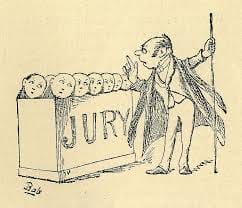
The Act also modifies the procedure for jury selection. Peremptory challenges, which allowed counsel to reject a potential juror without requiring a reason, have been abolished. There were serious concerns surrounding the misuse of peremptory challenges to ensure the jury was of a particular composition – one that would be adverse to the interests of the Accused.
The objective of the Act, broadly, is to reduce judicial delay by targeting and eliminating systemic flaws that impede the wheels of justice from turning as they should – but constitutional challenges are still to be expected.
If you’ve been charged with a criminal offence, it is crucial that you contact an experienced criminal lawyer without delay. We are conveniently located in Richmond, B.C., only a few steps away from Brighouse Station on the Canada Line, which brings you from various locations in Metro Vancouver in 20 minutes. We service all areas of the lower mainland (including but not limited to Surrey, New Westminster, Port Coquitlam, North Vancouver, and Abbotsford) the interior of B.C. (including but not limited to Cranbrook, Kelowna, Kamloops, and Salmon Arm), Northern B.C. (including but not limited to Prince George, Prince Rupert, and Quesnel) and in the Yukon Territory where we offer services in Whitehorse, Dawson City, Faro, Mayo, and Old Crow. Contact our office today to speak to a criminal defence lawyer without delay.