by Jason Tarnow | Sep 29, 2017 | Crime, Legal Aid, Legal Rights, Police, Politics, Social Media, Wheels Of Justice
Impaired operation of a vehicle/vessel is illegal in British Columbia, the Yukon Territory, and really, across our entire nation. However, you may be surprised to learn that police agencies haven’t always exercised their discretion when determining what constitutes a “vessel”. We all know it is against the law to drive your motor vehicle while under the influence of alcohol, and common sense dictates that this also applies to motorcycles, and motorized boats – but did you know that it is (apparently) just as unlawful to knock back a few and go for a ride in your canoe?
Yes, the word “vessel” does not limit illegality to motorized methods of passage. Police agencies across Canada have been known to charge individuals for tipsy transport via canoe.
If you make the smart choice to ride your bicycle to/from the bar, and your swerving attracts the attention of police, you might be ticketed with public intoxication – but not impaired driving.
If you get caught canoeing down the Fraser River, you could potentially be charged with impaired operation of a vehicle/vessel – and if convicted, you would likely lose your driver’s license.
Even though you don’t need a license to operate a canoe, it probably isn’t smart to be drunk on the water. While you’re unlikely to harm anyone else, open water and alcohol don’t mix very well. You could end up paying big penalties for impaired operation of a canoe, the highest of which would be your life if you happen to fall overboard.
But, if you don’t heed my advice & find yourself being breathalyzed canoe-side – “thar she blows…. over .08”, contact our office to discuss your options.
We are conveniently located in Richmond, B.C. only a few steps away from Brighouse Station on the Canada Line, which brings you from various locations in Metro Vancouver in 20 minutes. We service all areas of the lower mainland (including but not limited to Surrey, New Westminster, Port Coquitlam, North Vancouver, and Abbotsford) the interior of B.C. (including but not limited to Cranbrook, Kelowna, Kamloops, and Salmon Arm), Northern B.C. (including but not limited to Prince George, Prince Rupert, and Quesnel) and in the Yukon Territory where we offer services in Whitehorse, Dawson City, and Old Crow. Contact our office today for your initial consultation.
by Jason Tarnow | Jul 24, 2017 | Crime, Legal Rights, Police, Social Media, Wheels Of Justice

The Vancouver Police Department announced that it will be using a new form of intelligence to stop crime before it happens.
No, it isn’t the formation of the Psychic Task Force. It isn’t any sort of “Big Brother” surveillance method (I think) – rather, the VPD has declared it will be the first law enforcement agency in Canada to utilize a “crime prediction model” that will tip officers off to property-crime offences before they happen.
Unsurprisingly, the public has been given very little information about what this new tool is able to do. So far, all we have been told is that it is a computerized program that was apparently very successful in its 6 month pilot project.
The program identifies both residential and commercial areas that display a high-likelihood for property crime. Surveillance areas are set up within a 100-500 meter perimeter, and officers are then dispatched to those areas for visible public presence.
The presence of police, of course, acts as a deterrent for thieves and vandals.
Interestingly enough, this comes as a further development to the 2015 crime mapping tool developed by the VPD. This interactive map is available to the public, for use by anyone interested in learning more about which areas in Vancouver are deemed higher risk. While many people attribute
While this may seem like a weak method of combatting serious and ongoing theft and vandalism, preventative measures are only deemed necessary once an issue has spiralled out of control.
Charges that police hope to see a reduction in as a result of this new preventative measure:
- Break and Enter
- Break and Enter to commit an Indictable offence
- Theft under $5,000
- Theft over $5,000
- Mischief
- Possession of stolen property
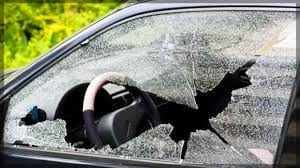
It isn’t unusual to see “petty” crimes, such as minor theft, escalate into more serious situations that can include violent offences as well – for example, a man breaks into a vehicle looking for valuables, but the owner of the vehicle happens to come down to his car as the crime is in progress. An altercation ensues, police attend, and the charges include break & enter, theft, AND assault. By preventing the theft, the entire situation could have been avoided.
Ideally, this tool will aid police in preventing some crimes from happening, but realistically, crimes will still occur in the areas that aren’t padded by police presence.
We are conveniently located in Richmond, B.C. only a few steps away from Brighouse Station on the Canada Line, which brings you from various locations in Metro Vancouver in 20 minutes. We service all areas of the lower mainland (including but not limited to Surrey, New Westminster, Port Coquitlam, North Vancouver, and Abbotsford) the interior of B.C. (including but not limited to Cranbrook, Kelowna, Kamloops, and Salmon Arm), Northern B.C. (including but not limited to Prince George, Prince Rupert, and Quesnel) and in the Yukon Territory where we offer services in Whitehorse, Dawson City, and Old Crow. Contact our office today for your initial consultation.
by Jason Tarnow | Jun 28, 2017 | Crime, Criminal Attorney, Legal Aid, Legal Rights, Police, Wheels Of Justice
What you say CAN and WILL be used  you (seriously)!
I think it is important to discuss the importance of exercising constitutional rights/freedoms. In particular, the right to remain silent when being questioned by law enforcement about alleged criminal activity.
Why does this seem to be the one freedom that no ordinary citizen wants to evoke? It is understandable of course – to a point. Yes, you want to be respectful and cooperative to with the police in the course of their investigation. This means conducting yourself maturely and appropriately, and politely advising the officer that you wish to exercise your right to silence – meaning you do not wish to have any further discussions whatsoever.
And you definitely are not taking the lie detector test.
There is a difference between cooperating and conceding. Exercising your constitutional right to remain silent does not indicate guilt – it does absolutely nothing except protects your best interests, liberty, and quite literally your freedom (depending on circumstances).
Assuming guilt as a result of silence is what’s known as an adverse inference – and in the realm of criminal justice in Canada, an Accused person is protected from such an insinuation. So, there really is no downside to the advice that seems to evade people during times of crucial importance: don’t talk to the police. Remain silent. Protect your best interests. Seek legal advice. Trust the guidance you receive from seasoned legal professions. We have dedicated our livelihood to protecting the fundamental and inherent rights awarded to every single individual in this country – but in order to obtain the best possible outcome, you, the client, must have confidence in your legal counsel’s ability as your advocate.
This is best demonstrated by being mindful of the first piece of advice you will receive: DO. NOT. TALK. TO. POLICE.
Instead, advise them that any dealings they wish to have with you should be done through your criminal defence lawyer. Once retained, a criminal lawyer becomes the conduit between you and the police. This not only ensures that all communications will be appropriate and methodical – it also provides a new point of contact for the police generally.
Here is a short (non-exhaustive) list of circumstances under which seeking legal advice is strongly recommended:
1) You have been arrested and charged with a criminal offence;
2) You have been contacted by the police for a statement, interview, etc and you are unsure if you are being looked at as a suspect;
3) There is a warrant out for your arrest; or
4) You have reason to believe you will be investigated, arrested, or charged in the near future.
We are conveniently located in Richmond, B.C. only a few steps away from Brighouse Station on the Canada Line, which brings you from various locations in Metro Vancouver in 20 minutes. We service all areas of the lower mainland (including but not limited to Surrey, New Westminster, Port Coquitlam, North Vancouver, and Abbotsford) the interior of B.C. (including but not limited to Cranbrook, Kelowna, Kamloops, and Salmon Arm), Northern B.C. (including but not limited to Prince George, Prince Rupert, and Quesnel) and in the Yukon Territory where we offer services in Whitehorse, Dawson City, and Old Crow.
Whether the crime is violent (assault, aggravated assault, sexual assault, assault causing bodily harm, manslaughter, murder), financial (fraud over/under $5,000, possession of stolen credit cards, forgery), or falls under any other category, the experienced criminal defence lawyers at Tarnow Law Offices are well equip and ready to help navigate you through this difficult time from start to finish.
by Jason Tarnow | Mar 9, 2017 | Crime, Criminal Attorney, Legal Rights, Police, Social Media, Wheels Of Justice
The scales of justice weighed in favour of an Accused woman earlier this week, when the Ontario Superior Court upheld her acquittal of impaired driving related charges in Ontario.
Kimberly McLachlan was acquitted of impaired driving in August 2015 after she succeeded in having evidence inadmissible at Trial – her breathalyzer readings, to be specific. This is known as a Charter application, as it seeks to have evidence excluded based on a breach of a Charter protected right.
Her application was based on the fact that when she taken to the police detachment, where she was required to provide a breathalyzer sample, the arresting officers’ had her stand on a scale so that they could have an accurate record of her weight.
Unfortunately, their attempt to be thorough actually triggered a breach of Ms. McLachlan’s section 8 under the Charter – providing protection against unreasonable search and seizure.
It is not part of standard procedure that the police would weigh a person who has been arrested on suspicion of impaired driving. The Judge confirmed that weighing a person is a violation similar in nature to taking bodily fluids (such as a urine or blood) without a warrant.
It is nuances like this – something seemingly harmless – that will catch the attention of a skilled criminal lawyer. Circumstances like these demonstrate the necessity of hiring a criminal lawyer who is familiar with Charter protected rights.
Impaired driving is a particularly complex offence, with a variety of available defences that must be reviewed in tandem with your unique circumstances. Contact our office today for a consultation that will allow us to come familiar with your situation.
by Jason Tarnow | Mar 1, 2017 | Crime, Criminal Attorney, Police, Wheels Of Justice
Dialogue surrounding mental illness echoes from the walls of nearly every courtroom across the country, which won’t come as a surprise to anyone. When dealing with an Accused person, both Crown and Defence will investigate what their client’s state of mind was like during the commission of the offence – it speaks to intent, which is a very important component in analyzing the intricacies of criminal behavior.
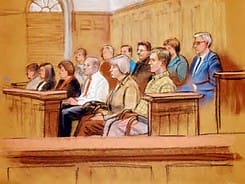
If Crown Counsel proceeds by way of Indictment (as opposed to summarily), the Accused will have the option of having their case heard by a Judge and Jury. If they so choose to have a Jury, members of the public will receive a summons to attend Jury Selection. Some will be chosen, and some will be dismissed. All who are chosen to sit on the jury will not have a say in what their role will be – they are bound by civic duty to fully participate.
Lengthy criminal trials are not uncommon – Robert Pickton’s Trial in 2007 lasted nearly a year, with lawyers calling 129 witnesses, and generating over 1.3 million documents. 129 individuals providing testimony, often gruesome and violent in nature, falling on the ears of 12 every day citizens, none of whom requested to put their lives on hold for a year. Jurors are required to view photo and video evidence, regardless of how brutal those images may be.
But, what happens to jurors once the Trial is over? One would assume that they gladly return to the nuisances of the life they had before the Trial. Sadly, however, many never return to their normal lives.
Post-Traumatic Stress Disorder is often associated with mental illness – however, this is not a fact. PTSD is a psychiatric injury. After repetitive exposure to traumatic situations, the human psyche may succumb to the disturbance. This is rarely immediate – recurring nightmares or overwhelming thoughts are normal to a point. Fresh events remain fresh in our minds.
It is the fog, cotton-in-your-ears feeling, and anxiety that will indicate the onset of PTSD weeks or months after the trauma has occurred. It can be a very isolating and numbing experience – and for whatever reason, societal stigma or taboo, people tend to carry a lot of shame with their PTSD diagnosis. And it is no different for jurors like the ones who sat on Pickton’s jury.
After hearing weeks of testimony, a juror can feel a genuine, bona fide connection with the victim(s). This is amplified when the victim’s family and friends are present for the Trial. Huge internal conflict can erupt when a juror must balance their responsibility and duty to the Court with their own morals and values. This internal back-and-forth is another burden, on top of what they have seen and heard, that they will be left to deal with on their own when jury duty is over.
So what responsibility does our government have to jurors afflicted with PTSD as a result of their participation at Trial? It would not be absurd to consider them as victims of crime. As such, they should have access to every single resource that is made available to the victims of first instance.
Last month in Ontario, the provincial government began offering free counselling for juror members, available either at the end of the coroner’s inquest, or at the end of the Trial. Only time will tell how receptive jurors are to the program, which sadly, hangs on the willingness of individuals to fight against PTSD and its crippling side effects.