by Jason Tarnow | Jun 8, 2026 | Crime, Criminal Attorney, Politics
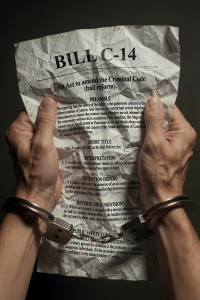 As a Vancouver criminal defence lawyer with years of experience navigating British Columbia courts, I’ve seen firsthand how shifts in bail laws can dramatically affect the lives of those accused of crimes. In the past week, fresh developments around Bill C-14, the Bail and Sentencing Reform Act, have kept criminal law practitioners across Canada on high alert. With Senate amendments under consideration by the House of Commons as of early June 2026, this legislation represents one of the most significant overhauls to the Criminal Code in recent memory.
For anyone facing charges in Vancouver or elsewhere in BC, understanding these proposed changes is essential. Whether you’re a first-time accused, a repeat offender, or simply concerned about justice system fairness, this post breaks down the key elements, their implications, and practical takeaways.
Why Bail Reform is Front and Centre in Canadian Criminal Law
Canada’s bail system operates on foundational principles: the presumption of innocence, the right to reasonable bail under section 11(e) of the Charter, and the “ladder principle” from R. v. Antic (2017 SCC 27), which favours the least restrictive conditions necessary. Yet public concern over repeat offenders committing crimes while on release has fueled calls for tougher measures.
Bill C-14, introduced in late 2025, responds with over 80 targeted amendments to the Criminal Code, the Youth Criminal Justice Act, and the National Defence Act. It expands reverse onus provisions, toughens sentencing for violent and organized crime, and recalibrates how justices assess detention. Recent Senate scrutiny and advocacy from groups like the Canadian Civil Liberties Association (CCLA) highlight the tension between public safety and individual rights.
In BC, where Vancouver’s busy courthouses already strain under caseloads, these changes could reshape pre-trial outcomes significantly.
Key Provisions in Bill C-14: Reverse Onus, Sentencing, and More
At its core, Bill C-14 bail reform introduces or expands reverse onus for several serious offences. Accused persons must now demonstrate why they should be released rather than the Crown proving why they should be detained. This applies to offences involving:
- Violence or weapons
- Breaking and entering
- Auto theft
- Organized crime involvement
Additional measures include restrictions on sureties with recent indictable convictions (with Senate-proposed safety valves for discretion) and adjustments to the principle of restraint, potentially reducing emphasis on the ladder principle for certain charges.
On the sentencing side, the bill aims to impose consecutive sentences for major crimes, limits conditional sentences (house arrest) for serious sexual offences, and strengthens tools against repeat violent offenders. These align with broader government efforts to address community safety while responding to criticisms of prior reforms like Bill C-75.
Recent CCLA advocacy urges MPs to adopt Senate amendments, including mandatory consideration of section 493.2 (Criminal Code) factors for vulnerable populations—particularly Indigenous accused—and enhanced annual reporting on pre-trial detention statistics. These “softening” measures seek to mitigate disproportionate impacts on racialized, low-income, and Indigenous communities, which are overrepresented in BC’s justice system.
Implications for Vancouver Criminal Defence Practice
As a Vancouver-based lawyer handling everything from impaired driving to serious indictable matters, I anticipate several practical shifts:
- Higher Detention Rates Pre-Trial: Expanded reverse onus will make it harder to secure release for clients facing listed offences. Defence counsel will need to prepare robust sureties packages, character evidence, and risk mitigation plans earlier. In Vancouver Provincial and Supreme Courts, where bail hearings are already high-stakes, expect more contested tertiary ground arguments (public confidence in justice).
- Impact on Vulnerable Clients: Indigenous clients, those with mental health issues, or from marginalized communities may face heightened challenges. Senate amendments requiring inquiry into s. 493.2 factors could provide a crucial tool, but implementation will depend on judicial training and Crown practices.
- Sentencing Trends: Tougher consecutive sentencing and restricted conditional discharges will push for more creative mitigation strategies. Defence lawyers must emphasize Gladue principles (for Indigenous offenders) and other mitigating factors more forcefully.
- Interaction with Jordan Principles: The Supreme Court of Canada’s recent May 2026 clarifications in cases like R. v. Vrbanic and R. v. Jacques-Taylor affirm the 18/30-month ceilings for trial delays while recognizing complexity exceptions. Faster bail decisions under Bill C-14 could help or hinder, depending on how they affect overall timelines.
In BC, these federal changes intersect with local pressures, including court disruptions anticipated from the 2026 FIFA World Cup, which may force rescheduling of criminal trials in key Vancouver-area venues.
Balanced Analysis: Safety vs. Charter Rights
Critics, including civil liberties groups, argue that Bill C-14 risks eroding the presumption of innocence by detaining more presumptively innocent people, increased overcrowding in remand centres, and disproportionately affecting equity-seeking groups. Proponents counter that it restores balance after perceived leniency, deterring repeat offences and bolstering public trust.
From my perspective in Vancouver criminal law trenches, the truth lies in nuanced application. Blanket “tough on crime” measures rarely solve systemic issues like court backlogs or social determinants of crime. Evidence-based reforms, robust data collection (as Senate amendments propose), and judicial discretion remain vital.
The bill also arrives amid ongoing discussions about intimate partner violence, femicide presumptions, and organized crime – which are all issues that resonate strongly in British Columbia.
Practical Takeaways for Accused Persons and Practitioners
- Early Legal Advice is Critical: If charged, contact an experienced Vancouver criminal lawyer immediately. Bail strategy starts at arrest.
- Build Strong Release Plans: Gather employment letters, treatment programs, sureties, and electronic monitoring options proactively.
- Monitor Legislative Progress: With House consideration of Senate amendments ongoing, the final shape of Bill C-14 could evolve. Stay informed via reliable legal sources.
- Consider Charter Challenges: Overly broad reverse onus or restraint provisions may invite future litigation under sections 7, 11(d), and 11(e).
- For Lawyers: Emphasize individualized assessments. Leverage any preserved judicial discretion and vulnerable-population considerations.
Defence counsel should also prepare for potential increases in Crown appeals of favourable bail decisions.
Conclusion: Navigating Uncertainty in Canadian Criminal Law
Bill C-14 underscores a pivotal moment in Canadian criminal law. While aimed at enhancing safety, its success will hinge on fair implementation that respects Charter protections. For those in Vancouver facing charges, or law students and citizens following justice issues, these developments highlight why competent, zealous representation matters more than ever.
At our firm, we remain committed to advocating for clients amid these shifts, which includes fighting for releases where justified and challenging overreach where necessary. The justice system works best when balanced, evidence-driven, and humane.
This blog post is for educational purposes only and does not constitute legal advice. Every case is unique. If you or someone you know is facing criminal charges in Vancouver or BC, consult a qualified criminal defence lawyer promptly for personalized guidance.
by Jason Tarnow | Feb 24, 2022 | Crime, Media, Police
A Vancouver man suffering from long haul COVID-19 symptoms was successful in the judicial review of his 90-day Immediate Roadside Prohibition (“IRP”) after arguing that the Adjudicator breached his right to procedural fairness in his original review to RoadSafety BC.
On February 11, 2021, Peter Ronald Gibson was issued an IRP after the police officer alleged he refused to provide a sample. Mr. Gibson made 7 attempts into the Approved Screening Device, none of which successfully yielded a suitable sample. As a result, his vehicle was impounded for 30 days, and he was prohibited from driving for 90 days.
Mr. Gibson sought a review of his IRP to RoadSafety BC, delegate of the Superintendent of Motor Vehicles on the basis that he had a reasonable excuse for failing to provide a breath sample. In Mr. Gibson’s original review, he provided evidence in the form of his Affidavit. He also provided a letter from his physician that confirmed his diagnosis – he was suffering from long term symptoms as a result of COVID-19, including shortness of breath on exertion.
The letter reads:
“His physical examination shows evidence of post-viral reactive airways with sever forced expiratory wheeze. He has been given prescriptions for Flovent and Salbutamol inhalers today. This could contribute to his difficulty performing breathalyzer test during recent traffic stop”
The Adjudicator at RoadSafety BC rejected the letter from Mr. Gibson’s physician, stating that there was no evidence that the physician was aware of the “minimum flow rate (of breath)” required to provide a sample. Mr. Gibson also provided his own Affidavit, which confirmed that he had been referred for treatment, which included CT scans and chest x-rays, among other diagnostic tests.

Keep in mind that the role of the Adjudicator is to analyze whether Mr. Gibson had a reasonable excuse for failing to provide a sample. The analysis is done through review of the Report to Superintendent and all included materials, and also through review of all materials provided by the Applicant (in this case, Mr. Gibson). The Adjudicator may also rely on the Operator’s manual for the Alco-Sensor FST (the Approved Screening Device), which includes information such as proper operating temperature of the device, screen codes, and procedural standards.
Ultimately, the Adjudicator determined that Mr. Gibson’s version of events lacked credibility, and that his physician did not provide sufficient evidence that his medical condition would have prevented him from providing a suitable sample into the Alco-Sensor FST. In doing so, they advanced their interpretation of the testing requirements within the Operator’s manual – specifically, the wording used to describe the necessary airflow required to provide a sample:
“The Alco-Sensor FST has an automatic sampling system designed to ensure that a sample of deep lung air is obtained and analyzed. In order to trigger automatic sampling the subject must blow with a minimum flow rate, must produce a minimum breath volume, and blow for a minimum duration…”
On judicial review, Supreme Court Justice Tammen took issue with the Adjudicator’s interpretation of this issue. The Judge dissected the Adjudicator’s analysis and concluded that despite quoting the appropriate resource, the manual itself provided no information to estimate the “minimum” flow rate required.
Through the Adjudicator’s analysis, Justice Tammen determined that they had relied on information (relating to the required flow rate of a sample) that was not available to the Petitioner (or his physician) at the outset of his review with RoadSafety BC. This breached the Petitioner’s right to procedural fairness.
Justice Tammen directed that the Adjudicator’s decision confirming the IRP of the Petitioner be set aside, and that the matter be remitted to RoadSafety BC for a new hearing.
This case demonstrates a significant flaw in the IRP regime – that is, a blurring of the lines between adjudication and medical expertise. While adjudicators may have specialized knowledge of certain issues due to continued exposure via their employment, the boundaries in their role must be respected and enforced.

If you have received an Immediate Roadside Prohibition, an Administrative Driving Prohibition, or have been charged with Impaired Operation of a Conveyance, contact an experienced criminal lawyer at Tarnow Criminal Law as soon as possible. Our office is located in the heart of Richmond, only 20 minutes from downtown Vancouver on the Canada Line, and within 10 minutes of Vancouver International Airport (“YVR”).
Our firm is also licensed to work in the Yukon Territory, where the 90-day review process for impaired driving is an entirely different process. If you are facing impaired driving charges in the Yukon, contact our office as soon as possible for a consultation.
by Jason Tarnow | Feb 23, 2021 | Crime, Legal Rights, Police, Politics, Wheels Of Justice
On May 1, 2020, Prime Minister Justin Trudeau issued an Order in Council immediately banning the use, sale and transport of approximately 1,500 “assault” style firearms. This action was met with criticism from firearm owners, retailers and pro-gun advocates from across the country. A two-year amnesty period for restricted firearm owners will expire on April 30, 2022, which is around the time when Bill C-21 could come into effect.
At its first reading in the House of Commons on February 16, 2021, details about Bill C-21 emerged that created further frustration and confusion among Canadian firearm owners and retailers. Described as “an Act to amend certain Acts and to make consequential amendments (firearms)”, Bill C-21 will make substantive changes to both the Criminal Code and the Firearms Act, both of which are Federal legislation, thus impacting Canadians from coast to coast. It will also amend the Immigration and Refugee Act and the Nuclear Safety and Control Act.

Proposed amendments to the Criminal Code include:
- Increasing the maximum penalty of imprisonment for offences under Sections 95, 96, 99, 100 and 103 of the Criminal Code from 10 years to 14 years;
- Establishing a procedure that would allow any person to apply for an emergency prohibition order, or an emergency limitations on access order;
- Deem certain firearms to be prohibited devices for certain provisions;
- Create a new offence for altering a cartridge magazine to exceed its lawful capacity;
- Authorize employees of certain federal entities who are responsible for security to be considered as public officers for the purpose of section 117.07
One of the most concerning amendments, and the focus of today’s blog, involves establishing a procedure that would allow for any person to apply for an emergency prohibition order, or an emergency limitations on access order. The proposed amendment reads as follows:
Application for emergency prohibition order
110.1 (1) Any person may make an ex parte application to a provincial court judge for an order prohibiting another person from possessing any firearm, cross-bow, prohibited weapon, restricted weapon, prohibited device, ammunition, prohibited ammunition or explosive substance, or all such things, if the person believes on reasonable grounds that it is not desirable in the interests of the safety of the person against whom the order is sought or of any other person that the person against whom the order is sought should possess any such thing.
An ex parte application does not require notice to be given to the adverse party. This means that any person can make an application to a judge seeking the immediate prohibition (and subsequent seizure) of any of the items described in section 110.1(1). Success on the application is discussed next:
Emergency prohibition order
(2) If, at the conclusion of a hearing of an application made under subsection (1), the provincial court judge is satisfied that the circumstances referred to in that subsection exist and that an order should be made without delay to ensure the immediate protection of any person, the judge shall make an order prohibiting the person against whom the order is sought from possessing any firearm, cross-bow, prohibited weapon, restricted weapon, prohibited device, ammunition, prohibited ammunition or explosive substance, or all such things, for a period not exceeding 30 days, as is specified in the order, beginning on the day on which the order is made.
The seizure process will unfold one of two ways:
Warrant to search and seize
(4) If a provincial court judge is satisfied by information on oath that there are reasonable grounds to believe that a person who is subject to an order made under subsection (2) possesses, in a building, receptacle or place, any thing the possession of which is prohibited by the order, and that it is not desirable in the interests of the safety of the person, or of any other person, for the person to possess the thing, the judge may issue a warrant authorizing a peace officer to search the building, receptacle or place and seize any such thing, and every authorization, licence or registration certificate relating to any such thing, that is held by or in the possession of the person.
OR:
Search and seizure without warrant
(5) If, in respect of a person who is subject to an order made under subsection (2), a peace officer is satisfied that there are reasonable grounds to believe that it is not desirable, in the interests of the safety of the person, or of any other person, for the person to possess any thing the possession of which is prohibited by the order, the peace officer may, where the grounds for obtaining a warrant under subsection (4) exist but, by reason of a possible danger to the safety of the person or any other person, it would not be practicable to obtain a warrant, search for and seize any such thing, and any authorization, licence or registration certificate relating to any such thing, that is held by or in the possession of the person.
The seized items will remain in police custody for 30 days. When the Order expires, the seizing agency (police) must make an application for a Prohibition Order under Section 111(1) of the Criminal Code. This Application requires that the subject of the Order (the firearms/weapons owner) be given notice of the application, and the opportunity to respond in court. At this juncture, there are three ways the seized items can be returned to their owner:
- No application is made for a Prohibition Order under Section 111(1);
- If the hearing does not result in a Prohibition Order being made under Section 111(5);
- If the Order issued at the ex parte application is revoked
While this legislation seeks to establish an alternative procedure that gives the public power to seek protection from violence involving firearms and other weapons, it fails to address the possibility that this power could be abused. Currently, the law requires that an individual report their concerns to the police, who would then engage in an investigation to determine whether a seizure is necessary. When citizens assume this authority, there are a myriad of complications that could pose negative consequences not only to the potential subject of the Order, but to whomever makes the ex parte application. It requires that they take the law into their own hands – something that law enforcement regularly counsels against.
Bill C-21 is still in the early stages of the legislative process, but has garnered both support and criticism from those it will protect, and those it will harm.