by Jason Tarnow | Feb 27, 2026 | Crime, Legal Rights

Across Canada, firearms offences appear to be subject to heightened scrutiny. In Vancouver and surrounding communities, these matters are being approached with increased regulatory and prosecutorial attention, particularly in light of the federal government’s firearms buy-back program and legislative amendments that took effect in early 2025.
If you own firearms in BC, it is important to understand how the law operates in 2026 and how expanded regulatory and court powers may affect you.
Amendments to the Firearms Act Now in Force
In early 2025, significant amendments to the Firearms Act came into effect. These changes strengthened preventative tools available to authorities where public safety concerns are raised.
While Canada has long maintained a strict licensing and regulatory framework, the 2025 amendments reinforced a precautionary approach. In practical terms, this means that firearms licences can now be suspended or revoked more quickly, and courts can intervene on short notice where safety concerns are alleged.
For lawful gun owners, compliance with storage, transportation, and licensing conditions is more important than ever. Even administrative issues can escalate quickly if not addressed properly.
Immediate Licence Revocation – Section 70.1(1)
One of the most significant provisions now in force is section 70.1(1) of the Firearms Act.
Under this section, a Chief Firearms Officer (CFO) may revoke a person’s firearms licence without delay if the CFO has public safety concerns. This authority allows for immediate administrative action, even in the absence of a criminal conviction.
A revocation under s. 70.1(1) can result in:
- Immediate loss of your Possession and Acquisition Licence (PAL)
- Seizure of firearms
- Parallel administrative and criminal proceedings
It is important to understand that a licence revocation is not the same as being found guilty of a criminal offence. However, the practical consequences can be severe. Your ability to lawfully possess firearms may end immediately, and failing to respond properly can expose you to further legal jeopardy.
There are legal mechanisms to challenge revocations, but strict timelines apply. Early legal advice is critical.
“Red Flag” Applications – 30-Day Suspensions
Another significant development is Canada’s red flag framework.
These provisions allow any person to apply to a court for an emergency order suspending another individual’s access to firearms for up to 30 days if there are concerns about that person’s ability to safely possess firearms or other public safety issues.
If granted, a red flag order can:
- Temporarily suspend a firearms licence
- Authorize seizure of firearms
- Be issued on short notice in urgent situations
These applications are civil in nature but can have serious consequences. In some cases, they arise in the context of family disputes, relationship breakdowns, or interpersonal conflicts. Because they can proceed quickly and sometimes without advance warning, responding promptly and strategically is essential.
Increased Prosecutorial Attention to Firearms Offences
Firearms offences in Canada often carry significant penalties, including:
- Mandatory firearms prohibitions
- Criminal records
- Potential imprisonment
- Long-term restrictions on lawful firearm ownership
In British Columbia, Crown counsel treat firearms matters seriously, particularly where public safety concerns are alleged. We are seeing increased scrutiny in cases involving:
- Unauthorized possession
- Unsafe storage
- Breach of prohibition orders
- Possession contrary to licence conditions
Firearms cases are legally technical. They often involve a combination of Criminal Code provisions, federal regulatory law, and administrative licensing processes. Small factual details, such as how firearms were stored or transported, can significantly affect the outcome.
The Importance of Experienced Firearms Defence
Not all criminal defence lawyers regularly handle firearms matters. These cases require familiarity not only with criminal procedure, but also with the licensing framework, CFO decision-making processes, and the interaction between administrative and criminal law.
If you have been:
- Contacted by police regarding a firearms investigation
- Served with notice that your licence is under review or revoked
- Named in a red flag application
- Charged with a firearms-related offence
you should seek legal advice immediately. What you say and how you respond at an early stage can materially affect your case.
Contact a firearms defence lawyer at Tarnow Criminal Law today. If you prefer, your initial consultation for firearms-related criminal charges can be conducted securely via encrypted video conferencing software like MSTeams or Zoom. All video consultations are fully confidential and protected by solicitor-client privilege.
by Jason Tarnow | May 4, 2017 | Crime, Media, Wheels Of Justice
It has been over one year since Dr. Perry Kendall to declare a Public Health Emergency in British Columbia.
That emergency announcement has not been retracted, but now, the Federal government is beginning to take additional steps to combat the ongoing crisis.
On May 2, 2017, Bill C-224, to be known as the Good Samaritans Drug Overdose Act, was unanimously passed in the House of Commons by MPs from all parties.
The bill aims to ensure that individuals who seek emergency help for someone suffering from an overdose can do so without fear of being prosecuted for drug possession offences. Additionally, it will protect those same individuals from facing breach charges related to drug possession.
The passing of Bill C-224 is fundamental in encouraging anyone witnessing an overdose to seek emergency medical treatment for that individual.
It is a very bold (and extremely necessary) stride in fighting back against one of the most lethal killers on the streets of British Columbia, which has claimed over 1,000 lives in the past 5 years.
Perhaps 1,000 doesn’t seem like a huge number – but do remember to that in the entire year of 2012, there were only 12 deaths attributed to Fentanyl overdoses.
In 2013, that number jumped to 50.
Fast forward to 2016, and that number climbs to 575 (roughly 47 people per month).
There is no question about the existence of a relationship between criminality and drug abuse. The two are not mutually exclusive, but are by no means estranged either. There is a direct link between them – profiting from crime (theft, fraud, etc) is the often only way to fuel addiction.
Our Provincial Government, however, is not obtuse to the unique circumstances that plague Vancouver’s drug scene. Vancouver’s Downtown Community Court is the first of its kind in Canada and serves roughly 1,500 people per year. It is a purpose-designed courthouse, and strives to bring resources for justice, health, and social services to the Vancouver community. Matters will be referred to the Downtown Community Court when the offender requires assistance to deal with underlying issues such as homelessness, substance abuse, and mental health problems.
With enactment of the Good Samaritans Drug Overdose Act, citizens do not have to worry about being penalized for seeking emergency assistance for someone who is overdosing. And rightfully so. Our government’s first priority should be harm reduction for every individual battling addiction, with no agenda to balance that objective with the war on drugs.
Bill C-224 does not however provide any immunity from prosecution for drug trafficking or other drug related offences.
There could not be a worse time to find yourself charged with an offence related to Fentanyl. Being charged with possession in circumstances unrelated to those discussed above can result in a lengthy term of incarceration, lifetime travel restrictions, and a host of other consequences. Contact a Vancouver Criminal Lawyer at Tarnow Criminal Law today for a free consultation.
by Jason Tarnow | Mar 9, 2017 | Crime, Criminal Attorney, Legal Rights, Police, Social Media, Wheels Of Justice
The scales of justice weighed in favour of an Accused woman earlier this week, when the Ontario Superior Court upheld her acquittal of impaired driving related charges in Ontario.
Kimberly McLachlan was acquitted of impaired driving in August 2015 after she succeeded in having evidence inadmissible at Trial – her breathalyzer readings, to be specific. This is known as a Charter application, as it seeks to have evidence excluded based on a breach of a Charter protected right.
Her application was based on the fact that when she taken to the police detachment, where she was required to provide a breathalyzer sample, the arresting officers’ had her stand on a scale so that they could have an accurate record of her weight.
Unfortunately, their attempt to be thorough actually triggered a breach of Ms. McLachlan’s section 8 under the Charter – providing protection against unreasonable search and seizure.
It is not part of standard procedure that the police would weigh a person who has been arrested on suspicion of impaired driving. The Judge confirmed that weighing a person is a violation similar in nature to taking bodily fluids (such as a urine or blood) without a warrant.
It is nuances like this – something seemingly harmless – that will catch the attention of a skilled criminal lawyer. Circumstances like these demonstrate the necessity of hiring a criminal lawyer who is familiar with Charter protected rights.
Impaired driving is a particularly complex offence, with a variety of available defences that must be reviewed in tandem with your unique circumstances. Contact our office today for a consultation that will allow us to come familiar with your situation.

by Jason Tarnow | Mar 1, 2017 | Crime, Criminal Attorney, Police, Wheels Of Justice
Dialogue surrounding mental illness echoes from the walls of nearly every courtroom across the country, which won’t come as a surprise to anyone. When dealing with an Accused person, both Crown and Defence will investigate what their client’s state of mind was like during the commission of the offence – it speaks to intent, which is a very important component in analyzing the intricacies of criminal behavior.
If Crown Counsel proceeds by way of Indictment (as opposed to summarily), the Accused will have the option of having their case heard by a Judge and Jury. If they so choose to have a Jury, members of the public will receive a summons to attend Jury Selection. Some will be chosen, and some will be dismissed. All who are chosen to sit on the jury will not have a say in what their role will be – they are bound by civic duty to fully participate.
Lengthy criminal trials are not uncommon – Robert Pickton’s Trial in 2007 lasted nearly a year, with lawyers calling 129 witnesses, and generating over 1.3 million documents. 129 individuals providing testimony, often gruesome and violent in nature, falling on the ears of 12 every day citizens, none of whom requested to put their lives on hold for a year. Jurors are required to view photo and video evidence, regardless of how brutal those images may be.
But, what happens to jurors once the Trial is over? One would assume that they gladly return to the nuisances of the life they had before the Trial. Sadly, however, many never return to their normal lives.
Post-Traumatic Stress Disorder is often associated with mental illness – however, this is not a fact. PTSD is a psychiatric injury. After repetitive exposure to traumatic situations, the human psyche may succumb to the disturbance. This is rarely immediate – recurring nightmares or overwhelming thoughts are normal to a point. Fresh events remain fresh in our minds.
It is the fog, cotton-in-your-ears feeling, and anxiety that will indicate the onset of PTSD weeks or months after the trauma has occurred. It can be a very isolating and numbing experience – and for whatever reason, societal stigma or taboo, people tend to carry a lot of shame with their PTSD diagnosis. And it is no different for jurors like the ones who sat on Pickton’s jury.
After hearing weeks of testimony, a juror can feel a genuine, bona fide connection with the victim(s). This is amplified when the victim’s family and friends are present for the Trial. Huge internal conflict can erupt when a juror must balance their responsibility and duty to the Court with their own morals and values. This internal back-and-forth is another burden, on top of what they have seen and heard, that they will be left to deal with on their own when jury duty is over.
So what responsibility does our government have to jurors afflicted with PTSD as a result of their participation at Trial? It would not be absurd to consider them as victims of crime. As such, they should have access to every single resource that is made available to the victims of first instance.
Last month in Ontario, the provincial government began offering free counselling for juror members, available either at the end of the coroner’s inquest, or at the end of the Trial. Only time will tell how receptive jurors are to the program, which sadly, hangs on the willingness of individuals to fight against PTSD and its crippling side effects.
by Jason Tarnow | Nov 7, 2016 | Crime, Legal Rights, Media, Social Media, Uncategorized, Wheels Of Justice
Offensive and shocking cellphone footage has led to criminal charges for a 49 year old man from Hope, B.C.
Karry Corbett received a $110 parking ticket, which initiated a heated exchange between Corbett and the parking enforcement officer. Ravi Dhura, of South Asian descent, was an innocent bystander who noticed the altercation between Corbett and the parking officer, and pulled out his cellphone to film the incident.
This led to Corbett turning his rage to Dhura, hurling obscene remarks directed at Dhura’s nationality, telling him to “go back to India” at one point, and then raising a fist and proclaiming “white power”. The comments made by Corbett aren’t difficult to interpret, which is clear by the reaction of the public. Comments on social media called for Corbett to be charged with a hate crime, but there were no such charges recommended by the RCMP.
“When did you come to Canada?” asked Corbett of Dhura, who replied that he was born a Canadian citizen. Corbett made many comments similar to that one – clearly indicated his belief that Mr. Dhura must have immigrated here at some point, alleging he was not Canadian born.
After a fairly brief review of the evidence, Crown Counsel approved 2 counts of assault, one count of uttering threats, and one count of causing a disturbance – charges that aren’t foreign to Mr. Corbett. According to RCMP he has a lengthy criminal record for similar offences, including 2 matters currently before the Courts.
Now, the public is wondering why, in the face of clear racism, there is no talk of prosecuting a hate crime. There has also been speculation on social media of how Corbett can be charged with 2 counts of assault when there was no physical contact.
The answer is easily drawn from the definition of Assault in the Criminal Code.
As you will see, the definition of assault is broad enough to include indirect force. Upon watching the video it is easy to see how Mr. Dhura, and the parking enforcement officer, would feel threatened.
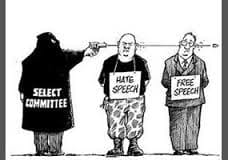
As for the hate crime, there is no offence named “hate crime” in the Code, however, in this situation, Section 319 – Public Incitement of Hatred, would seem most fitting. Ultimately, Crown Counsel reviewed the available evidence, and determined that such charges would be inappropriate in Mr. Corbett’s circumstances. While some have indicated that charging Mr. Corbett for his comments infringes on his Constitutional right to Freedom of Speech, there are limitations. These limitations are set by our societal values, and rule of law that protect any and all individuals from being the victim of hateful speech.
Instances of hate propaganda and hateful speech in Metro Vancouver and surrounding communities such as Surrey, Richmond, Burnaby, Abbotsford and other Valley municipalities are steadily increasing. In January 2016, during an influx of Syrian Refugees settling in Canada, over 100 people were pepper sprayed by one disgruntled citizen at a gathering in Vancouver, B.C. RCMP indicated that kind of attack could constitute a hate crime.
Then, in August 2016, a Turkish speaking man was beaten in Vancouver for “speaking a foreign language” according to his attacker. RCMP confirmed they would be investigating that situation as a hate crime, however, it resulted in assault charges being laid against a 54 year old man.
In modern day society, social media has proven to be a useful tool in gauging the public’s tolerance for racism – this situation demonstrates that Mr. Corbett’s actions simply went too far. However, as our judicial system provides, Mr. Corbett is innocent until proven guilty.
The issues that are raised in matters like these are complex and require the expertise of seasoned criminal lawyers – therefore if you, or anyone you know, face a situation similar to Mr. Corbett’s, contact our office today to discuss your next steps.